By Alain Jourdan
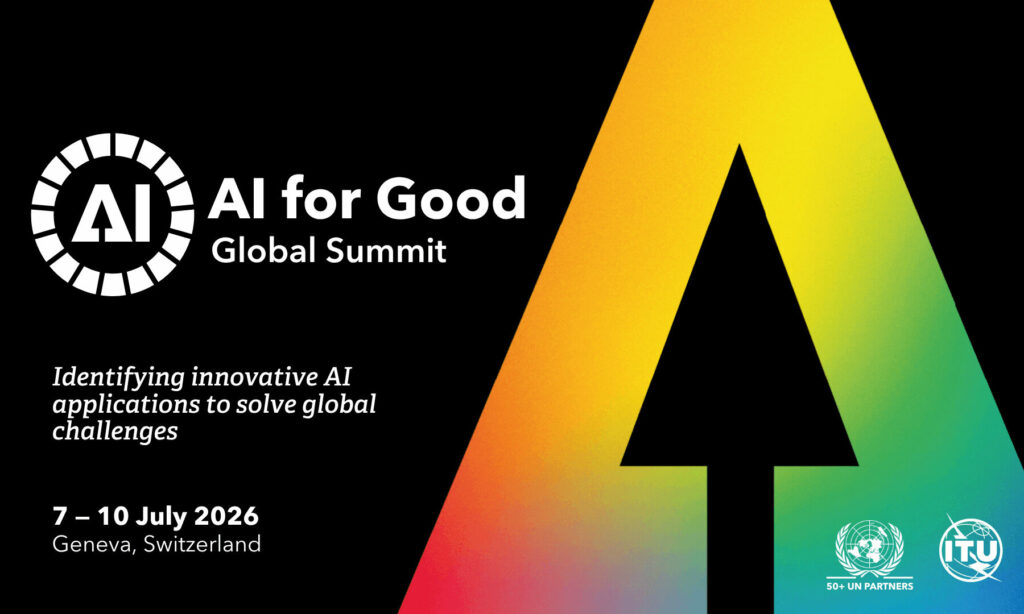
Some silences are more revealing than speeches. This week, Geneva is hosting AI for Good, one of the world’s major gatherings devoted to the future of artificial intelligence. Yet behind the conferences, the innovations and the diplomatic meetings lies a crucial question: who will set the rules tomorrow for the most disruptive technology of our time? Artificial intelligence will transform our economies, our jobs, our security, our information and probably our very understanding of knowledge itself.
And yet one question is troubling: where is the great public debate? Where are the special reports? Where are the major investigations? How can an event of such global significance, held in the heart of Geneva, fail to prompt exceptional media coverage? A few days earlier, the Francophonie had also brought together experts and international stakeholders to discuss the challenges of artificial intelligence, digital technology and cultural diversity. There too, a vital discussion was under way: what place for French-speaking countries? What place for the Global South? What place for an AI that is not shaped solely by a handful of tech giants? There too, the media response was far too muted.
This observation goes well beyond these two events. It reveals a more worrying reality: International Geneva, despite its strategic importance, is today not covered nearly enough. And that is a huge paradox. Never have the issues discussed in Geneva — artificial intelligence, global health, climate, conflicts, human rights, international trade — had such an influence on citizens’ daily lives. Never have they been so invisible.
For several years, together with a handful of enthusiasts, we have tried to fill this void with La Tribune des Nations. Without significant resources. Without powerful financial backers. Without an army of consultants. Simply with a conviction: Geneva holds a diplomatic and intellectual treasure unique in the world, but a treasure that loses its value if it remains invisible.
We cover the debates, the conferences, the initiatives and the players who are building International Geneva. We try to do what journalism should always do: make what seems complex understandable, give it meaning, and build bridges between institutions and citizens. And yet, let us be frank: how many doors have truly been opened? How many players are ready to give this endeavour concrete support? Everyone acknowledges that Geneva’s story needs to be told better. But when an independent initiative tries to do precisely that, the silence is often deafening.
That, too, is part of the current crisis in the media. There is much talk of innovation, digital transformation and artificial intelligence. But where are the genuine editorial visions? I watch with concern as some publishers see AI solely as a new productivity tool: producing more, publishing faster, cutting costs even further. It is a dangerously impoverished vision.
The artificial intelligence revolution should not be a means of churning out more mediocre content. It should enable us to produce better journalism. More analysis. More investigation. Greater capacity to explore complex data, to understand how the world is changing, and to place events in their full historical depth. AI should give time back to human intelligence, not simply speed up the content machine.
But that still requires real publishers: women and men capable of carrying an intellectual ambition, not merely of managing profitability spreadsheets. That is also why I joined the Geneva AI Governance Institute (GAIGI). Because the battle now beginning is not merely technological. It is democratic, cultural and geopolitical.
Artificial intelligence cannot be left to engineers, technology platforms or economic interests alone. We must build spaces where researchers, diplomats, entrepreneurs, civil society and the media can engage in dialogue. Geneva has every asset it needs to become a global centre of this new governance. But a world capital is not built with institutions alone. It is also built with ideas, with narratives, and with media capable of explaining why what is decided here matters to the rest of the world.
The question, then, is not merely whether artificial intelligence will transform journalism. The real question may be whether journalism will still have the ambition needed to tell the story of the artificial intelligence revolution. For history is being written. And it would be tragic if Geneva, having failed to tell its own story, were to let others write that history in its place.
Editorial transparency: La Tribune des Nations to show AI footprint in its articles
As artificial intelligence profoundly transforms the world of news, La Tribune des Nations is choosing transparency. In the coming weeks, every article published on our platform will carry a new star-rating indicator showing the extent of AI’s involvement in its production.
This index will specify the level of technological assistance used: from articles written, researched and edited entirely by a journalist to content in which AI has played a greater role in background research, summarising or drafting.
Our conviction is simple: artificial intelligence must not replace journalism, but should become a tool serving richer, faster and better-documented news. On one condition, which must remain inviolable: editorial responsibility, verification and analysis must remain human.
At a time when the media are going through a major economic crisis and citizens are questioning the origin of the content they consume, La Tribune des Nations intends to champion a new standard: not hiding AI, but explaining how it is used.
Because trust will be the real challenge for journalism in the age of artificial intelligence.
Translated from French. The French original prevails.