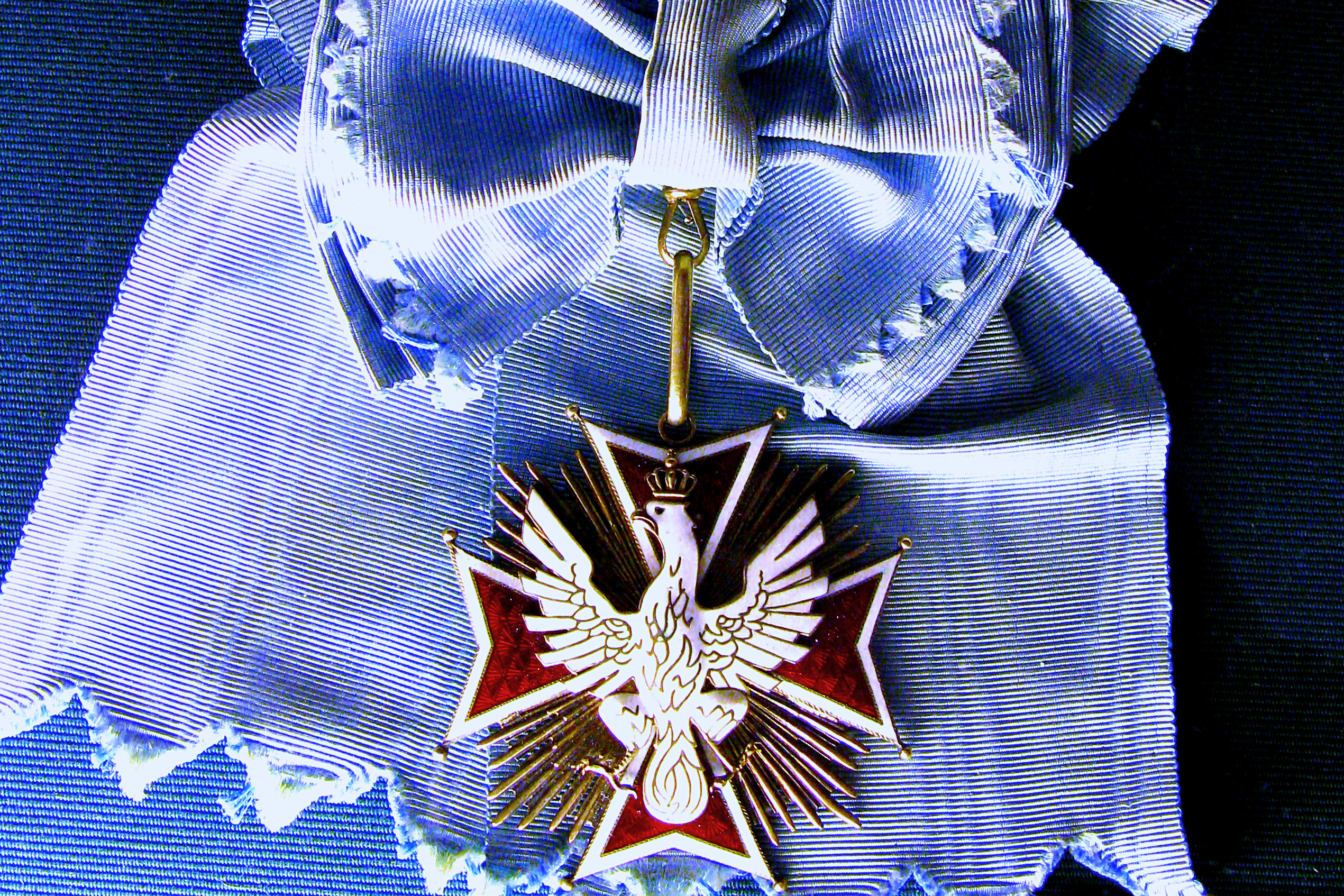
Polish President Karol Nawrocki’s decision to strip Ukrainian President Volodymyr Zelensky of the Order of the White Eagle appears, at first sight, to be a purely symbolic gesture. In reality, however, it is the symptom of a crisis in which historical memory is being used as a political instrument that weighs on current relations between Poland and Ukraine.
The move takes on even greater significance in the light of the history of the decoration itself, the Order of the White Eagle. Established at the beginning of the 18th century, it was not only the Polish state’s highest distinction but also a powerful instrument of diplomacy. Among its first knights was the Ukrainian hetman Ivan Mazepa (1639–1709), one of the best-known national figures, who embodies the aspiration to Ukrainian statehood. According to several Ukrainian historians, the Order’s warrant was issued to him in October 1703. Thus, long before the emergence of the modern Polish and Ukrainian states, this distinction already linked the destinies of the two peoples.
The Volhynia tragedy
At the beginning of the 18th century, this decoration embodied the alliance between the Polish crown and a Ukrainian hetman. In the 21st century, it has become an instrument for the political repudiation of the Ukrainian president. The Order, once a sign of mutual recognition, is today a source of mutual grievance.
The formal trigger for the tension was the controversy over Volodymyr Zelensky’s decision to confer the honorary title “Heroes of the UPA” (UPA — the Ukrainian Insurgent Army, the military formation of the Ukrainian national movement during the Second World War) on a Ukrainian military unit engaged in resisting Russian aggression. In Warsaw, the decision was seen not as an internal Ukrainian matter but as a provocation.
It is here that the present collides with an unresolved past. The most sensitive point of that past remains the Volhynia tragedy of 1943–1944 — a series of mass killings and reciprocal ethnic cleansing between Polish and Ukrainian civilian populations during the Second World War, mainly in Volhynia and Eastern Galicia. Poles describe these events as genocide, whereas in Ukrainian memory they are regarded as a tragic and complex conflict set against a backdrop of war and occupation. This divergence of interpretation is a constant source of political tension between the two states.
In this context, historical memory ceases to be a strictly academic field and becomes a political instrument that plays on emotion. In this respect, Poland’s Institute of National Remembrance (IPN – the public institution responsible for historical memory policy and for research into the crimes of Nazism and communism) plays a role in shaping the public interpretation of the major historical conflicts. Karol Nawrocki, who headed the IPN before becoming president, already combined a harsh reading of the UPA, which he regarded as a criminal organisation, with formal recognition of Ukrainians’ right to choose their own national heroes. In 2023, he declared that the IPN would “come under attack, but remain a fortress”, underlining the institutional role of memory policy in Poland.
The Order of the Future: civil society responds
That is why the President’s current decision has sparked heated debate. Nawrocki’s opponents point out that his previous position was more balanced, whereas the current one looks like a political instrumentalisation of history. Stripping Zelensky of the honour has shifted historical memory from the realm of interpretation to that of political decisions, with real consequences for bilateral relations.
The debate has not been confined to political circles but has also extended to civil society. A number of Polish human rights defenders, cultural figures and activists launched an initiative to award “the Order of the Future” to Volodymyr Zelensky and the Ukrainian people as a sign of solidarity. The initiators stressed that their move was a response to the politicisation of history and an attempt to refocus attention on the main factor in regional security — the full-scale war waged by Russia against Ukraine since 2022, which shapes the security architecture of Eastern Europe. In this view, Ukraine is not an object of historical disputes but a state that serves as a defensive shield for Poland and NATO’s eastern flank.
At the same time, this response from civil society highlights another dimension: the historical controversies surrounding Volhynia and the UPA tend to push the current war, decisive as it is for security, into the background. Rather than serving as a unifying factor, history is becoming an instrument of domestic mobilisation and political competition.
Reciprocal symbolic gestures have also emerged on the Ukrainian side — the return or refusal of Polish state decorations by certain politicians and former presidents. Legally marginal, but politically significant.
Support and tensions
To understand why the historical question looms so large in Polish politics today, one has to take account of developments since 2022. Poland has become one of the most pro-Ukrainian countries in Europe: millions of people have helped refugees, collected humanitarian aid and supported Ukraine. But internal tensions have built up: competition on the labour market; the “grain crisis”, when Polish farmers blocked trains and dumped Ukrainian grain on the tracks; war fatigue among the population; and the rise of right-wing populism.
Polish public opinion towards Ukraine has shifted: whereas in 2022 around 25% of people said they had negative or even very negative feelings, by 2026 that figure had risen to 43%. This creates fertile ground for political rhetoric that combines history with contemporary anxieties.
Tellingly, historical controversies are also beginning to have a bearing on the future. Nawrocki has stated on several occasions that support for Ukraine’s accession to the European Union could not be unconditional unless historical questions, notably those relating to Volhynia, were resolved. The past is thus gradually becoming a condition for the future.
An effective tool of Polish domestic politics
But why is Volhynia a central point of tension, when the tragedies of Katyn and Smolensk play no comparable role? It is not a matter of double standards, but of the fact that these events belong to different historical spheres of responsibility and do not intersect within the bilateral framework.
For Poles, the Katyn massacre (the mass execution of Polish officers by the NKVD during the Second World War) is a crime of the Soviet Union, while the Smolensk air disaster (2010, in which the Polish state leadership was killed, from President Lech Kaczyński to senior military and diplomatic officials) is linked to Russia. Volhynia, by contrast, is directly associated with the Ukrainian national movement.
Polish society perceives Russia as a threat on which there is consensus, regardless of political affiliation. It is therefore not an effective instrument of domestic politics. The Ukrainian question, on the other hand, remains an arena of political competition. Hence slogans such as: “We are helping, but we have the right to demand the truth”, “Polish victims must not be forgotten”, “Ukraine must respect Polish memory”.
An artificial controversy that serves Russia
The history of Polish-Ukrainian relations is far broader than a single conflict and does not begin with Volhynia. In Ukrainian historical memory, the Polish-Ukrainian War of 1918–1919 remains a deep wound: at its end, the West Ukrainian People’s Republic (ZUNR) lost control of Eastern Galicia, which came under the authority of the Second Polish Republic.
In the interwar period, the Ukrainian population faced a policy of Polonisation and restrictions on Ukrainian education, cultural life and political representation. In 1930, the Polish authorities launched what became known as the “Pacification”: a sweeping repressive operation carried out by the police and the army against the Ukrainian population of Galicia. After the Second World War, a further tragedy followed with Operation “Vistula” in 1947, during which Poland’s communist regime forcibly deported some 140,000–150,000 Ukrainians, Lemkos and Boykos from their ancestral lands to the north and west of the country. For most Poles, these events do not occupy a central place in the national memory. For Ukrainians, however, they remain historical traumas every bit as painful as the Volhynia massacre is for Poles.
The assessment of the Armia Krajowa is likewise a complex matter. For Polish society, the organisation embodies resistance to the Nazi occupation and is one of the foundations of contemporary national identity. Ukrainian historians point out, however, that some of its units committed documented crimes against Ukrainian civilians during the Polish-Ukrainian conflict of 1943–1945. That is why one question is being asked with increasing frequency in Ukraine: if Ukrainians are expected to take a clear-eyed and critical view of the history of the UPA, is Polish society prepared, with the same openness, to acknowledge and examine the most controversial chapters of its own past? The point is not to set the tragedies in competition with one another, but to recognise that the historical memory of the two peoples is reciprocal and cannot be selective.
Recalling these events does not diminish the scale of the Volhynia tragedy, but it does underline that memory in the region is multidimensional and mutually traumatic.
Paradoxically, modern-day Poland has become one of Ukraine’s foremost champions in Europe precisely after the two states had come through difficult historical periods. This means that reconciliation has never required complete agreement about the past — it becomes possible when political elites put the future above historical disputes.
Ukraine is today waging a full-scale war against Russia and is, in effect, a defensive bulwark for Poland and NATO’s eastern flank. Yet this strategic reality is increasingly giving way to domestic political narratives. Each new historical row between Warsaw and Kyiv erodes trust and opens up room for Russian influence. In this context, the Order of the White Eagle is merely a symbol. The real conflict is not about a decoration, but about the right to define the past — and thereby to shape the future.
History has come full circle in a new, symbolic way: from Mazepa’s alliance with the Polish crown to today’s political confrontation. And therein lies the central paradox — the past, which ought to explain the present, is increasingly beginning to dictate it.
Translated from French. The French original prevails.