
Sébastien THIERY, MENA analyst intern at the Geneva Geostrategic Observatory
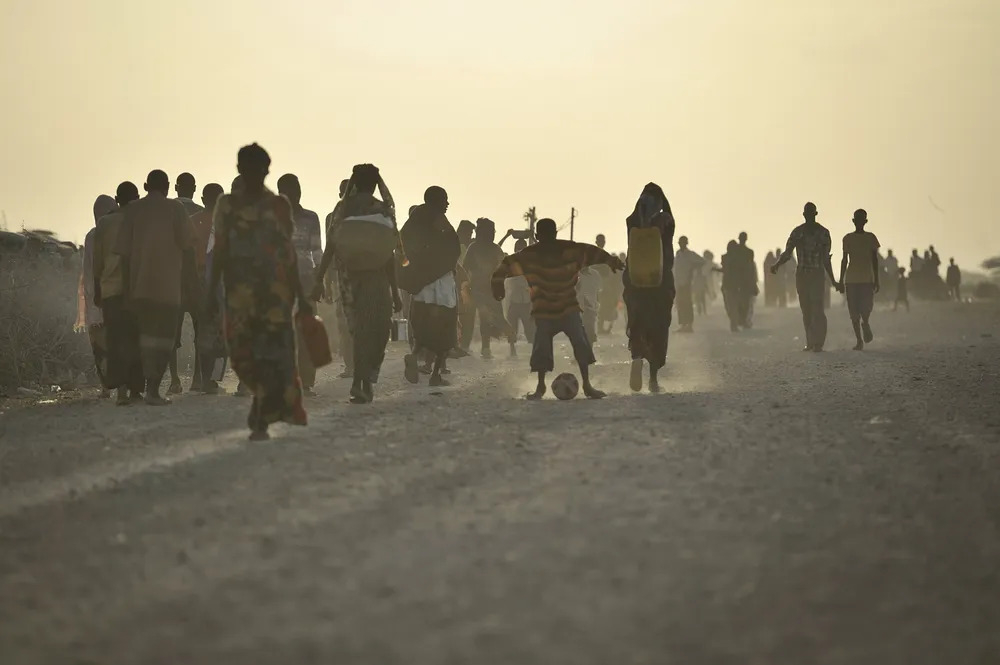
The conflict has already claimed some 200,000 lives and caused the displacement of nearly 13 million people, including around 4 million refugees in 2025.
After a 500-day siege, El-Fasher, the capital of Sudan’s North Darfur State, fell to the Rapid Support Forces (RSF) on 26 October. Satellite images analysed by researchers at Yale University in the days that followed point to the scale of the violence against civilians during the capture of the city.
The intensity and duration of this conflict have been fuelled by the variety of resources – economic, material and human – supplied from abroad to the two main forces involved, the RSF and the Sudanese Armed Forces (SAF). Owing to its geographical position, its history and its natural resources, Sudan is coveted by several major regional players, who are wielding their influence.
How decisive is the role of the United Arab Emirates (UAE) on the ground, and above all, to what extent is this conflict of strategic interest to the monarchy ?
Historical background and military-economic relations
In 2019, Omar al-Bashir, in power since his 1989 coup, was in turn overthrown. He was succeeded by a civilian-military Sovereignty Council led by Abdel Fattah al-Burhan, already head of the SAF. His deputy was Mohamed Hamdan Dagalo (Hemedti), leader of the Arab Janjaweed militias from which the RSF emerged. Two years later, the council’s civilian component was ousted, putting an end to the attempted democratic transition. The two military leaders, each commanding more than 100,000 fighters, have been vying for power ever since. In 2023, the conflict turned into a civil war and spread across the entire country.
Regional powers have taken sides, and their support has only made the conflict worse.
Regional powers have taken sides, and their support has only made the conflict worse. The UAE has been linked to elements of the Rapid Support Forces since 2015. The Janjaweed militias, then under Omar al-Bashir’s control, fought in Yemen under Emirati command. Since 2023 and the start of the civil war, the Emirates have been supplying the RSF with military equipment in exchange for access to the country’s raw materials. In return for gold from Sudanese mines, the UAE has built a complex logistics network to move war materiel through eastern Chad and South Sudan. As the UAE also backs Marshal Haftar’s Libyan opposition, it has likewise enjoyed privileged access to the desert region of south-eastern Libya. Several Emirati cargo planes have indeed been shot down near the airport of Nyala, the RSF’s headquarters and capital of South Darfur. The Emirates are also sending men to Sudan : Colombian mercenaries pass through Bosaso airport, on the Somali coast south of the Gulf of Aden, to fight alongside Hemedti’s men.
Despite the diplomatic and reputational risk, this active military support is part of a regional strategy dictated by Mohammed Bin Zayed, Emir of Abu Dhabi and President of the UAE.
Vital interests and sphere of influence
Sudan possesses considerable wealth, the vast majority of which never reaches local people. Al Jazirah State, south of Khartoum, holds most of the country’s arable land. It owes this distinction to its location upstream of the confluence of the White and Blue Niles. At present, an area of some 200,000 hectares is farmed by the UAE and secured by the RSF. The desert climate of the Arabian Peninsula forces the Emirates to import 90% of its food. Since the 2008 crisis, the Gulf states have been managing large areas of farmland around the world in order to secure their food supply.
The key to the Emirati presence in this part of Africa, and to its support for Hemetti, is the desire to install a counter-revolutionary military force in power in Sudan.
As explained earlier, Sudan is rich in gold deposits. In 2024, the Sudanese state-owned mineral resources company reported production of 64 tonnes of gold. Mohammed Taher, director of the SMRC, nevertheless estimates that a significant share of this gold output feeds the smuggling market. Clandestine networks are taking shape along the country’s borders with South Sudan, Chad and Egypt to supply Dubai, one of the main hubs of the trade in the precious metal. Sources in the Sudanese mining industry, for their part, indicate that the proceeds from the mines controlled by the warring parties in their respective zones of influence go first and foremost to their war effort.
It should also be noted that a $6 billion Emirati project to build a deep-water port at Abu Amama, on the shores of the Red Sea, a vital hub of international trade, was abandoned by the Sudanese government for diplomatic reasons.
The key to the Emirati presence in this part of Africa and to its support for Hemetti is the determination to install a counter-revolutionary military force in power in Sudan. The 2011 Arab Spring revolutions are regarded at the palace as an existential threat. After the successive overthrow of regimes, the UAE intervened financially in Egypt to secure the seizure of power by Field Marshal Abdel Fattah al-Sisi and to counter the revolution in Egypt. In Sudan, Abdel Fattah al-Burhan and the SAF are still linked to former senior Islamist officials of Omar al-Bashir’s old regime. According to several sources, the Muslim Brotherhood has relays and influence within the military hierarchy of the Sudanese forces, which in the eyes of the UAE constitutes a genuine threat.
Finally, the State of Israel’s recent recognition of Somaliland illustrates its strategic partnership with the UAE. The Emirates are already established in this part of the Horn of Africa, with port infrastructure and a military base at Berbera opening onto the Gulf of Aden. There, they occupy a more favourable geographical position vis-à-vis the Houthis. This recognition ran counter to the official position of the Somali and Sudanese governments, but also of Egypt, Saudi Arabia and Turkey, all of which oppose the secession of the Hargeisa government. This example illustrates the complexity of the shifting alliances in the region, where security, economic and ideological interests intersect.
Analysis of the situation on the ground, together with the reactions of the international community, offers little hope of a truce or an end to hostilities.
Prospects of a stalemate
On the ground, each side has recently secured notable victories – the capture of El Fasher by the RSF and the recapture of Khartoum by the SAF – as the conflict zone is not a single, uniform front. Their short- and medium-term objective is to consolidate these new positions : the whole of the Darfur region for the RSF, and the eastern regions as far as the shores of the Red Sea for the SAF. In January 2026, the conflict thus shifted to, and is intensifying in, the Kordofan region in the centre of the country.
The dominance the SAF owed to its air superiority is now being challenged by the growth of the RSF’s anti-aircraft capabilities and its acquisition of drones capable of deep strikes. This new state of affairs is therefore tending to rebalance the forces on the ground.
Finally, attempts to negotiate a peace agreement are not regarded as serious by the warring parties, notably by the forces of Adbel Fattah Al-Burhan. Indeed, sitting alongside Cairo, Riyadh and Washington in the Quad responsible for the talks, Abu Dhabi finds itself both judge and party to the conflict. It should be noted that Egypt and Saudi Arabia are in the same position. Moreover, the restrictive measures put in place to contain the conflict are proving ineffective ; the embargo in force is not being respected by the regional powers involved. The strong diplomatic, economic and military ties between the Gulf states and Western countries reduce the latter’s capacity to respond to nothing.
The internal conflict pitting the forces of Al-Burhan against those of Hemetti for control of the country and its resources is merely the visible face of a struggle for influence between regional powers that act as humanitarian mediators while also serving as military sponsors whenever their strategic interests are at stake. Described by the United Nations as the world’s largest humanitarian crisis, the conflict has left some 200,000 people dead and caused the displacement of nearly 13 million people (UN estimate, 2025). More broadly, the stability of the entire region is under threat ; 4 million Sudanese have already crossed the border, further weakening neighbouring states.
Bibliography :
- Africa Overview : January 2026 | ACLED. (2025, 3 October). ACLED. https://acleddata.com/update/africa-overview-january-2026
- Fighting moves to Kordofan as Sudan’s east–west divide solidifies | ACLED. (2024, 12 December). ACLED. https://acleddata.com/report/fighting-moves-kordofan-sudans-east-west-divide-solidifies
- Tracking Conflict Worldwide MAP. (n. d.). CrisisWatch. https://www.crisisgroup.org/crisiswatch?utm_campaign=cw_menu_link
- Mahjoub, H. (2025, 29 December). Soudan : derrière les massacres, le rôle des Émirats Arabes Unis [Sudan: behind the massacres, the role of the United Arab Emirates]. Le Vent Se Lève. https://lvsl.fr/soudan-derriere-les-massacres-le-role-des-emirats-arabes-unis/
- Chaanbi, I. (n.d.). Sudan’s geostrategic importance: between diplomatic realignment and regional rivalries. Lodj. https://www.lodj.ma/Interet-geostrategique-du-Soudan-entre-recomposition-diplomatique-et-rivalites-regionales_a132343.html?print=1
- Le Dessous des Cartes – ARTE. (2024, 16 April). Sudan: the forgotten war | L’essentiel du Dessous des Cartes | ARTE [Video]. YouTube. https://www.youtube.com/watch?v=Zzt-gY9GXLU
- Vircoulon, T. (2025, 3 December). United Arab Emirates and Sudan: how does a small country contribute to a major war? eismena.com. https://eismena.com/article/emirats-arabes-unis-et-soudan-comment-un-petit-pays-contribue-a-une-grande-guerre-2025-12-03
- Sudan: nearly 65,000 people displaced by fighting in Kordofan. (2026, 6 January). UN News. https://news.un.org/fr/story/2026/01/1158181?_gl=1*1c9rlae*_ga*NDkwOTAwMzM0LjE3Njg1NTcxNzY.*_ga_TK9BQL5X7Z*czE3Njg1NTcxNzYkbzEkZzAkdDE3Njg1NTcxNzYkajYwJGwwJGgw
- Letter addressed to the President of the Security Council by the Panel of Experts on the Sudan. (2024, 15 January) UN Security Council. https://docs.un.org/fr/S/2024/65
- Caato, B. M. (2025, 31 October). Exclusive: Inside the UAE’s secret Sudan war operation at Somalia’s Bosaso. Middle East Eye. https://www.middleeasteye.net/news/inside-uae-secret-operation-somalia-sudan-bosaso
- Guerre au Soudan : Comment les émirats convoitent l’or et les terres agricoles [War in Sudan: how the Emirates covet gold and farmland]. (2025, 24 April). Repoterre. Retrieved 16 January 2026, from https://reporterre.net/Derriere-la-guerre-au-Soudan-les-Emirats-convoitent-l-or-et-les-terres-agricoles
- Ag, S. (n. d.). Sur la piste de l’or africain – Swissaid [On the trail of African gold]. Swissaid. https://www.swissaid.ch/fr/articles/sur-la-piste-de-lor-africain/
- Afp, L. M. A. (2025, 27 March). Soudan : la ruée vers l’or finance la guerre civile, via les Emirats arabes unis [Sudan: gold rush finances the civil war via the United Arab Emirates]. Le Monde.fr. https://www.lemonde.fr/afrique/article/2025/03/27/soudan-la-ruee-vers-l-or-finance-la-guerre-civile-via-les-emirats-arabes-unis_6586734_3212.html
- Le Soudan annule un projet portuaire de 6 milliards $ pour des raisons diplomatiques [Sudan cancels $6 billion port project for diplomatic reasons]. (2024, 6 November). Agence Ecofin. Retrieved 16 January 2026, from https://www.agenceecofin.com/actualites-infrastructures/0611-123168-le-soudan-annule-un-projet-portuaire-de-6-milliards-pour-des-raisons-diplomatiques
- Rédaction, L. T. D.-. (2025, 13 November). OPINION. “Sudan is an arena of regional rivalries under the control of an army with Islamist overtones”, by Nizar Jlidi, analyst and geopolitical expert. La Tribune. https://www.latribune.fr/article/la-tribune-dimanche/opinions/44237723172761/opinion-le-soudan-est-une-arene-de-rivalites-regionales-sous-le-controle-d-une-armee-aux-accents-islamistes-par-nizar-jlidi-analyste-et-geopoliticien
- Du Trésor, D. G. (n. d.). Sudan | Direction générale du Trésor. https://www.tresor.economie.gouv.fr/services-aux-entreprises/sanctions-economiques/soudan
- Where will the United Arab Emirates’ destabilising actions end? – IRIS. (2026, 5 January). IRIS. https://www.iris-france.org/ou-sarreteront-les-actions-destabilisatrices-des-emirats-arabes-unis/
Translated from French. The French original prevails.





