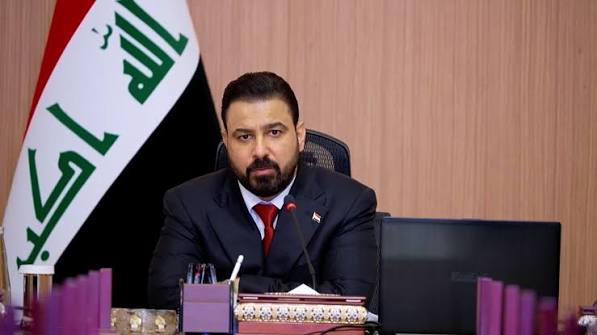
Iraqi Prime Minister Ali al-Zaidi.
After several weeks of tension, Baghdad is now openly acknowledging its search for a formula that would avert an armed confrontation. Ali al-Zaidi says that all political forces support restricting weapons to the hands of the state, that handover mechanisms are under way and that there is neither the intention nor the likelihood of a military confrontation. The compromise taking shape is less about abruptly disarming the factions than about placing their arsenals and structures under the legal and operational authority of the state. One decisive question remains: who will actually control the drones, the missiles and the chains of command?
In Iraq, the debate over the militias changed in nature within a matter of days. Until the beginning of August, Ali al-Zaidi’s government spoke mainly of “restricting weapons to the hands of the state” and held to 30 September as the deadline for all weapons held by militias outside official structures to be handed over to the state. Several factions close to Iran, notably Kataeb Hezbollah, Harakat al-Nujaba and Kataeb Sayyid al-Shuhada, responded that they would not surrender their military capabilities as long as foreign forces remained in Iraq. At that point, the stand-off seemed bound to lead to a show of strength around the militia strongholds and Baghdad’s main thoroughfares.
This prospect had led La Tribune des Nations to examine the case of Jurf al-Sakhar, a closed-off area controlled by Kataeb Hezbollah, as one of the possible tests of Baghdad’s gradual reclaiming of sovereignty. Since then, political developments have pointed to a different course: rather than heading for a head-on confrontation, the various actors are now seeking a formula that would allow some of the armed structures to be preserved while tying them more closely to the state.
30 September: a deadline that has become too dangerous
The 30 September 2026 deadline officially remains in place. It coincides with the announced end of the international coalition’s military mission and, according to Baghdad, was meant to mark the point from which no armed activity could any longer take place outside state institutions. On paper, the principle is simple. In Iraqi reality, it touches on a system built up over more than twenty years, in which parties, brigades of the Hashd al-Shaabi, Iraqi factions of the “axis of resistance”, economic networks and security structures overlap.
The arrest, subsequent release and swift acquittal of Abbas al-Yaqoubi offered a case in point. Head of intelligence for the Baghdad Belt operations within the Hashd and described as a senior figure in Harakat al-Nujaba, an Iraqi faction closely tied to Iran’s Quds Force, al-Yaqoubi had been arrested by the Counter Terrorism Service (CTS), Iraq’s counter-terrorism agency. The case immediately triggered intense pressure from both political and militia quarters. Whatever the legal grounds for his acquittal, the episode laid bare how difficult it is for the organs of the state to confront head-on actors who are at once embedded in certain institutions and tied to factional structures.
It is against this backdrop that the idea of “disarmament” appears to be gradually giving way to looser notions: “organising weapons”, “managing weapons”, handing arsenals over to the Hashd, or placing brigades at the disposal of the commander-in-chief of the armed forces. The semantic nuance is in fact strategic. It makes it possible to seek a political way out without requiring the factions to announce their capitulation publicly.
Qaani, then Qalibaf: averting a rupture without provoking war
The unannounced visit to Baghdad on 10 August by Esmail Qaani, commander of the Quds Force, had already exposed Iran’s dilemma. According to sources cited by Al Jazeera, Qaani delivered a twofold message to political leaders and faction chiefs: Tehran did not want the armed groups to hand over their weapons at this stage, but also wished to avoid a direct confrontation with the Iraqi government.
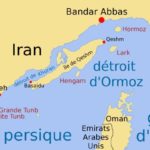
Hormuz adds a major economic lever to this mediation. Shafaq News reported that Qaani’s talks also covered the possibility of guaranteeing Iraqi tankers passage through the strait, at the request of officials in Baghdad. On 19 August, the Speaker of Parliament, Haibet al-Halbousi, formally asked Qalibaf to grant Iraq “special status” for its exports via Hormuz, in order to protect its economic interests. The dependence is considerable: the closure of the strait had caused Iraqi exports to fall from around 3.3 million to 600,000 barrels per day in March. Tehran thus holds indirect leverage over Zaidi at the very moment he is trying to regain control of the militias. One should, however, avoid going beyond the facts: no solid source has so far established an explicit bargain along the lines of “passage through Hormuz in exchange for abandoning disarmament”; the sources show that the two issues are running in parallel and that Iran has an interest in retaining this leverage.
On 21 August, Zaidi himself publicly acknowledged the scale of this vulnerability at the eighth Baghdad Dialogue: the closure of Hormuz, he said, represents “a major challenge”. He also explained that the government was seeking to diversify export routes, expanding capacity at Ceyhan in Turkey and working on outlets to Banias in Syria and Aqaba in Jordan. In time, this diversification will reduce Iran’s room for applying pressure, but it does not yet eliminate it: for now, Baghdad remains heavily exposed to decisions taken in the strait.
The visit by Mohammad Bagher Qalibaf, Speaker of the Iranian Parliament, on 19 and 20 August made this ambiguity even more visible. On arrival, Qalibaf went to the memorial to Qassem Soleimani, former commander of the Quds Force of the Islamic Revolutionary Guard Corps, and Abu Mahdi al-Muhandis, former deputy head of the Hashd al-Shaabi and a central figure among the pro-Iranian militias in Iraq. Both were killed in a US strike near Baghdad airport in January 2020. Qalibaf portrayed the Iraqi “resistance” as one of the components of the country’s strength and framed his visit as part of building a “new regional order”. These remarks appeared to embolden the factions that refuse to disarm.
But the following day, during talks with the Iraqi national security adviser Qassem al-Aboudi, Qalibaf publicly backed the principle of a legal framework placing weapons under the authority of the commander-in-chief of the armed forces. At the same time, Iraqi sources said that his main aim was to secure a softening of Zaidi’s position. Asharq Al-Awsat reported on 20 August that the visit had not achieved all its objectives and that the Prime Minister remained committed to the 30 September deadline.
This apparent contradiction is probably less significant than it seems. Tehran can accept the principle of the state’s legal authority while seeking to prevent the physical disappearance of the arsenals and networks that constitute one of its main levers in Iraq. The question therefore becomes less “should weapons be placed under the authority of the state?” than “what exactly does that authority mean?”
Fayyadh sketches out a compromise formula
The statements by Faleh al-Fayyadh, chairman of the Popular Mobilisation Authority (Hashd al-Shaabi), now give an Iraqi shape to this compromise. Fayyadh points out that the Hashd is an institution under the authority of the commander-in-chief of the armed forces and that it does not itself have the power to decide on war. He also asserts that certain brigades must be gradually detached from their political or factional affiliations.
At the same time, he clearly rejects the idea of disarmament achieved by force, as well as any outside pressure on the Hashd. In his view, the US withdrawal should pave the way for new security arrangements, notably to protect Iraqi airspace and the country’s sovereignty. The language used is telling: the aim is less to eliminate existing forces than to place them within a state framework.
This approach chimes with proposals under discussion within the Shia Coordination Framework. Hadi al-Amiri, head of the Badr Organisation, and Ammar al-Hakim, leader of the National Wisdom Movement (al-Hikma), two leading figures on Iraq’s Shia political scene, have been named among the officials tasked with seeking mediation with the most reluctant factions. Several scenarios are being floated: handing over heavy weapons to an official body, transferring certain capabilities to the Hashd, placing the brigades under the direct command of the commander-in-chief of the Iraqi armed forces, or drawing a clearer line between the military structures and their political parties.
First weapons handovers under way
On 21 August, Zaidi provided further official confirmation: according to him, some factions have already handed over their weapons, severed their factional ties and joined the Hashd al-Shaabi, while the government continues its dialogue with other groups. He added that all political forces were “in full agreement” on continuing to restrict weapons to the hands of the state, and that work was now focused on the practical mechanisms for the handover. The statement does not yet make it possible to gauge the scale of the arsenals transferred, but it confirms that the process has moved beyond political discussions alone.
Earlier reports give an idea of the weaponry involved. According to The New Arab, an Iraqi official said that a faction with a political wing had already handed over to the state some twenty Iranian fixed-wing drones, as well as missiles with a range of more than 100 kilometres, in the presence of US representatives. The faction’s identity has not been made public and the exact arrangements remain opaque, but the episode shows the kind of weaponry on which the government is focusing its attention: attack drones and missiles capable of striking beyond the country’s borders, rather than rifles, mortars or conventional artillery.
The choice makes sense. The most sensitive weapons are not those used to protect a headquarters or provide local security, but those that allow a faction to pursue an armed foreign policy independent of Baghdad. A drone launched at a US base, a Gulf state or Israel could drag Iraq into a regional crisis without any decision by the government. It is precisely this strategic autonomy that Zaidi is seeking to eliminate.
This development extends the shift we noted as early as 30 June in “Facing the militias, Zaidi opens a front against corruption”: restoring the Iraqi state cannot be reduced to the physical collection of weapons. It requires gradually regaining control over chains of command, budgets, appointments, logistics networks and decisions on the use of force.
Disarm or absorb: what is really at stake
The compromise taking shape could therefore look more like absorption than disarmament. The brigades would keep some of their men and perhaps some of their equipment, but would be placed within an official chain of command, their heavy weapons would be inventoried or stockpiled, and their ability to decide unilaterally on an external operation would be gradually curtailed.
Such a solution has an obvious advantage: it avoids turning 30 September into a day of confrontation between the Counter Terrorism Service (CTS), the Iraqi army and the most powerful factions. It also offers militia leaders an honourable way out. They can claim that they have not “disarmed”, while the government can maintain that no strategic weapon now remains outside its authority.
But everything will depend on what that authority actually amounts to. If the drones and missiles are genuinely transferred to state-controlled depots, if their use requires a government order and if the brigades’ officers answer to a national chain of command, the change will be substantial. If, on the other hand, the arsenals remain physically under the control of the same commanders and can be handed back at the factions’ request, the reform risks being little more than a legalisation of the status quo.
30 September becomes a test of sovereignty, not D-Day
The latest statements therefore point to a clearer conclusion than they did only a few days ago. Zaidi says there is “neither the intention nor the likelihood” of a military confrontation and that all political forces support restricting weapons to the hands of the state. Qalibaf publicly accepts the framework of the authority of the commander-in-chief of the armed forces. Fayyadh rules out any autonomous decision by the Hashd to go to war and insists on the need to bring weapons under organisation without imposing disarmament by force. According to the Prime Minister himself, some factions have already begun handing over their weapons or severing their factional ties in order to join the Hashd. At this stage, therefore, the scenario of a controlled absorption appears more credible than that of a head-on clash around 30 September.
That does not mean the issue is settled. Kataib Hezbollah, Harakat al-Nujaba and other organisations close to Tehran remain opposed to a complete handover of their arsenals. Chains of command remain intertwined, stockpiles are difficult to inventory and political rivalries are intact.
The real verdict will therefore not necessarily come on the evening of 30 September. It will be read in the weeks that follow: who will give orders to the brigades, who will control the missile and drone depots, who will appoint the commanders and, above all, who will be able to decide whether an Iraqi weapon is used against another state? Only under these conditions will “restricting weapons to the hands of the state” cease to be a political formula and become a change in sovereignty. Iraq may not need to disarm, within a few weeks, all the forces born of the wars of the past twenty years. It must, however, demonstrate that none of them can any longer decide on war and peace alone.
The contrast with Lebanon is striking. In Iraq, the main components of the Shia system are now seeking a formula that would integrate weapons into, or subordinate them to, the state without forcing the factions into a public capitulation. In Lebanon, by contrast, Hezbollah continues to reject disarmament and remains outside any negotiations on the matter, even as the Lebanese state attempts to extend its authority over the whole of its territory. La Tribune des Nations recently illustrated this with the case of Ali al-Tahir hill.
The parallel nevertheless has its limits. The Hashd al-Shaabi is legally part of Iraq’s security apparatus, even if some of its brigades retain factional loyalties and chains of command; Hezbollah remains a politico-military organisation separate from the Lebanese army. But the divergence is telling: in Baghdad, Tehran and some of its allies now appear willing to negotiate the terms of institutional subordination to the state; in Beirut, Hezbollah continues to regard giving up its military autonomy as a red line. Two different answers to the same question of sovereignty are thus emerging within the former “axis of resistance”.
Read more in La Tribune des Nations…
• Iraq: Jurf al-Sakhar, the forbidden territory where Baghdad wants to restore its sovereignty
• Facing the militias, Zaidi opens a front against corruption
• Will Iran revive the “axis of resistance” after sanctions are eased?
• South Lebanon: Ali al-Tahir hill, the strategic chokepoint the Lebanese army has not crossed
And elsewhere.
• Al-Mashhad — Zaidi: consensus on weapons and alternative oil export routes (21 August 2026)
• Shafaq News — Qaani in Baghdad: militia weapons and exports via Hormuz (10 August 2026)
• AP — Hezbollah rejects disarmament in Lebanon (15 August 2026)
Translated from French. The French original prevails.