The view from Tehran.
The Jordanian newspaper Al-Rai has published an article by the Jordanian writer and political analyst Ahmad Dhayban on the escalating campaigns of executions and arrests in Iran, arguing that these measures reflect the fear and confusion gripping the Iranian regime in the face of internal crises and recent developments in the region.
Ahmad Dhayban refers to the admission by Iran’s police chief, Ahmad Reza Radan, that some 6,500 people have been arrested since the start of the latest war on 28 February, accused of links to espionage, collaboration with foreign entities or anti-government activities.
The author added that Radan had also disclosed 567 cases involving individuals in contact with foreign entities, a term the Iranian authorities habitually use to refer to opposition forces, in particular the People’s Mojahedin Organization of Iran (PMOI), and stressed that the wave of arrests linked to January’s uprising is still continuing.
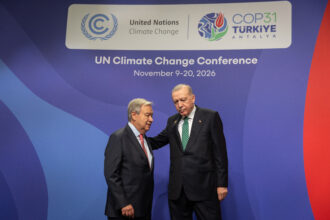
In the same vein, Dhayban drew attention to the open letter sent on 18 May by more than 300 international experts in law and human rights, including a Nobel laureate, to the Secretary-General of the United Nations, António Guterres, warning of a dramatic escalation in executions in Iran.
He explained that the signatories of the letter, among them former United Nations officials, presidents of international courts and eminent legal experts, asserted that the Iranian authorities are exploiting the atmosphere of war and regional instability to wage a sweeping campaign of political repression against opponents and protesters.
The Jordanian writer stressed that political prisoners and protesters face arbitrary death sentences after trials that fall short of international legal standards, arguing that what is happening reflects the continuation of a policy of impunity associated with the 1988 massacres.
Dhayban asserted that recent developments reveal the extent of the Iranian regime’s anxiety over the domestic situation, noting that the popular uprising the country experienced last January exposed the regime’s fragility in an unprecedented way.
He argued that the real danger preoccupying the regime’s leaders lies not so much in the external war as in the anger of Iranian society and the growing role of the organised opposition, adding that the authorities particularly fear the repercussions of the post-conflict phase and the possibility of fresh popular protests erupting as a result of deteriorating economic and living conditions.
He also drew attention to the massive deployment of security forces on Iran’s streets, saying that this reflects preparations to confront any potential popular uprising.
Concluding his article, Dhayban noted that since the start of the latest war the National Council of Resistance of Iran has adopted the slogan “Peace and Freedom”, and that it welcomed the ceasefire as soon as it was announced, stating that the establishment of lasting peace in Iran and the region requires the fall of the current regime and the establishment of a democratic republic by the Iranian people and the Resistance.
Translated from French. The French original prevails.