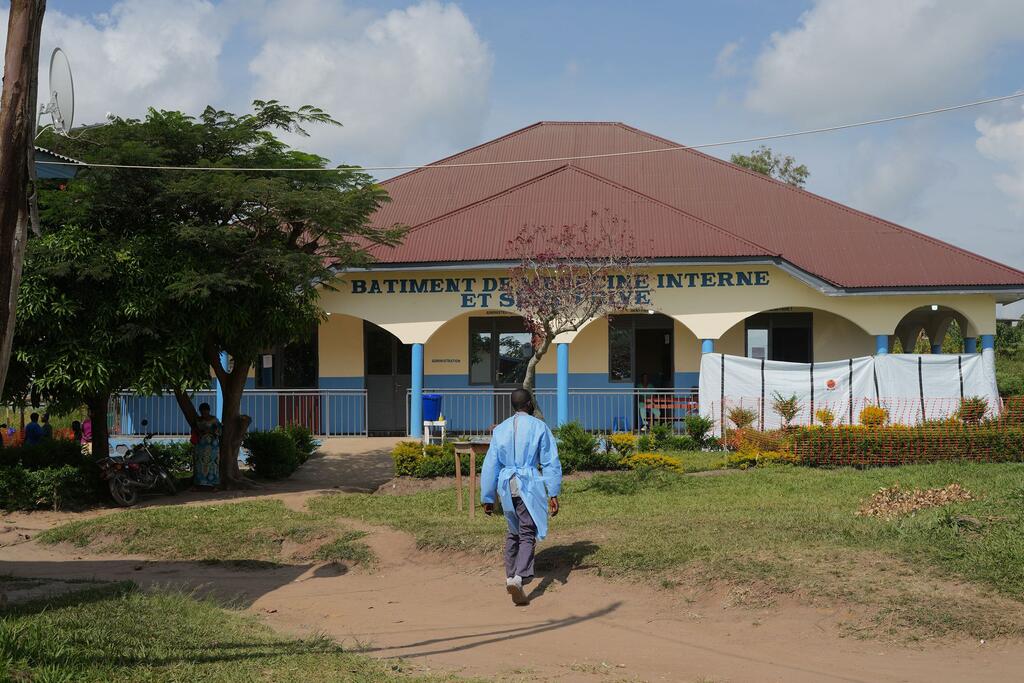
Rwampara General Referral Hospital in Ituri province, DRC. © WHO / Joël Lumbala
As the situation evolves “rapidly, with cases and deaths reported in several health zones” of eastern Democratic Republic of the Congo (DRC), four nurses who had been receiving treatment for Ebola virus disease, caused by the Bundibugyo strain, have been discharged from a hospital in Bunia after recovering from the disease, the Geneva-based UN global health agency, WHO, has said.
According to the World Health Organization (WHO), further recoveries are expected as the outbreak response steps up, particularly when patients are diagnosed early and can access care. These health workers had cared for people with Ebola at their facility in early May. A laboratory worker had also recovered earlier last week, the UN agency said, bringing to five the total number of people who have overcome the virus. In all, 16 health workers have been reported to have contracted Ebola during this outbreak.
282 confirmed cases, including 42 deaths
“This is a victory worth celebrating. It sends a strong message that it is possible to recover from Ebola when people seek treatment quickly at a specialised health facility,” Dr Dieudonné Mwamba Kazadi, Director General of the DRC’s National Institute of Public Health, said in a statement.
According to a count conducted on Sunday 31 May, 282 cases have been confirmed, including 42 deaths, after 19 new positive test results were recorded, according to data released by the Congolese Ministry of Health. For its part, WHO says that 349 suspected cases are currently under monitoring and awaiting test results.
During his visit to Bunia on Saturday 30 May, the WHO Director-General, Dr Tedros Adhanom Ghebreyesus, stressed that, although there is as yet no licensed vaccine or treatment for the Bundibugyo strain, “all is not lost”.
“It is possible to survive Ebola caused by the Bundibugyo virus with good-quality medical care, and some people here in Ituri have already recovered. Getting treatment early makes all the difference,” he insisted.
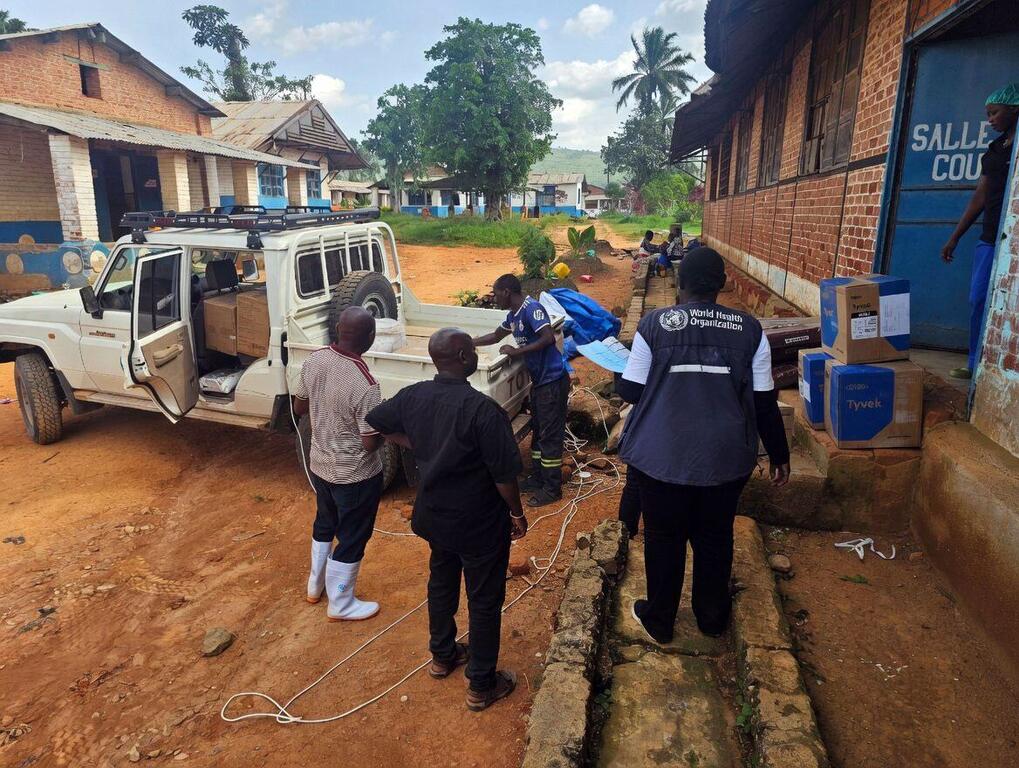
© WHO Infection prevention and control teams are stepping up their work in Mongbwalu against the Ebola outbreak caused by the Bundibugyo virus.
The central role of communities
WHO advisory groups announced last week that several candidate treatments and vaccines were promising enough to warrant being prioritised for clinical trials. WHO is now working closely with the DRC and Uganda to “rapidly launch randomised controlled trials of candidate vaccines and treatments”.
In the meantime, WHO is relying on “proven public health measures that remain effective in slowing transmission and supporting patients’ full recovery”.
At the heart of this response is the recognition that communities are central to the solution. According to the UN agency, success will depend on the trust, engagement and leadership of local communities. “National and provincial authorities, with the support of WHO and partners, are stepping up dialogue with community leaders, women’s groups, youth representatives, religious leaders and the private sector in order to better understand local concerns and jointly develop culturally appropriate and effective solutions,” the Congolese government and the UN agency stressed in a joint statement.
Early detection, contact tracing and safe burials
However, challenges remain, notably the early detection and isolation of cases, contact tracing, safe and dignified burials, the strengthening of infection prevention and control measures in health facilities, and greater community awareness.
In this regard, the latest health update issued yesterday, Sunday, by the Congolese Ministry of Health reports “five patients who escaped”. They fled the hospital when angry residents set fire to a treatment tent. The escalating violence and attacks on health facilities in the DRC are heightening fears about the spread of the virus.
The Government and WHO are therefore calling on all communities to continue adopting protective behaviours, including regular hand hygiene, seeking care early at health facilities and sharing reliable information.
After the signs of hope from Bunia, where four nurses have recovered, WHO points out that Kinshasa has “unrivalled experience in this field, having successfully contained multiple Ebola outbreaks in the past”.
“This experience, combined with strong political leadership at the highest level of the State and renewed international solidarity, provides a solid foundation for bringing the current outbreak under control,” the UN agency argued.
Translated from French. The French original prevails.