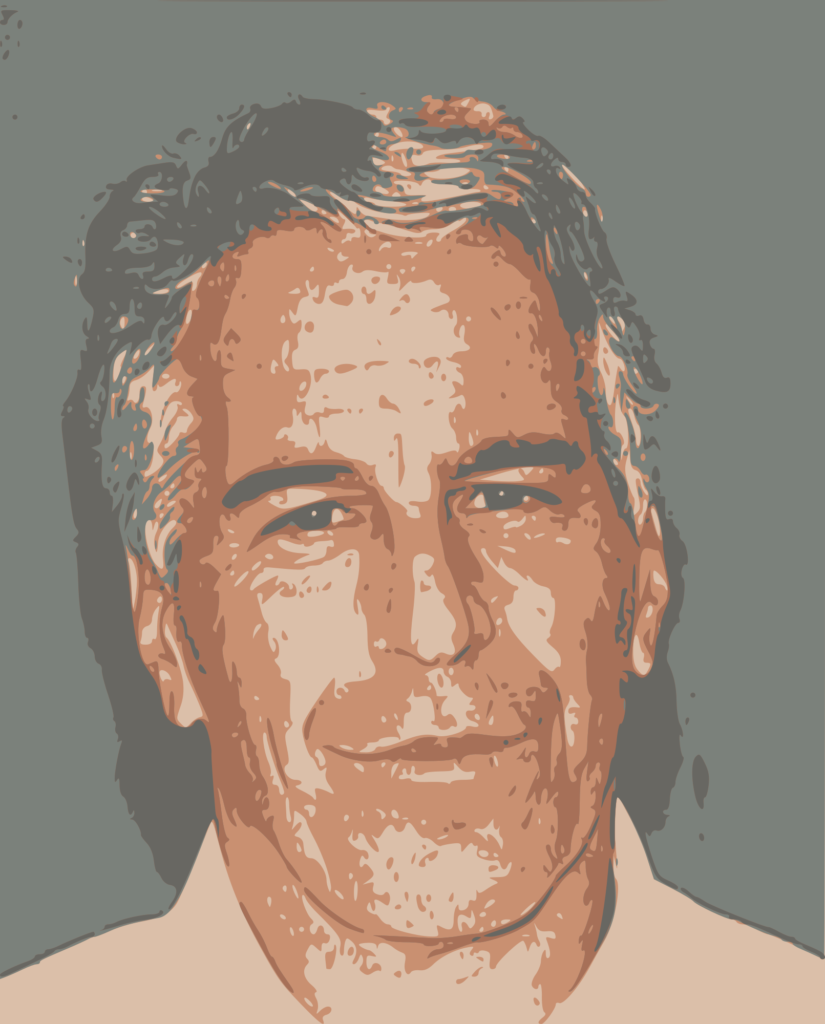
For far too long, the Jeffrey Epstein affair has been reduced to a string of sex scandals, lists of names and media fantasies: in short, the excesses and horrors of a single man. All of this has served as a convenient smokescreen for the darker, at times almost cabbalistic, revelations suggested by the latest documents released by the United States Department of Justice. That reading was comfortable, but profoundly inadequate. Attention focused early on a handful of prominent names, but access to nearly 300,000 newly released documents could either shed light on certain questions or, conversely, drown the truth in an overwhelming flood of information. The names of people who knew Epstein, directly or indirectly, are now emerging at a rapid pace.
What is emerging as the declassified Department of Justice documents are made public is not merely the portrait of a sexual predator shielded by networks of influence, but that of an individual placed at the heart of a global web of political, economic, financial and diplomatic relationships whose overall coherence still largely eludes conventional judicial analysis.
What is striking today is not merely the international reach of the Epstein network, but the near-total absence of legal proceedings against the prominent figures named in these documents. Ministers, former heads of state, billionaires, academics, intelligence officials, princes, bankers, financial intermediaries: the names are circulating, the records exist, the testimonies keep piling up, and yet the judicial machinery appears paralysed. This situation inevitably feeds what are often dismissed as conspiracy theories. This asymmetry raises a central question, uncomfortable but unavoidable: was Epstein simply a protected criminal, or an influence operator working in a grey zone between sex, money, information and power?
Epstein: a system beyond the scandal
The more documents the US Department of Justice releases, the less the Jeffrey Epstein affair looks like merely a criminal case and the more it resembles a major symptom of the excesses of globalised power. What these records reveal is not only the trajectory of one predatory individual, but the existence of an opaque international ecosystem in which political leaders, economic decision-makers, leading scientists, financial intermediaries and diplomatic figures crossed paths, without any collective accountability ever being established.
Ultimately, the problem is not merely moral or criminal but clearly geopolitical. Epstein did not thrive on the fringes of the system, but at the very heart of the great transnational networks of power. And despite the scale of the revelations, no comprehensive judicial investigation has been opened into the figures named in these files. This explains the constant insistence on the presumption of innocence for everyone mentioned in documents that are now public, even though many passages were redacted before publication. This total inertia raises a weighty question: what exactly is being protected by refusing to pursue this affair fully through the courts?
Epstein: an agent of influence in a borderless world
Jeffrey Epstein was neither a billionaire industrialist, nor a head of state, nor an official diplomat. Yet, having supposedly built his fortune through speculation, he moved freely among the world’s centres of decision-making. In the history of international relations, individuals with no official status but with universal access are rarely insignificant. They are often facilitators or intermediaries, what English-language literature calls go-betweens. They serve as conduits between spheres that prefer not to be seen publicly as connected.
Epstein offered far more than private parties. He offered a space beyond sovereignty, a place where legal, moral and sometimes even diplomatic rules seemed suspended. In such spaces, sex becomes a strategic instrument and a point of vulnerability for many powerful people. Not merely to satisfy urges, but to create exposure, generate dependence, establish asymmetrical relationships and provide leverage for future pressure. In the world of intelligence and influence operations, this mechanism is well known. This is the notorious kompromat, compromising material long favoured by the Russian services and still actively used by the Chinese services to bring someone down.
The real question, then, is not whether Epstein engaged in explicit blackmail, but whether he cultivated implicit dependence. A dependence in which everyone knew they had crossed a line, and that this transgression could one day be used against them. By this logic, Epstein did not even need to act directly. His mere existence, his possession of information and his control over access were enough to make him a power broker. Otherwise, why so many people involved, so many documents and such an abundance of information available?
Sex, money, information: the winning trio of discreet empires
This is nothing new. Global power no longer operates mainly through institutions, which find it increasingly difficult to act, but through parallel networks in which money, information and compromising material circulate freely. In this context, sex is not an excess; it is the icing on the cake. Today, it is one of the most effective ways of getting rid of someone who has become useless to the system. It is a political currency. It buys silence, loyalty and sometimes access to decision-making or to closed circles.
What now shocks global public opinion, and the media more timidly — notably in France — is not only the list of names, but the disappearance of the principle of accountability. No major systemic trial. No investigation into the networks. No apparent desire to understand the real functions of this system. This absence is not neutral. It feeds the notion that certain global elites operate in a zone of structural impunity, shielded by the very complexity of the system they embody. This is precisely what appears to be happening in the case of Jack Lang, who for decades has managed to slip out of every scandal and persistent rumour.
In an unstable world marked by strategic competition between powers, information warfare and the weakening of democracies, this affair marks a symbolic breaking point. We have long known that we live in an era of hybrid warfare, but the Epstein affair should reinforce the idea that such dynamics have existed for far longer than we imagined, and on a global scale. An already weakened West has long been undermining the very moral values it constantly seeks to promote internationally. Given the number of European and American public figures implicated, the Epstein affair may well be another nail in the coffin of a Western dominance founded on double standards.
A political bombshell for the international order
This affair further weakens Western discourse on governance, the rule of law and elite accountability. It feeds public distrust of leaders and provides endless fuel for anti-establishment narratives, whether populist, conspiracist or authoritarian. Our adversaries are already relishing the chance to exploit our weaknesses.
Globally, the message it sends is disastrous: certain private networks appear able to circumvent the rules indefinitely without ever being troubled. This further weakens international institutions, reinforces strategic cynicism and accelerates the fragmentation of the world order. At a time when authoritarian powers are already denouncing Western hypocrisy, Epstein is becoming a geopolitical argument against the liberal model itself.
As long as this affair is treated as a series of isolated sex scandals, it will continue to have a corrosive effect. For Epstein was no accident. He was a revealer, laying bare the way real power circulates, protects itself and conceals itself in a globalised world. Refusing to see this amounts to accepting that sex, money and influence will go on shaping the international order in the shadows, beyond any democratic oversight.
Translated from French. The French original prevails.