The confirmation by state television of the deaths of the Supreme Leader of the Islamic Republic, Ali Khamenei, and of several senior regime figures, such as the commander of the Revolutionary Guards, Mohammad Pakpour, and Ali Shamkhani, a close adviser to the Supreme Leader, has as its first consequence a weakening of the military-clerical regime of the mullahs and the Pasdaran.
However, without the defection of part of the army or of the Revolutionary Guards, who control the economy, the nuclear programme and internal security, it is hard to see how the joy of the Iranians who took to the streets on hearing of the death of the man responsible for last month’s bloody crackdown could turn into the fall of the regime installed by the Islamic Revolution of 1979.
The risk of civil war cannot be ruled out. On the one hand, because a population largely hostile to its current leaders could find the courage to take to the streets against the regime once again, while the regime’s supporters remain highly mobilised. Moreover, among Iran’s 92 million people there are several ethnic and religious minorities. The Kurds in the north or the Baloch could take advantage of the turmoil to secede. Even if, according to some Iranian experts, these large minorities are attached to Iran’s national integrity. That remains to be seen.
Geneva as a smokescreen
Other regional and international consequences are emerging after this military operation, prepared for months by the intelligence services and armed forces of Israel and the United States.
For Geneva, which hosted negotiations between the Trump administration’s envoys, Steve Witkoff and Jared Kushner, an Omani mediator, Sayyid Badr Albusaidi, and the Iranian Foreign Minister, Abbas Araghchi, as recently as the eve of the military intervention, this is yet another blow dealt by Trump to Switzerland’s standing as a diplomatic hub. These Geneva meetings now look like a smokescreen, while military action had been in preparation for weeks, launched the very day after a round of negotiations.
Iran has the means to set the region ablaze
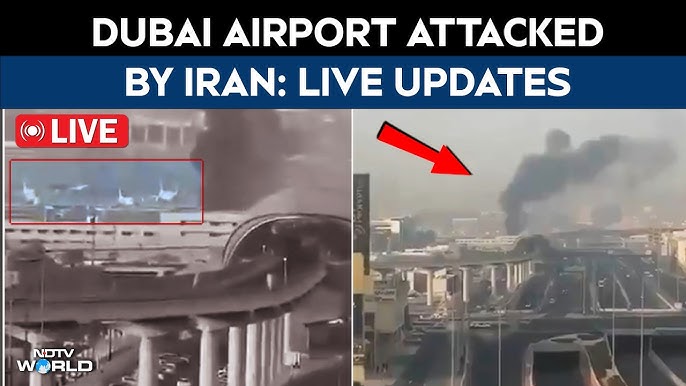
Unlike in the Twelve-Day War, Iran has not merely retaliated by firing missiles at Israel. By targeting US bases in the Arab states of the Persian Gulf and striking Riyadh, Dubai and Manama, Tehran could ignite the powder keg of the long-standing regional rivalry between Shias and Sunnis. Saudi Arabia’s very strong reaction points to a possible escalation and a regional conflagration.
The Shia-Sunni rivalry
Iran does indeed have the means to inflame the region by bringing its proxies into the conflict, such as Lebanon’s Hezbollah, albeit weakened by Israeli operations in southern Lebanon, or above all Yemen’s Houthis, who have so far not fired missiles at Israel, as they have done on many occasions since 7 October. Tehran can also mobilise the Shia minorities in the Gulf, in Dubai, Bahrain or Oman, and as far afield as Lebanon, to destabilise the authorities. A resurgence of terrorist attacks in the West cannot be ruled out either.
Another consequence of the operation is the weakening of one of Russia’s few allies, which supplies it with, among other things, the notorious Shahed drones. After the fall of Bashar al-Assad and the weakening of Hamas, this is potentially a fresh setback for Vladimir Putin. He could nonetheless welcome seeing this regional conflict keep the United States occupied and, above all, push up the price of oil, a vital source of funding for his war in Ukraine.
For Donald Trump, finally, it is a risky gamble just months before the midterms in November, as his MAGA base is strongly opposed to American interventions abroad, which are very costly and change nothing in their daily lives. With the death of the Supreme Leader, however, he could be credited with having eliminated the figurehead of the regime most hostile to the United States, as Barack Obama was after announcing the death of Bin Laden.
Translated from French. The French original prevails.