Geneva, 18 February 2025 – The Office of the United Nations High Commissioner for Human Rights has expressed deep concern at the intensifying crackdown in Tunisia. A wave of mass arrests has targeted activists, lawyers, journalists and opposition figures, raising serious concerns about respect for fundamental rights and the principles of the rule of law in the country.
According to Volker Türk, the United Nations High Commissioner for Human Rights, these detentions constitute “a flagrant violation of the fundamental freedoms of opinion and expression, the cornerstone of any democratic society”. He called on the Tunisian authorities to “immediately put an end to this persecution and respect their international human rights obligations”.
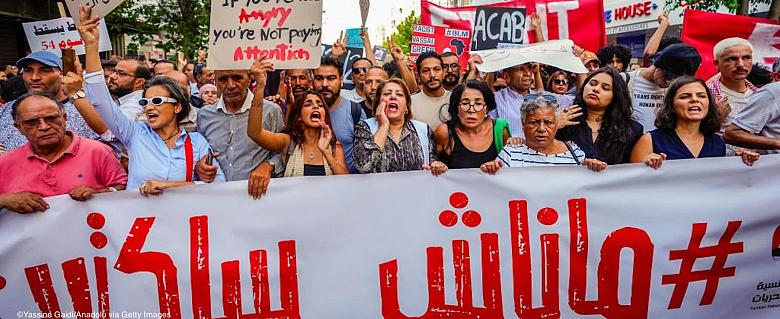
The trials looming in this tense climate are raising concerns about their fairness. More than 40 political opponents are due to be tried in early March by the Tunis Court of First Instance, at least seven of whom have been held in pre-trial detention since February 2023. They are accused of “conspiracy against the State” and terrorism-related offences, while some who are in exile will be tried in absentia. Human Rights Watch has denounced “excessively vague charges”, arguing that they are chiefly intended to stifle all political dissent.
The “Instalingo” case, which ended in prison sentences ranging from 5 to 54 years for 41 people, illustrates the excesses of the Tunisian justice system. Among those convicted are journalists and bloggers prosecuted for “plotting against State security” and “offending the President of the Republic”. The Office of the United Nations High Commissioner for Human Rights points out that “judicial guarantees and the right to a fair trial must be respected in all circumstances”.
Meanwhile, the situation of political prisoners is becoming increasingly alarming. Several detainees have gone on hunger strike in protest at their prolonged incarceration and the conditions of their detention. Abderrazak Krimi, a project director at the Tunisian Council for Refugees, has entered the third week of his hunger strike following his arrest last May, when he was accused, together with the NGO’s director, Mustapha Djemali, of providing shelter to irregular migrants from sub-Saharan Africa.
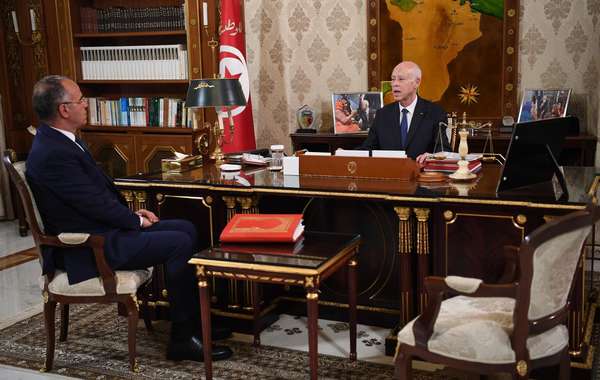
Abir Moussi, a lawyer and president of the Free Destourian Party, who has been imprisoned since October 2023 and faces prosecution in five cases, two of them related to freedom of expression, has also been on hunger strike for a week. Amnesty International has condemned “targeted political repression” aimed at opposition figures.
Sihem Bensedrine, 75, former president of the Truth and Dignity Commission, remains behind bars after her detention was extended by four months last month. Her worrying state of health led to her being hospitalised after two weeks on hunger strike. The International Federation for Human Rights (FIDH) expressed its “deep concern over the judicial harassment and the instrumentalisation of the justice system against human rights defenders in Tunisia”.
In light of this situation, the Office of the UN High Commissioner for Human Rights is calling for the immediate release of all those arbitrarily detained and urging the Tunisian authorities to guarantee the transparency and independence of the judicial system. It is also pressing for the release, on humanitarian grounds, of elderly prisoners and those in poor health. In his statement, Volker Türk stressed: “Tunisia, the cradle of the Arab Spring, must remain a country where citizens can freely express their opinions without fear of reprisals. It is imperative that the authorities review their criminal legislation to bring it into line with international human rights standards”.
The international community is following the situation closely, and several non-governmental organisations are calling on the European Union and the United Nations to step up diplomatic pressure on Tunis to ensure respect for fundamental rights and put an end to its authoritarian drift.
Translated from French. The French original prevails.