In Geneva, the DRC reaffirmed its diplomatic offensive for recognition of the “génocost” and presented an unprecedented fund for victim reparations. Kinshasa now intends to take this battle to New York.
The Democratic Republic of the Congo is pressing ahead with its international diplomatic campaign. After Geneva, where its representatives were received by the High Commissioner for Human Rights and addressed the Human Rights Council, Kinshasa intends to put the issue of mass crimes committed on its territory for more than thirty years on the United Nations agenda. This initiative, which is explicitly aimed at Rwanda and the M23 armed movement, will continue in the coming weeks in New York, before the General Assembly and the Security Council. The Congolese government nevertheless stresses that there is no incompatibility between this diplomatic offensive and the ongoing negotiations with Kigali.
In Geneva, two key figures in this advocacy campaign, Patrick Fata, Director General of the National Fund for Reparations for Victims (FONAREV), and François Kakese Simasa, Executive Coordinator of the International Commission for Victim Assistance and Support for Reforms (CIA-VAR), set out the efforts under way to address the suffering of victims and to denounce what they call génocost — a genocide driven by the plundering of the Congo’s mineral resources.
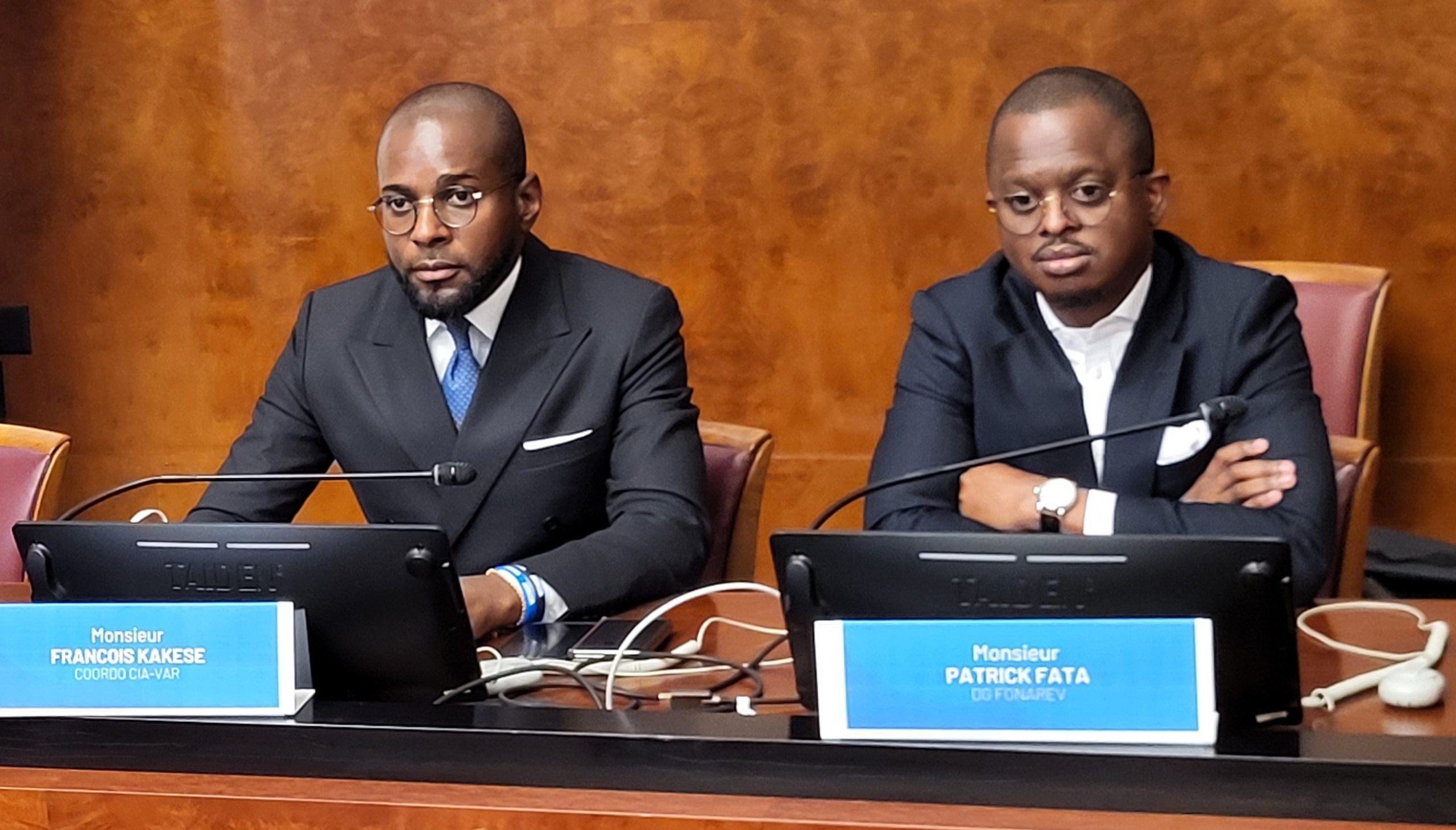
Established in 2022, FONAREV is an unprecedented institutional innovation in the DRC. It has sustainable, independent funding, drawn notably from mining royalties, a carbon tax and insurance contributions. “Unlike other public bodies, the legislature made sure that we benefit from regular sources of funding,” Patrick Fata stressed. “It is an unprecedented model that allows the Congolese state to finance reparation services for victims directly.”
More than 400,000 victims have already been pre-identified. Mobile clinics are operating in the worst-affected provinces, such as Tshopo and Ituri, and the first compensation payments have been initiated for survivors holding final judgments. “We wanted to put in place an innovative response for millions of victims, dead or surviving, who have been abandoned through more than thirty years of conflict,” Fata insisted. “It is a long-term undertaking, but we are moving in the right direction.”
For François Kakese, the advocacy goes further still: the aim is to secure recognition by the international community of the reality of the crimes committed. “For more than thirty years, numerous studies have documented staggering figures ranging from 10 to 12 million deaths. Among these crimes are acts of extreme violence, including crimes of genocide. All acknowledge the existence of genocidal intent, because entire peoples have been decimated. What sets this genocide apart is that its motive lies in the exploitation of the country’s wealth. This is what we now call the genocost.”
A side event held during the 60th session of the Human Rights Council shed light on this tragedy, with the participation of researchers, lawyers and academics. Kakese issued a clear warning: “It is urgent that the world recognises what happened, and what sadly continues to happen, amid a deafening silence.”
By placing the recognition of mass crimes on the international agenda and proposing an unprecedented reparations mechanism, the DRC is seeking to combine memory, justice and reconstruction. Geneva was only one stage: the diplomatic battle now moves to New York, where Kinshasa hopes to convince the international community that the question of the genocost can no longer remain in the shadows.
Translated from French. The French original prevails.