*Article produced with the assistance of AI
Beijing’s territorial claims and repeated incursions around disputed islands are fuelling an escalation of tensions with its South-East Asian neighbours and the United States. As the UN tries to encourage dialogue, multilateralism is struggling to contain a strategic rivalry that is redrawing the balance of power in the Indo-Pacific region.
A sea at the heart of rival ambitions
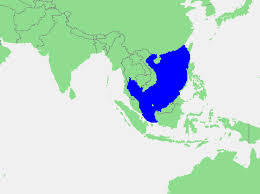
The South China Sea covers some 3.5 million km², linking the Pacific Ocean to the Indian Ocean. It is one of the busiest shipping routes in the world: nearly a third of international maritime trade passes through it, including much of the oil bound for China, Japan and South Korea. But beyond its role as a trade corridor, the sea is also rich in resources: proven and potential hydrocarbon reserves, exceptional marine biodiversity and fishing grounds that are vital to millions of people.
These assets make it a strategic and fiercely contested area. China claims almost the entire sea, relying on the famous “nine-dash line” drawn as early as 1947. Opposing it, several countries – Vietnam, the Philippines, Malaysia, Brunei and Indonesia – dispute these claims and defend their exclusive economic zones as defined by international law.
Beijing flexes its muscles
Over the past decade, China has tightened its grip in a visible and spectacular fashion. It has built artificial islands, some of them turned into military bases equipped with airstrips, radar and air-defence systems. These advances, often described as a “fait accompli”, allow it to project growing naval power and to control strategic sea lanes.
Incidents are multiplying: Chinese coastguard vessels blocking the path of Philippine boats, verbal clashes between Vietnamese fishermen and Chinese patrol boats, accusations of intimidation. These episodes are a reminder that the militarisation of the area is a reality and that the fragile balance could tip into escalation at any moment.
Neighbours resist, but remain divided
Faced with this pressure, the coastal states are responding in different ways.
- The Philippines is strengthening its military alliance with the United States, stepping up joint exercises and allowing Washington greater use of bases on its territory.
- Vietnam is modernising its navy and does not rule out closer cooperation with other powers, while avoiding a head-on confrontation with Beijing.
- Malaysia and Brunei, more cautious, favour bilateral dialogue and are careful not to jeopardise their economic ties with China.
This diversity of positions weakens ASEAN’s ability to speak with one voice. Beijing deftly exploits these divisions, preferring to negotiate bilaterally with its neighbours rather than accept a binding multilateral framework.
The United States as arbiter… and protagonist
Washington casts itself as the guarantor of “freedom of navigation”. Its warships regularly sail through the area to challenge Chinese claims and demonstrate their commitment to regional allies. But behind this defence of international law, the United States is above all seeking to contain Chinese expansion in the Indo-Pacific.
The US administration has also stepped up the building of regional alliances:
- the Quad (United States, India, Japan, Australia),
- AUKUS (United States, United Kingdom, Australia),
- and strengthened partnerships with the Philippines and Japan.
These arrangements are intended to encircle China and preserve a strategic balance, but they also feed the impression, on the Chinese side, of a hostile policy of containment.
The UN’s low profile
In this explosive context, the United Nations is struggling to establish itself as a mediator. Admittedly, the United Nations Convention on the Law of the Sea (UNCLOS), adopted in 1982, defines states’ maritime rights and has already served as the legal basis for a major arbitration: in 2016, the Permanent Court of Arbitration in The Hague ruled in favour of the Philippines, rejecting China’s claims. But Beijing simply ignored the ruling.
The Security Council, paralysed by rivalries between the great powers, remains inactive. China, a permanent member, holds a veto that it would not hesitate to use to block any binding resolution. The UN therefore confines itself to stressing the importance of dialogue and respect for international law, with no real effect on the ground.
A rivalry with global repercussions
The South China Sea is far more than a regional dispute. It illustrates the reshaping of the world order:
- Economically, it exposes the dependence of global supply chains on sea routes and the fragility of international trade in the face of geopolitical tensions.
- Militarily, it marks the return of power politics, with intense naval and technological competition.
- Politically, it highlights the limits of multilateralism and the inability of international institutions to regulate the balance of power.
It has become a prime arena for the Sino-American rivalry. Every maritime incident becomes a test of credibility for Washington and Beijing alike.
Possible scenarios
Three main trajectories are emerging:
- Controlled escalation: tensions persist but stop short of armed confrontation, with each side testing the other’s limits.
- Open confrontation: a military incident spirals out of control, triggering a major crisis and forcing the international community to intervene.
- Pragmatic negotiation: under economic and climate pressure, the coastal states eventually agree on a regional code of conduct, however limited.
For now, the first scenario appears the most likely. But the growing number of incidents increases the risk of a misunderstanding or accident that could trigger an uncontrolled crisis.
Conclusion: a test for multilateralism
The South China Sea is one of the most sensitive flashpoints on the planet. It brings the established power (the United States) and the rising power (China) into direct confrontation, while leaving the coastal states in a position of strategic vulnerability.
Despite its norm-setting role, the UN remains on the sidelines in the face of power politics. More than a mere maritime dispute, this crisis epitomises the international system’s difficulty in managing rivalries between great powers.
If the international community fails to defuse these tensions, the South China Sea could become the stage for a major strategic shift, heralding a world governed less by law than by force.
Translated from French. The French original prevails.