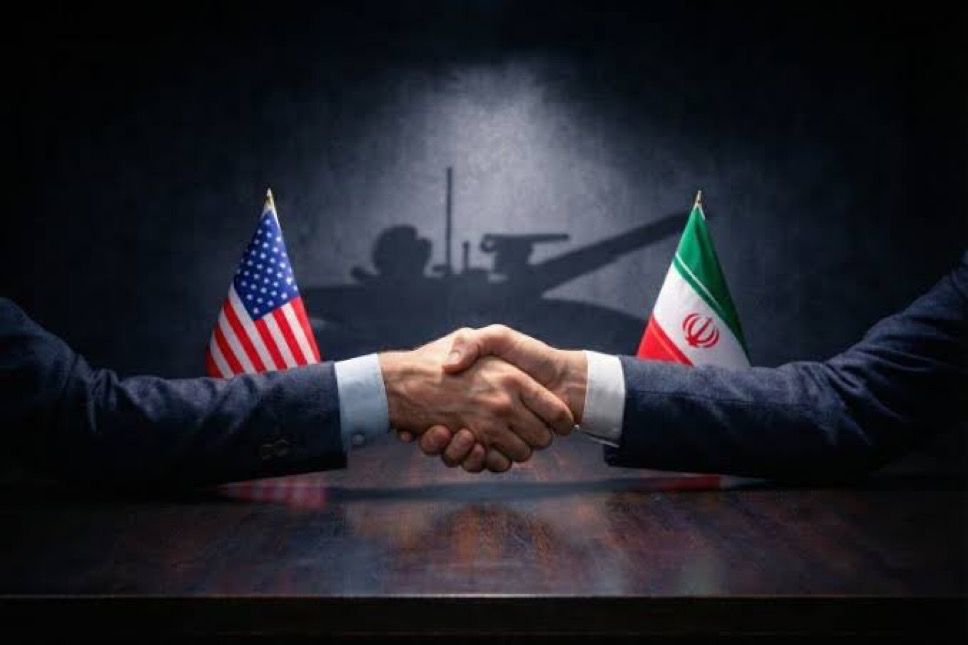
The United States and Iran announced on Monday that they had reached an agreement to bring an immediate end to the hostilities that have engulfed the Middle East for several months. An official signing ceremony is scheduled for Friday 19 June in Geneva, Switzerland, under the auspices of international mediators.
The announcement was made in the morning by Pakistan’s Prime Minister, Shehbaz Sharif, whose country played a role in the negotiations between Washington and Tehran. A few hours later, the US and Iranian authorities confirmed the existence of the agreement.
“The agreement with the Islamic Republic of Iran is now finalised,” US President Donald Trump said on his Truth Social network. The White House leader also announced the forthcoming reopening of the Strait of Hormuz, a strategic shipping lane for the global oil and gas trade, as well as the lifting of the US naval blockade imposed since the start of the conflict.
Financial markets reacted to the announcement. Oil prices fell by more than 4%, while the main Asian stock markets recorded gains, as investors anticipated an easing of regional tensions.
According to the initial information released by Tehran, the agreement provides for the immediate cessation of military operations on all fronts of the conflict, including in Lebanon. Iran’s Deputy Foreign Minister, Kazem Gharibabadi, nevertheless stated that a sixty-day period of negotiations would be needed to resolve several sensitive issues.
Among the issues still under discussion are the lifting of economic sanctions imposed on Iran, the future of the Iranian nuclear programme, the reconstruction of war-affected areas and the establishment of an international mechanism to verify compliance with the commitments made by both parties.
Reports carried by some Iranian media also mention the gradual release of several billion dollars in Iranian assets frozen abroad, although no official confirmation has yet been published.
The international community has reacted to the announcement. The United Nations Secretary-General, Antonio Guterres, described the agreement as “a crucial step towards a peaceful settlement of the conflict”. European governments have also expressed their support for the process, saying they are prepared to consider a gradual easing of sanctions in exchange for verifiable guarantees regarding the Iranian nuclear programme.
Despite the announcement, several observers are urging caution. Although it comes after months of war that have claimed thousands of victims in Iran and Lebanon, a number of questions remain unresolved. The negotiations scheduled for the coming weeks are expected to address, in particular, the arrangements for implementing the announced commitments and the issues still outstanding.
The official signing, scheduled for Friday in Geneva, is expected to bring together several senior international officials. US Vice-President JD Vance has already confirmed his attendance, while the participation of President Donald Trump is still being considered.
First problem to solve: Hezbollah and Israel
Benjamin Netanyahu has reportedly informed Donald Trump that Israel is not bound by the clause concerning Lebanon in the agreement between the United States and Iran. The Israeli military will respond to any attack carried out by Hezbollah. The Israeli military will keep its forces in the positions it occupies in Lebanon.
Translated from French. The French original prevails.