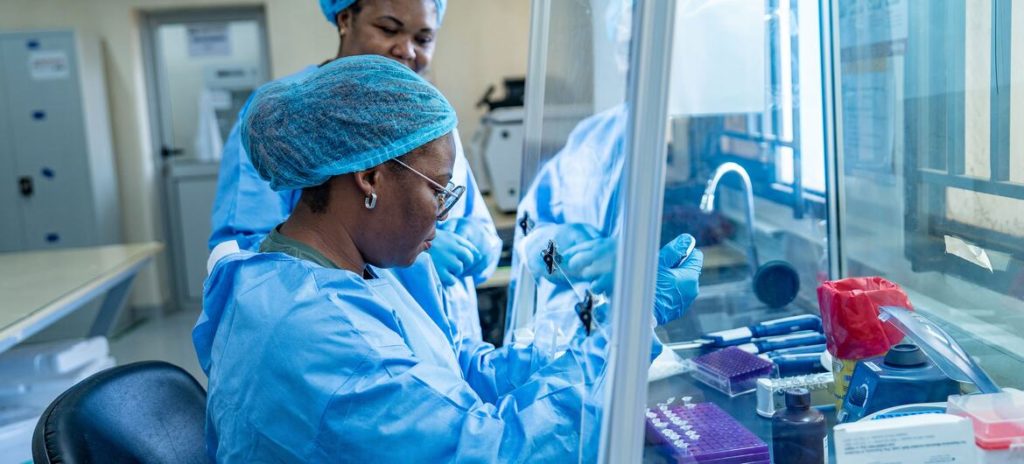
The future WHO Pandemic Agreement is intended to strengthen global health security. © WHO/Josua Mulala Raymond
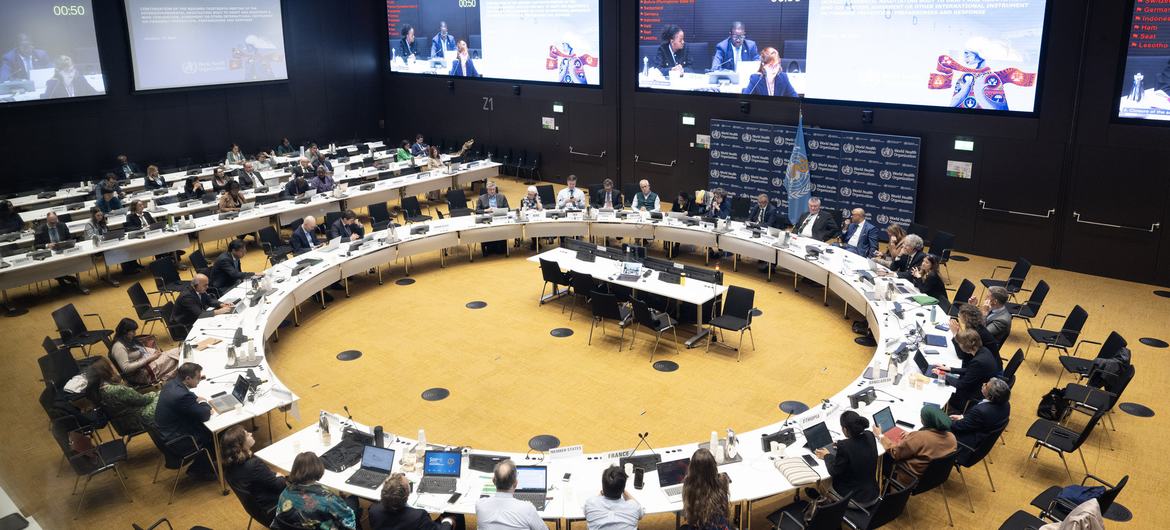
Member States of the World Health Organization (WHO) have decided to hold a new round of negotiations in mid-September on a key element of the pandemic treaty that has been holding up its finalisation for a year. According to the WHO, the Intergovernmental Working Group on the Pandemic Agreement (IGWG) will hold its eighth meeting from 14 to 18 September 2026 in order to “continue negotiations on the Pathogen Access and Benefit-Sharing (PABS) annex of the WHO Pandemic Agreement”.
The decision was taken at the close of the seventh session, which ended on Friday in Geneva. After two weeks of negotiations, countries reaffirmed their commitment to establishing a system allowing the rapid sharing of pathogens with pandemic potential, while guaranteeing the fair and equitable sharing of the benefits arising from their use, including pandemic vaccines, diagnostic tests and treatments.
Finalising this annex is a crucial step towards enabling countries to consider signing and ratifying the WHO Pandemic Agreement, thereby strengthening global health security as well as pandemic prevention, preparedness and response for future generations.
“Even if differences remain, they can be overcome if we keep in mind our common goal: a world in which pathogens and scientific information are shared rapidly, and in which the benefits they generate are distributed fairly and equitably. The task is vital and urgent. The next pandemic will not wait. Nor must we,” said Dr Tedros Adhanom Ghebreyesus, Director-General of WHO, in a statement.
WHO Member States have made progress in negotiations on the annex on pathogen access and benefit-sharing, a central element of the WHO Pandemic Agreement, while agreeing that further discussions were needed to finalise a framework enabling a faster, more effective and more equitable response to future pandemics.
A clear roadmap
During the meeting, Member States further streamlined the draft text while continuing consultations on more complex issues in order to move closer to consensus. The discussions covered several interlinked elements of the PABS system, including the contractual provisions underpinning the framework, the structure of the laboratory networks responsible for sharing and handling pathogens with pandemic potential and their sequence information, and the definition of the benefits arising from pathogen sharing.
While “significant progress” has been made, obstacles remain, acknowledges one of the co-chairs of the IGWG Bureau. “The outstanding issues remain difficult, but we have a clear roadmap to bring this important work to completion,” argued Brazil’s ambassador, Tovar da Silva Nunes.
In May 2025, the World Health Assembly adopted the WHO Pandemic Agreement to strengthen international cooperation on pandemic prevention, preparedness and response. Through resolution WHA78.1, Member States also established an Intergovernmental Working Group, open to all Member States, tasked with carrying out essential work related to the Agreement, including drafting and negotiating the Pathogen Access and Benefit-Sharing system.
Translated from French. The French original prevails.