As regional tensions reshape the strategic balance in the Middle East, one question keeps resurfacing: would Iran step up its support for its regional allies if some of its frozen assets abroad were released?
Several diplomatic and regional sources believe that Tehran could be tempted to reinvest some of its resources in its network of allies, often referred to as the “axis of resistance”.
According to Reuters, Iranian officials are said to have intimated to Lebanon’s Hezbollah that greater financial assistance could be provided if the constraints on Iran’s finances were eased.
A weakened but still strategic Hezbollah
Hezbollah has emerged considerably weakened from its recent clashes with Israel. Loss of life, the destruction of infrastructure and the economic hardship afflicting Lebanon have diminished the Shia movement’s capabilities.
Before these events, several Western estimates put Iran’s annual support for Hezbollah at anywhere between several hundred million and nearly a billion dollars, depending on the year and the method of calculation used. This aid helped to fund salaries, social programmes and media outlets affiliated with the movement, as well as certain military activities.
Despite this weakening, Hezbollah remains one of the main instruments of Iran’s regional influence. Founded with the backing of the Revolutionary Guards in the 1980s, it retains a central place in Tehran’s strategy of deterrence against Israel and the United States.
An extensive and changing regional network
Hezbollah is just one part of a wider network of movements allied with Iran.
In Yemen, the Houthis have for years received Iranian military and technological support, particularly in the fields of drones and missiles. Their ability to disrupt shipping in the Red Sea has greatly increased their strategic importance.
In Iraq, several Shia armed groups close to Tehran, including Kataib Hezbollah, Asaib Ahl al-Haq and Harakat Hezbollah al-Nujaba, maintain close ties with the Quds Force, the branch of the Revolutionary Guards responsible for external operations.
Contrary to some claims, these groups have not given up their military capabilities. Today they remain integrated into or associated with the Popular Mobilisation Forces (Hashed al-Shaabi) while retaining their armed structures. To date, none of these main militias has fully disarmed in a manner comparable to that seen in some peace processes elsewhere in the region.
In the Palestinian territories, Hamas and Palestinian Islamic Jihad have also received Iranian support in various forms, although relations between Tehran and Hamas have at times gone through periods of tension.
Until the fall of Bashar al-Assad’s regime, Syria was also a vital link in this regional network, serving in particular as a logistics corridor between Iran and Lebanon’s Hezbollah.
Moreover, although the Supreme Leader, Ali Khamenei, has authorised the continuation of negotiations with the United States, the ultra-conservative circles grouped under the name “Delvapasan” (“the Worried”) remain fiercely opposed to any rapprochement with Washington and are demanding the return of Iranian assets frozen abroad. Close to the Front of Islamic Revolution Stability (Paydari) and to the former nuclear negotiator Saeed Jalili, these political and religious circles remain in favour of maintaining financial support for the organisations of the axis of resistance.
Frozen assets at the heart of negotiations
Iran’s ability to strengthen its regional influence, however, depends largely on how its financial situation and the international negotiations on sanctions develop.
The exact amount of frozen Iranian assets remains difficult to determine. Estimates vary widely depending on the source and the definition used. The Iranian authorities regularly cite more than $100 billion in assets blocked abroad. However, several sanctions specialists point out that a significant proportion of these sums consists of receivables, illiquid investments or funds to which access remains legally complex.
The main assets concerned derive from oil revenues accumulated in countries that import Iranian crude, notably China, South Korea, Iraq, Japan and, to a lesser extent, India. Some of these funds are held in escrow accounts or subject to control mechanisms that severely restrict their use.
Contrary to claims circulated in recent months, no large-scale unfreezing of Iranian assets has been agreed to date. Most of the funds remain subject to US sanctions and to various international restrictions.
Among the most emblematic cases is that of the roughly $6 billion in Iranian oil revenue transferred from South Korea to supervised accounts in Qatar in 2023. These funds are in theory reserved for humanitarian purchases, notably of medicines, food and medical equipment. Their use was in practice suspended following Hamas’s attack on Israel on 7 October 2023, even though the funds have remained in the supervised accounts in Qatar.
Other substantial sums are also cited in Iraq, where several billion dollars from sales of electricity and gas to Baghdad remain difficult to repatriate because of US financial sanctions. These sums can sometimes be used for certain authorised purchases, but they are generally not freely transferable to Iran.
The debate over the use of the funds
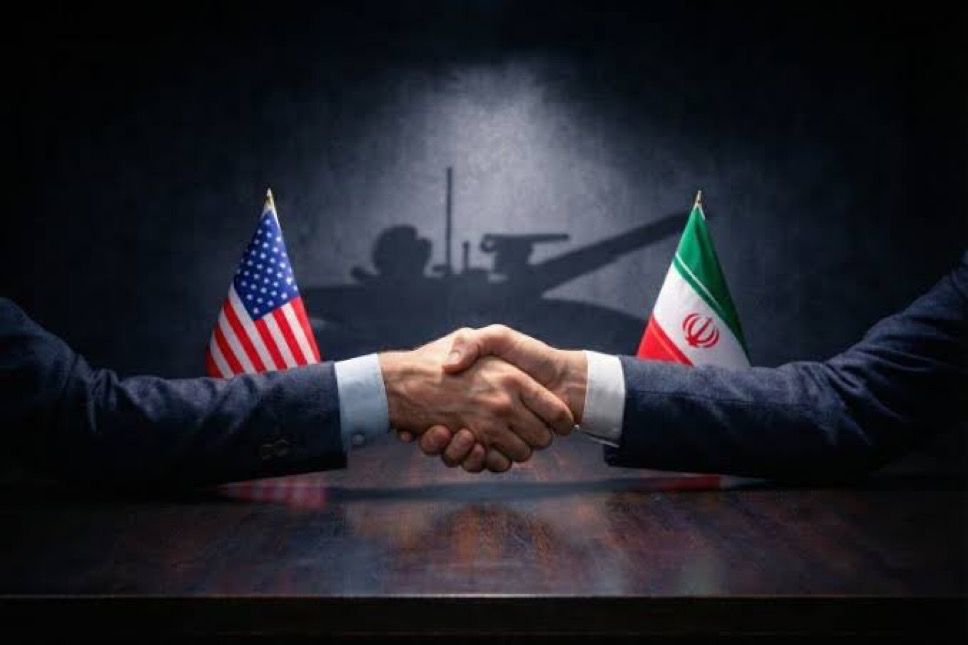
This situation fuels a recurring debate between Washington and Tehran.
US officials maintain that any funds released must be strictly controlled to prevent them from directly financing armed groups allied with Iran.
The Iranian authorities reply that money is by nature fungible. Even when a resource is earmarked for a specific humanitarian purpose, it can indirectly free up other budget allocations that may be used elsewhere.
For many analysts, then, what is at stake lies not only in the amount officially unfrozen but in the overall improvement of the Islamic Republic’s financial position.
A strategy of adaptation despite sanctions
Financial constraints have not, however, prevented Iran from maintaining some capacity for action in the region. An exclusive Reuters investigation published on 19 June reveals that the Islamic Revolutionary Guard Corps (IRGC) has reportedly set up new clandestine cells in Iraq tasked with carrying out attacks against the Arab monarchies of the Gulf, bypassing the traditional networks of pro-Iranian militias in order to evade surveillance by intelligence services.
According to eight Iraqi sources cited by the agency, these secret units were reportedly formed directly under the authority of the Revolutionary Guards. Three of these sources say that three to four separate cells, each made up of around ten hand-picked Iraqi Shia fighters, carried out at least seven drone operations between 20 April and 17 May 2026.
The attacks were reportedly launched from desert areas near Basra and Samawah, in southern Iraq, and targeted objectives in Kuwait, Saudi Arabia and the United Arab Emirates. The targets mentioned include military installations as well as sites linked to the American presence in the region.
The most striking element of the investigation is its description of a structure running parallel to the militias traditionally associated with the Axis of Resistance. According to the sources interviewed, these cells reportedly do not fall under the usual chains of command of Iraqi armed groups, but report directly to the Revolutionary Guards.
This shift appears to reflect an adaptation of Iranian strategy to a profoundly transformed regional landscape. Several of Tehran’s allied organisations have suffered heavy losses in recent months or are facing mounting political pressure. In Iraq in particular, some armed factions have entered into discussions on scaling back their military activities or on closer integration into state institutions, although no actual disarmament of the main militias has been observed so far.
Against this backdrop, the creation of small clandestine units would allow Iran to preserve a regional strike capability while limiting its direct exposure and retaining a degree of plausible deniability.
The existence of such structures also illustrates a point often stressed by sanctions specialists: even when Iran’s financial resources are constrained, Tehran retains the capacity to fund relatively inexpensive operations relying on drones, local networks and informal financial channels. Any easing of sanctions could therefore widen this room for manoeuvre without necessarily bringing a return to the large-scale support models seen in the past.
Between regional ambitions and domestic needs
However, there is nothing to suggest that any easing of sanctions would automatically translate into a massive increase in support for Tehran’s regional allies.
The Iranian economy faces considerable challenges: persistent inflation, the depreciation of the rial, unemployment, difficulties in attracting investment and social discontent. A significant share of any resources that became available could be devoted to stabilising the country’s economy.
How resources would be divided between domestic priorities and geopolitical ambitions therefore remains a major unknown.
A strategic question for the future of the Middle East
In Washington, Jerusalem and several Arab capitals, discussions on a possible unfreezing of Iranian assets are being closely watched. The control mechanisms that could accompany a future agreement will be one of the main points of negotiation.
For supporters of easing sanctions, allowing Iran to recover some of its resources could foster regional détente and support an economy under pressure. For their opponents, it risks instead strengthening the capabilities of the axis of resistance and altering the security balance in the Middle East.
One thing seems certain: as long as sanctions remain largely in force and most Iranian assets stay frozen, Tehran’s ability to mobilise these resources quickly will remain limited. But should that situation change, the consequences could be felt well beyond Iran’s borders.
It should not be forgotten, however, that over the years Iran has developed various mechanisms enabling it to support its allies despite sanctions: informal financial networks, shell companies, parallel oil trading and transfer channels routed through third countries. Even without a large-scale unfreezing of its assets, Tehran thus retains funding capabilities that partly escape international restrictions. Recent revelations about clandestine cells operating from Iraq suggest that this capacity to adapt could remain one of the main assets of Iran’s regional strategy in the years ahead.
Translated from French. The French original prevails.