Gathered in Geneva to mark the twentieth anniversary of the United Nations Human Rights Council, diplomats, lawyers and civil liberties advocates delivered a damning assessment of Tunisia’s political trajectory. Fifteen years after embodying the democratic hopes of the Arab world, Tunisia now appears to symbolise a disillusionment that reaches far beyond its borders.
GENEVA – The symbolism was lost on no one. As the United Nations Human Rights Council marks its twentieth anniversary this year, it was precisely one of the countries that had best embodied the democratic aspirations of the early 21st century that found itself at the centre of human rights defenders’ concerns.
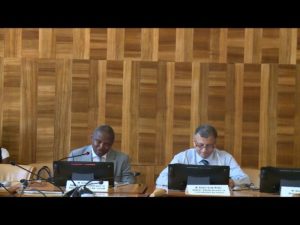
Held on the sidelines of the 62nd session of the Human Rights Council, the meeting devoted to the state of freedoms in Tunisia took on a significance reaching far beyond the national context. For behind the Tunisian case lies a broader question: what remains today of the democratic promises born of the Arab Spring? And, more broadly, how far is the international system genuinely able to protect fundamental freedoms when the geopolitical balance is being reshaped at the expense of the principles on which the post-Cold War international order was founded?
For a long time, Tunisia was the exception. The first country to topple an authoritarian regime during the Arab Spring of 2011, it had become the testing ground for a democratic transition watched closely far beyond the Arab world. The adoption of the 2014 Constitution, the holding of pluralist elections and the establishment of independent institutions had fuelled hopes that another path was possible in a region marked by authoritarianism, conflict and crises of governance.
Fifteen years on, enthusiasm has given way to concern.
The speakers gathered in Geneva painted a picture of a democratic trajectory interrupted since the decisions taken by President Kaïs Saïed on 25 July 2021. The suspension of Parliament, the dissolution of oversight institutions, the concentration of executive and legislative power: for many observers, the country has embarked on a process of recentralising power that calls into question the gains of the revolution.
To substantiate this assessment, the meeting brought together several recognised figures in the defence of civil liberties. Abderrazak Kilani, former President of the Tunisian Bar and former Permanent Representative of Tunis to the United Nations in Geneva, the lawyer and human rights defender Dalila Msaddek Ben Mbarek, and the opposition MP Oussama Khelfi compared their analyses of the country’s development since the institutional turning point of July 2021. From Paris, Christian Charrière-Bournazel, former President of the French Conseil national des barreaux, also expressed his support for Tunisian lawyers and judges facing mounting pressure.
The criticisms centre first and foremost on judicial independence. The dissolution of the Supreme Judicial Council, the dismissal of judges and the gradual weakening of checks and balances were seen by participants as so many warning signs. Beyond the institutional decisions, it is the very capacity of the judicial system to function as a guarantor of freedoms that is now being called into question.
Freedom of expression is another major concern. Journalists, lawyers, judges and civil society activists face legal proceedings or prosecution linked to their professional activities or their public stances. Discussions focused in particular on Decree-Law No. 54 on cybercrime, whose potential effects on freedom of expression are regularly denounced by human rights organisations.
The decline observed is not confined to institutions. It also affects civil society. Organisations working to defend migrants, combat racism or protect fundamental rights denounce growing restrictions on their activities. Several speakers also raised the worsening situation of sub-Saharan migrants, against a backdrop of rising xenophobic rhetoric and mounting social tensions.
Yet the Tunisian crisis cannot be reduced to a simple contest between authoritarianism and democracy.
The reality is more complex. For several years, the country has been grappling with a particularly difficult economic situation. Youth unemployment, inflation, debt, the erosion of public services and a loss of confidence in the political elite have created fertile ground for a growing demand for authority. It was on this promise of a break with a political system seen as ineffective that Kaïs Saïed built his popularity.
It is precisely this paradox that makes the Tunisian case so revealing. The 2011 revolution opened up an unprecedented space for freedom, but it never managed to fully meet the social and economic expectations that had made it possible. Fifteen years on, part of the population appears to have put the pursuit of stability and effectiveness ahead of the defence of democratic mechanisms.
This shift extends far beyond Tunisia alone. It reflects a global trend marked by the weakening of democratic institutions, the rise of populism and the return of power politics. In a world beset by wars, economic crises and technological upheaval, human rights increasingly appear to be a secondary concern.
That is why the debate held in Geneva carries particular significance. Twenty years after its creation, the Human Rights Council faces an existential question: how can fundamental freedoms be defended effectively when states themselves are calling into question the oversight and protection mechanisms they helped to build?
Tunisia is no longer merely the story of a democratic transition in trouble. It has become a test for the entire international human rights architecture: a revealing sign of the weaknesses of a multilateral system that is struggling to halt democratic backsliding, including in countries once held up as models.
In this sense, the debate in Geneva extends far beyond Tunisia’s borders. It calls into question the capacity of today’s world to safeguard civil liberties at a time when authority, security and efficiency are tending to establish themselves as the new political priorities. Tunisia, once a symbol of Arab democratic hope, has now become the mirror of the doubts running through the entire international order.
Translated from French. The French original prevails.