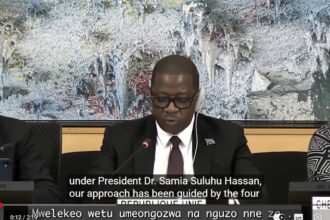
Against an international backdrop marked by persistent conflicts, growing challenges to multilateralism and flagrant human rights violations, the 59th regular session of the United Nations Human Rights Council opens in Geneva, running from 16 June to 9 July 2025. The session, to be held under the presidency of the Swiss ambassador Jürg Lauber, is of particular importance at a time when the fundamental principles of international and humanitarian law appear increasingly fragile.
For almost a month, the Council will address the human rights situations in more than forty countries, through 32 interactive dialogues and the consideration of more than sixty reports. The session promises to be unusually intense, as several regions of the world are experiencing systematic and widespread violations of fundamental rights, often with complete impunity.
At the opening, the High Commissioner, Volker Türk, will present an overview of the human rights situation around the world, an address that is eagerly awaited amid mounting tensions. On the same day, the situations in Afghanistan, Eritrea and the eastern Democratic Republic of the Congo will be the subject of specific discussions, illustrating the scale of the challenges in protecting civilians and ensuring accountability.
The situation in the Occupied Palestinian Territory, at the heart of a deep humanitarian and political crisis, will also come under close scrutiny with the presentation of the report of the Commission of Inquiry on the Occupied Palestinian Territory, including East Jerusalem, and Israel. The session will return to the issue on 3 July, during a dialogue with the Special Rapporteur. In addition, crucial discussions will be held on Sudan, Syria, Venezuela, Nicaragua, Myanmar, the Central African Republic, Belarus and Burundi, countries where massive human rights violations call for constant vigilance.
The session will also focus on contemporary forms of repression and inequality: freedom of expression, extrajudicial executions, trafficking in persons, extreme poverty, discrimination based on sexual orientation or gender, judicial independence and the rights of migrants. These issues, often pushed into the background by geopolitical emergencies, are nonetheless at the heart of the dynamics of oppression that undermine societies.
The annual debate on women’s rights, scheduled for 24 June, will illustrate this determination to advance rights despite the setbacks seen in many parts of the world. Likewise, the Council will address environmental challenges, in particular the effects of climate change on human rights, and will devote a panel discussion to access to safe drinking water and sanitation, issues that have become critical in several regions affected by drought, conflict or poor governance.
This session comes at a pivotal moment for the multilateral system, which is increasingly being challenged. The Universal Periodic Review (UPR), which will assess fourteen countries from 30 June to 2 July, remains one of the Council’s few inclusive and non-confrontational mechanisms. It serves as a reminder that, despite the divisions, dialogue remains both possible and necessary to build collective accountability on human rights.
In the face of resurgent conflicts, the erosion of humanitarian law and attacks on international norms, this 59th session is a test of the Council’s ability to remain relevant. The world is watching: in the halls of the Palais des Nations, the future of international cooperation is also at stake, caught between fragile hopes and an absolute need to act.
Translated from French. The French original prevails.