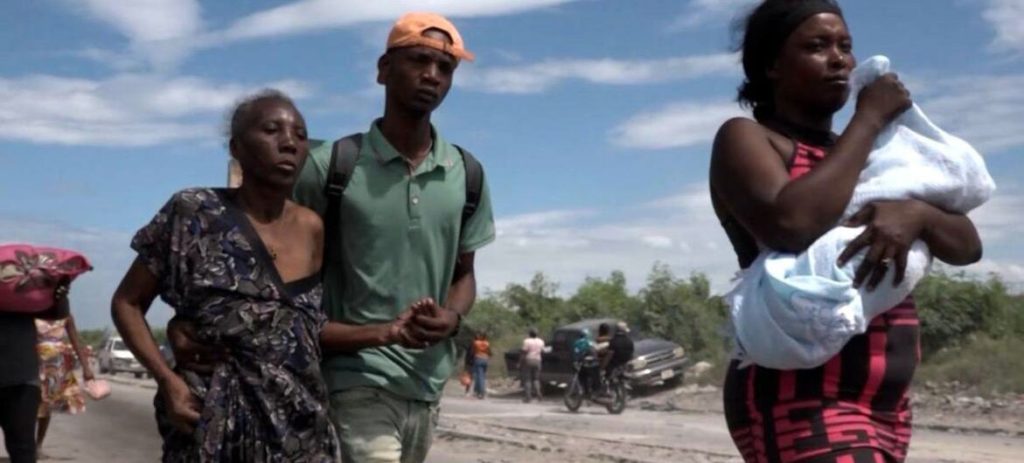
People who have fled gang violence live in camps in Port-au-Prince, the capital of Haiti.© WFP
For years, fleeing one’s neighbourhood could be enough to escape Haiti’s gangs. Today, even the camps for displaced people are no longer places of refuge. In Port-au-Prince, armed groups have begun to infiltrate the sites where hundreds of thousands of families who fled the fighting have crowded together. One mother says she now sleeps on top of her daughter every night to protect her from rape. At a community centre, the glass has been removed from the windows for fear that deeply traumatised children might use it to harm themselves. In the capital’s last major public hospital still operating, women who have just given birth spend the night on the bare floor with their newborns.
“The situation we witnessed is unacceptable”
This picture, painted on Friday by two humanitarian officials at a press briefing at United Nations Headquarters in New York, reflects a crisis that has crossed a new threshold. “We regularly visit humanitarian crises around the world. Yet what we saw in Haiti deeply shook us,” said Youri Saadallah, emergency director at the NGO Norwegian Refugee Council (NRC), at the end of a mission conducted with six international humanitarian organisations. “I am leaving the country in a few minutes, speaking not only as a humanitarian, but also as a father and, quite frankly, as a human being: the situation we witnessed is unacceptable.”
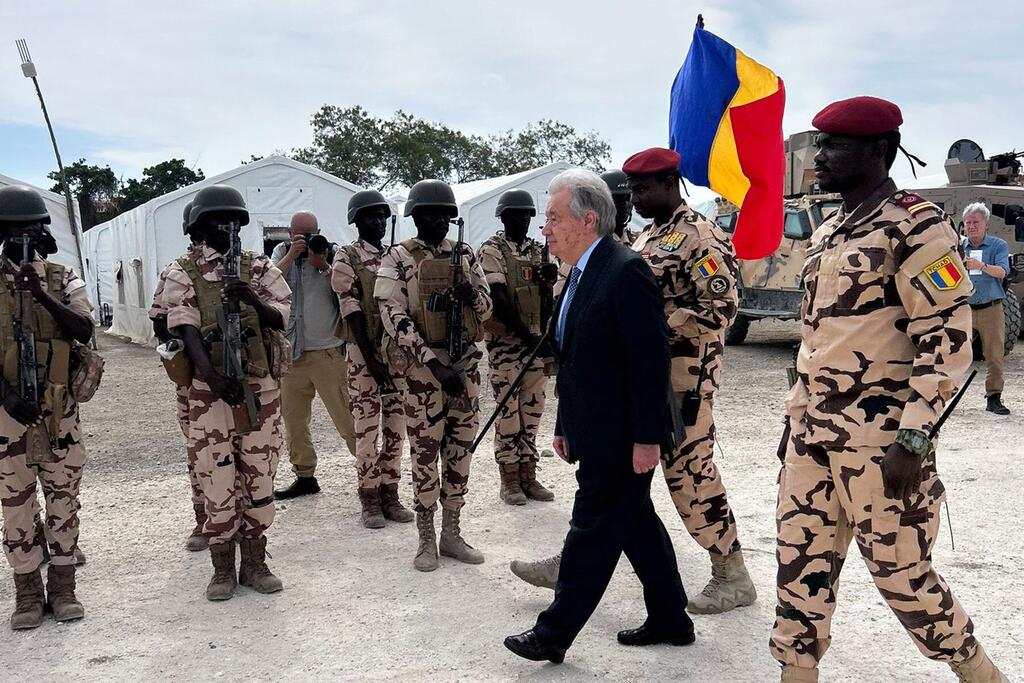
The assessment comes less than a month after the UN Secretary-General, António Guterres, visited the Haitian capital to support the deployment of the new Gang Suppression Force (GSF). This non-UN multinational force has been authorised by the Security Council to regain control of Haiti, and in particular of Port-au-Prince, which has largely fallen under the control of armed groups.
While the United Nations sees this new force as an opportunity to gradually restore security, humanitarian actors describe a country whose social fabric continues to unravel.
Violence that targets the most vulnerable
According to humanitarian workers, 6.4 million Haitians, more than half the population, now need emergency assistance. Nationwide, only one in 10 public hospitals with beds is still functioning normally. Yet the figures barely convey the brutality of what they have witnessed.
“The strongest message we heard is that people no longer feel safe. They are being stripped of their dignity,” Youri Saadallah summed up. “Women and children are bearing the brunt of this crisis. Sexual violence, including gang rape, is pervasive. We have the disturbing sense that this violence is gradually becoming normalised. Women-led organisations told us they were overwhelmed by the scale of the trauma and suffering. The bodies of women and girls are being used as a battlefield in Haiti.”
Children, too, are paying a growing price. The recruitment of minors by armed groups rose by 200%, while grave violations committed against them increased by 21% in 2025 compared with the previous year.
Displaced people have nowhere left to flee
The displacement crisis has also reached unprecedented levels. Nearly 1.5 million people are now internally displaced, a record since the violence began. Schools have been turned into makeshift shelters, where families live on top of one another, with no privacy and sometimes without latrines or space to cook. Many have already had to flee several times.
“In the Bel Air neighbourhood, we met families who had been displaced five times,” Maria Moita of the International Organization for Migration (IOM) told the press briefing. The phenomenon now extends beyond Haiti’s borders. In Belladère and Ouanaminthe, humanitarian teams have witnessed the daily arrival of 600 to 700 people deported from the Dominican Republic. Many had already fled the violence before being sent back to a country where they no longer have a home.
One of these encounters left a particularly deep mark on the humanitarian workers: a 15-year-old girl deported with her newborn the day after giving birth, the baby still wearing its maternity hospital wristband.
“Families are trapped in a cycle of violence, displacement, migration, deportation and forced return,” Ms Moita summed up. “Many cannot go home because the armed groups are still there and their houses have been burnt down.”
A security window, but a humanitarian emergency
Asked about the gradual deployment of the new Gang Suppression Force, the two officials refrained from any comment on its military action, while acknowledging that improved security remains essential.
“2026 offers a decisive window of opportunity for Haiti,” said Youri Saadallah. “Humanitarian operations are entirely separate from those of the Gang Suppression Force. But we want to see the security situation improve so that the country can regain the stability it needs. At the same time, investment in humanitarian aid and essential services is indispensable.”
For, they warn, the organisations on the ground still have the teams and the expertise needed to scale up their work, in Port-au-Prince as in the worst-affected departments. What they now lack is funding. In Haiti, then, the battle against the gangs will not be fought solely on the streets of Port-au-Prince. It will also hinge on the international community’s ability to prevent the humanitarian collapse from making irreversible the disintegration of a state already bled dry.
Translated from French. The French original prevails.