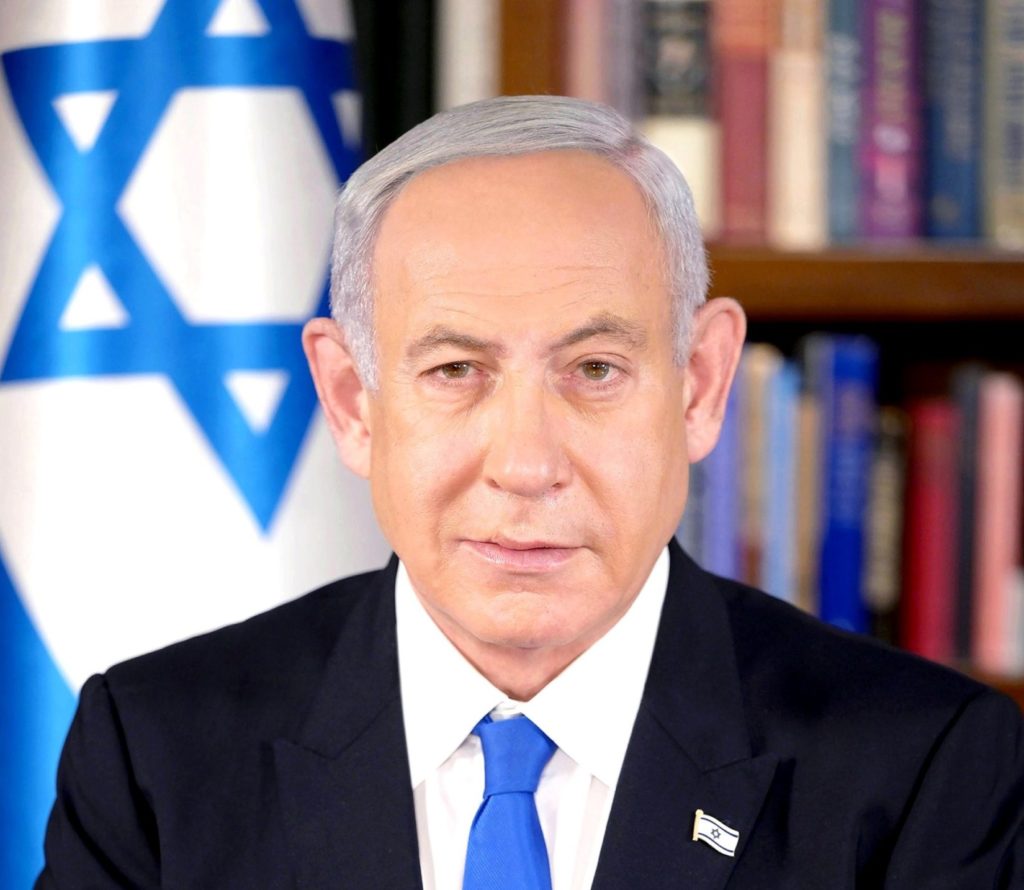
This autumn has brought a whirl of pivotal elections in several geopolitically significant countries, in Latin America, the United States and the Middle East. But make no mistake: the vote held on 27 October in Israel will not produce white smoke any time soon. In the Jewish state, winning an election does not necessarily mean being able to govern. At this stage, there is no clear winner: will it be Benjamin Netanyahu, the indestructible Prime Minister, or Gadi Eisenkot, the former chief of staff who has become his main rival? The latter reportedly holds a narrow lead, not enough to guarantee him a majority in the Knesset. In Israel, coalition bargaining can drag on for weeks. In 2022, “Bibi” took 58 days to form his government.
Yet beyond this electoral battle, it is Israel’s very future that is at stake: that of a deeply divided country, exhausted by three years of war and forced to question its security certainties. Netanyahu has turned his own political survival into a method of government. The question now is whether this extraordinary staying power has become a danger to the security, and the very future, of his country.
Netanyahu, the protective father who failed to protect
One can be resolutely anti-Netanyahu and still acknowledge his exceptional political skill. Over three decades, he has become far more than a Prime Minister: a veritable Israeli institution, almost a father figure for many. A father who is loved, loathed and blamed for every ill, but who, people believe, will always be there to protect them. Yet on 7 October 2023, Israelis tragically discovered that “Dad” was no longer there.
With nearly 1,200 people killed in the massacres carried out by Hamas, an entire security doctrine collapsed. The man who had built his legitimacy on his ability to protect Israel will go down in history as the prime minister of 7 October. He bears political responsibility for the failures that allowed this catastrophe to happen, not least because military forces had been redeployed to the West Bank to protect the settlements. His persistent refusal to allow an independent commission of inquiry has only fuelled mistrust.
Netanyahu must nonetheless be credited with undeniable successes: the 2020 Abraham Accords, the rapprochement with several Arab monarchies, his special relationship with Donald Trump and military successes against several regional adversaries. But these achievements do not erase the consequences of his domestic choices.
To survive, Bibi gradually opened the door wide to ultranationalist and religious parties that had once been kept away from power. Itamar Ben-Gvir and Bezalel Smotrich, veritable “ministers of chaos”, embody this drift. Through accelerated settlement building, violence against Palestinians and constant provocations in the West Bank, they have helped to radicalise an Israeli society that was already deeply divided. Not to mention the perennial question of conscripting the ultra-Orthodox, which is always postponed to preserve the balance within the government.
For years, Netanyahu also favoured managing the Palestinian conflict rather than resolving it, indirectly fostering the division between Hamas in Gaza and the Palestinian Authority in the West Bank so as to push back any prospect of a Palestinian state. But can permanent war amount to a political project? The operations against Hamas, Hezbollah and now Iran have shown that military victory is not enough to guarantee lasting security. In his determination to save his own position, has Netanyahu ended up weakening his own country?
Eisenkot: a political break, but certainly not a revolution
Facing him, Gadi Eisenkot embodies an alternative all the more credible because it comes from the very heart of Israel’s security establishment. A former chief of staff and member of the war cabinet after 7 October until his break with Netanyahu in June 2024, he knows the threats facing his country inside out. His son Gal was killed in Gaza in December 2023, as were two of his nephews during the war. This personal tragedy gives him a particular standing in a wounded society.
Eisenkot’s first promise is to restore trust between citizens, the army and the institutions. He is calling for an independent commission of inquiry into 7 October, wants to challenge the military exemptions granted to the ultra-Orthodox and, above all, to end the government’s dependence on the religious far right. His party, Yashar, seeks to bring people together across traditional divides.
But care is needed not to put words in his mouth. Eisenkot is not a man of peace in the sense Europeans would understand it. Like Netanyahu, he remains opposed to the creation of a fully sovereign Palestinian state. He nonetheless rejects the wholesale annexation of the West Bank, condemns settler violence and envisages a form of Palestinian autonomy under Israeli security control. An important difference of method, but certainly not a diplomatic revolution.
On Iran, too, the two men share the same diagnosis: Tehran remains the main strategic threat in the region. Since the outbreak of the war on 28 February 2026, Israel has entered a new security dimension. Netanyahu secured from Donald Trump the confrontation with the Iranian regime that he had been calling for for years. Yet eight months on, the mullahs’ regime is still there. The threats against Israel are very real. The problem lies in their constant exploitation by a leader who has ended up making his own political survival and that of the state almost inseparable.
Arab parties: the new kingmakers of an ungovernable Israel?
What remains now is the crux of the matter: who will be able to govern? Israeli democracy rests on unforgiving parliamentary arithmetic. A majority requires 61 of the 120 members of the Knesset. Netanyahu might still manage to piece together a coalition with his ultra-Orthodox and ultranationalist allies, at the cost of fresh concessions. Eisenkot could try to bring together the parties of Naftali Bennett, Yair Lapid, Avigdor Lieberman or Yair Golan. But no combination looks obvious at this stage.
And now Israel’s Arab parties could become the real kingmakers. Their parliamentary representation would almost double, upending the Knesset’s traditional balance of power. What political irony! These parties, with which much of Israel’s Jewish political class initially refused to govern, could now hold the seats needed to form an alternative majority. Eisenkot may need those whom some of his partners still do not want to see enter government. Their support from outside the coalition could even prove decisive. This speaks volumes about the contradictions of a democracy in which Arab citizens vote and elect their representatives, yet still struggle to be regarded as legitimate political partners.
Three scenarios are therefore emerging: Netanyahu remaining in power at the cost of further radicalisation, an alternative coalition led by Eisenkot, or an institutional deadlock leading to fresh elections. A national unity government remains possible in theory, but the differences between the two main rivals make that prospect difficult.
On top of this domestic uncertainty comes the American electoral calendar. November’s midterm elections could weaken Donald Trump and complicate Israel’s calculations. A House of Representatives under Democratic control would exercise greater oversight of US military commitments, particularly in the Middle East. Netanyahu could then lose some of the freedom of action his American ally had given him. Eisenkot, for his part, would have to build a relationship with a president who openly backed his opponent.
Ultimately, Israelis have not merely chosen their members of parliament. They have been called upon to decide which vision of their security, their democracy and their future they wish to uphold. Netanyahu will undeniably have left his mark on his country’s history through his longevity and his successes. But he may also be remembered as the man who, in striving to be irreplaceable, made a change of government all but impossible. And Israel today may well need a new political project more than an eternal man of destiny.
Translated from French. The French original prevails.