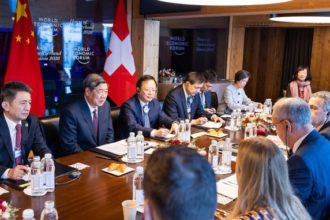
The second edition of the ECOCIR forum, a spearhead in the promotion of the African circular economy, which will be held in Abidjan from 15 to 18 October, has been launched in Paris. This year, the theme of the international conference, initiated in 2023 by the Prime Minister of Côte d’Ivoire (pictured), will be: “Sustainable cities and technology: what contribution can the circular economy make?”
The launch ceremony for the International Circular Economy Forum (ECOCIR 2024) took place on 13 September at the Embassy of Côte d’Ivoire in Paris, under the high patronage of Prime Minister Robert Beugré Mambé. The launch brought together public figures, elected officials, French and African experts, as well as the Quai d’Orsay. More than 150 participants attended, exceeding the initial expectation of 100 people – evidence of the relevance of an initiative that prompted rewarding discussions.
A staunch advocate of the circular economy and the driving force behind the creation of the first Circular Economy Institute in Africa, Robert Beugré Mambé, Prime Minister since October 2023 of the Ivorian republic of nearly 30 million inhabitants, actively supports initiatives such as the ECOCIR Forum, which he founded. His commitment in this field dates back to his term as Minister-Governor of the Abidjan Autonomous District, where he launched several initiatives to raise public awareness of the issues surrounding the circular economy. He has relied on technological innovation and international cooperation to ensure the success of this initiative.
A catalyst for international cooperation towards more sustainable cities in Africa
This unique platform provides an opportunity to reflect on the challenges of the circular economy and to share good practice between African and international stakeholders. The 2023 edition focused on “the circular economy for the sustainable development of Territories in Africa”. The 2024 edition will examine the importance of the circular economy in transforming African cities, particularly in the face of the mounting challenges of rapid urbanisation and environmental pressures. This economic model, which encourages the reuse of resources and the reduction of waste, shares the same objectives as urban planning and sanitation. The fight against the unregulated occupation of public spaces and the promotion of better urban management practices illustrate how more rigorous resource management can be a powerful lever for more sustainable cities.
Local initiatives such as the campaign against urban disorder in Abidjan led by the Minister-Governor of the Autonomous District of Abidjan, Cissé Ibrahima Bacongo, will be showcased. The Ivorian politician, lawyer, writer and teacher heads the most populous city in Côte d’Ivoire (more than 5.6 million inhabitants), which was the country’s administrative and political capital until the transfer to Yamoussoukro in 1983. Through measures aimed at clearing public spaces and strengthening urban sanitation, he is striving to improve residents’ quality of life while making Abidjan more attractive and functional.
“The challenge for our continent, and for Côte d’Ivoire in particular, is urbanisation.” Danho Paulin
In focus: the sustainability of African cities
“The challenge for our continent, and for Côte d’Ivoire in particular, is urbanisation,” Danho Paulin, Deputy Governor of the Abidjan Autonomous District, said at the ceremony in Paris. In his view, it is essential to find sustainable solutions that allow African cities to grow while meeting present needs without compromising future generations. Danho Paulin also highlighted the central role of the circular economy in this transition, noting that reusing resources and reducing waste are key levers for making cities more resilient and sustainable.
Technological innovation is key to creating more resilient cities, stressed Mariame Berete, president of Challenge Tech International and co-organiser of the forum, responsible for mobilising the international community. She called on all players in the circular economy to contribute actively to this transition, and encouraged the international community to invest in sustainable development projects in Côte d’Ivoire, singling out France’s commitment in particular. She also made a point of stressing that Côte d’Ivoire offers a stable and welcoming environment for investors.
Translated from French. The French original prevails.