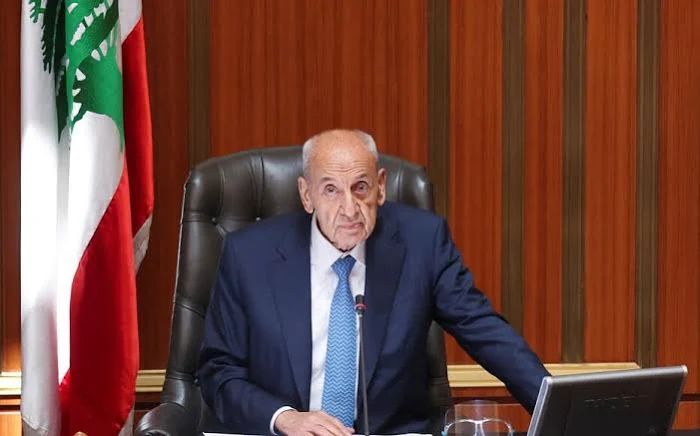
Nabih Berri, Speaker of the Lebanese Parliament.
A fresh revelation attributed to the Speaker of the Lebanese Parliament, Nabih Berri, could further complicate the ongoing US-mediated negotiations between Lebanon and Israel. According to information circulating in Lebanese political circles, the government reportedly agreed, during indirect talks with international mediators, to the withdrawal of some 2,300 Hezbollah fighters from the area south of the Litani River. These fighters were reportedly identified by name as part of a mechanism for implementing the proposed security arrangements.
According to the same information, Nabih Berri reportedly rejected this proposal, arguing that these men represent “the people of the South” and that it would be politically impossible to accept their forced removal from their home region. This position reflects the argument put forward for several months by leaders of the Shia movement and their allies, who regard any attempt to separate the fighters from the local population as unrealistic on the ground.
Stabilising Lebanon’s southern border
The controversy comes as the United States seeks to consolidate a broader agreement between Beirut and Jerusalem aimed at lastingly stabilising Lebanon’s southern border. Washington regards the effective implementation of UN Security Council Resolution 1701, in particular the absence of non-state armed forces south of the Litani, as an essential element of any security arrangement.
For a number of observers, the Hezbollah question has now become the main obstacle to the talks. Israel is demanding concrete guarantees over the withdrawal of the Shia movement’s forces from the border area, while Hezbollah and its allies reject any measure that could be construed as unilateral disarmament or a political defeat.
This latest leak is also fuelling questions about the Trump administration’s ability to preserve the diplomatic process it helped to set up. If no compromise formula is found on Hezbollah’s presence south of the Litani, the negotiations risk entering a deadlock that could call into question the progress made in recent months.
In Beirut as in Jerusalem, many officials now acknowledge that the future of the talks depends largely on resolving this central question: how to reconcile Israel’s security demands with Lebanon’s political and sectarian balances.
Translated from French. The French original prevails.