By awarding the Nobel Peace Prize to Navi Pillay, the Norwegian committee has chosen to defend international law at a time when the great powers are disregarding it ever more openly. It is a highly political decision, and one that also underlines the limits of European influence in world affairs. But does that make it a mere consolation prize?
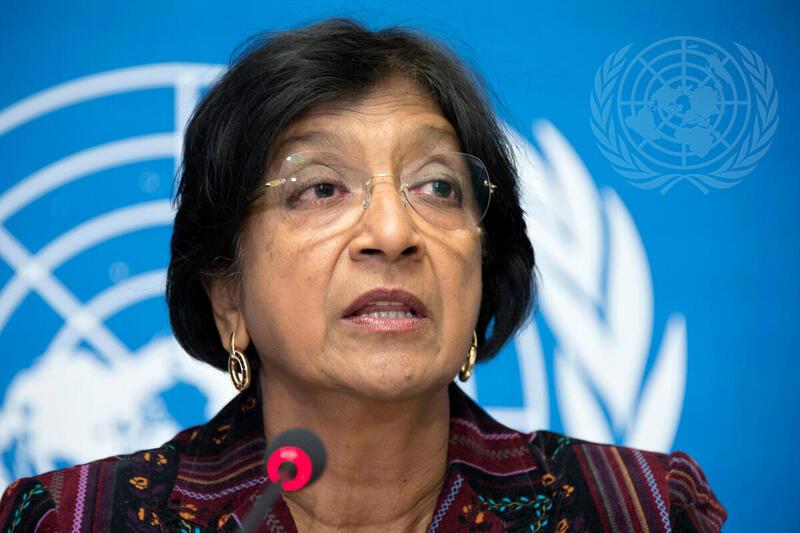
So Donald Trump will not get his Nobel Peace Prize this year. The US president, who regularly trumpets his diplomatic successes and makes little secret of his desire to win the prestigious award, will have to wait. In Oslo, the Nobel Committee chose instead Navi Pillay, 85, a South African jurist, former United Nations High Commissioner for Human Rights and a historic figure of international criminal justice. The contrast could hardly be starker between a US president who intends to settle conflicts through direct negotiation, sanctions or economic pressure, and a woman who has devoted her career to defending international institutions.
The choice comes as the United Nations is going through a deep crisis, the International Criminal Court is under pressure from Washington and the world’s leading powers are ever more openly embracing a diplomacy founded on their national interests. The Nobel Committee wanted to send a political message. The question is who is still listening.
Navi Pillay’s career undeniably deserves respect. Born in apartheid South Africa, she took up the defence of fundamental rights at an early age before serving as a judge at the International Criminal Tribunal for Rwanda and then at the International Criminal Court. Her work notably helped to establish that rape and sexual violence could constitute acts of genocide. More recently, she chaired a United Nations commission of inquiry on the Palestinian territories and Israel, whose findings accusing the Jewish state of genocide in Gaza sparked fierce controversy. Israel categorically rejected them.
Her award is more than recognition of a career. It enshrines a particular vision of international relations, one that took hold in the West after the Second World War and reached its zenith in the aftermath of the collapse of the Soviet Union. At the time, many imagined that globalisation, the growth of multilateral institutions and the expansion of international law would eventually impose common rules on the entire planet.
Thirty-five years on, the record is far less glorious. China never had any intention of adopting Western political standards. Russia has reverted to a power politics that disregards the most basic principles of European security. As for the United States, it now openly challenges certain institutions whose emergence it had once encouraged.
Donald Trump has accelerated this shift. His diplomacy rests on a transactional view of international relations, in which every agreement must deliver an identifiable benefit for Washington. He negotiates with leaders, threatens sanctions, wields tariffs and lays claim to an effectiveness that the major international organisations have supposedly lost. This approach can sometimes produce results. It is also helping to sideline multilateral institutions and to undermine the predictability of relations between states.
The US president is thus demanding recognition from the Nobel Committee while challenging many of the principles to which it remains committed. He wants the prestige of the old international order without accepting all of its constraints. The award of the prize to Navi Pillay looks like a political response, even if the Norwegian committee did not put it in those terms.
Europe finds itself in an even more uncomfortable position. It continues to place law, norms and institutions at the heart of its diplomatic discourse, but struggles to turn these convictions into real influence. It denounces violations of international law, passes resolution after resolution, and calls for investigations and sanctions, without always having the political or military means needed to achieve results. Its commitment to multilateralism is sincere. Its strategic powerlessness is no less worrying for that.
The Nobel’s own precedents also suggest its significance should be kept in perspective. Henry Kissinger was honoured in 1973, when the Vietnam War was not yet over. Barack Obama received the prize in 2009, only a few months after entering the White House. In 2019, the Ethiopian Prime Minister, Abiy Ahmed, was recognised for his rapprochement with Eritrea, before his country descended into the terrible Tigray war. These examples are a reminder that international recognition of a leader or a peacemaker in no way guarantees the success of their efforts.
It would nonetheless be unfair to regard such accolades as pointless. International institutions have made it possible to document crimes, prosecute those responsible and give legal standing to victims long ignored. Navi Pillay’s experience illustrates this. But advances in international criminal law have not prevented conflicts from multiplying, any more than they have persuaded the major powers to give up their strategic interests.
The problem now is one of authority. International institutions can investigate, convict, recommend or impose sanctions within the limits of their remit. Their effectiveness still depends largely on the cooperation of states. Yet that cooperation dwindles precisely when the vital interests of the major powers are at stake. The United Nations Security Council remains deadlocked on several major crises, while international criminal justice continues to draw accusations of selectivity.
In these circumstances, the Nobel Peace Prize retains undeniable moral value, but its geopolitical weight appears very limited. It can draw attention to a cause, offer symbolic protection to certain figures and reaffirm fundamental principles. It does little to alter the calculations of Beijing, Moscow or Washington. No leader will abandon a military operation, an economic strategy or a territorial ambition because a Norwegian committee has voiced its disapproval.
The award to Navi Pillay ultimately reflects the old Western world’s difficulty in accepting the new international environment. Europe continues to believe in the possibility of an order based on universal rules, whereas the powers that now shape the global balance think first and foremost in terms of sovereignty, security and power. International law remains indispensable, but defending it requires a political capacity that Europeans have neglected for too long.
The Nobel Peace Prize will probably survive this transformation of the world. Its historic prestige and symbolic force remain considerable. We will, however, have to get used to it being no more than one instrument of influence among others, in an international system where the balance of power is once again taking on a decisive role.
Navi Pillay thus receives a well-deserved distinction for a life devoted to justice. But international justice, however necessary it may be, still lacks the means to match its ambitions. And the states that possess those means seem less and less willing to place them at its service.
Translated from French. The French original prevails.