
“The loveliest trick of the Devil is to persuade you that he does not exist.” Charles Baudelaire
In his speech of 2 March 2026, President Macron hammered the point home once again: “deterrence is and must remain an inviolable French principle; our deterrent is robust and effective; I owe the Nation (…) the absolute assurance that our deterrent will remain credible” and so on. The choice of this rhetoric is in fact intended to erase those aspects of the strategy that might call it into question. Indeed, what might be called the vocabulary of shame applies to many components of nuclear deterrence.
The very term “deterrence”
In the 1960s, Generals Lucien Poirier, Charles Ailleret, André Beaufre and Pierre-Marie Gallois defined the concept of “deterrence of the strong by the weak”, based, according to General Poirier, “on the idea that, given the destructive capacity of a single nuclear weapon compared with conventional arsenals, a sufficient number of nuclear weapons is enough to deter an adversary.” Indeed, according to this axiom, “the weaponry is proportionate to the value of the stake one represents in the eyes of a potential aggressor.”
The deliberate choice of this terminology by the architects of deterrence is no accident: on the one hand, it aims to assert the credibility of a defence against a better-armed adversary (at the time, the USSR) through the rational fear of retaliation; on the other, it seeks to play down the idea that nuclear weapons might be used against the adversary should it fail to be deterred from attacking and thereby trigger devastating nuclear retaliation. According to General Poirier, even in the case of an adversary that is a priori irrational, the atom would have a “rationalising virtue” owing to “the law of politico-strategic expectation”. Yet, the general acknowledges, “we are in the realm of uncertainty and chance” and “deterrence can fail“. In any event, this concept of deterrence amounts to making one’s security dependent on the rational calculation of the adversary: according to the general, “credibility is what the other, the potential aggressor, thinks. It is not what I myself think.“
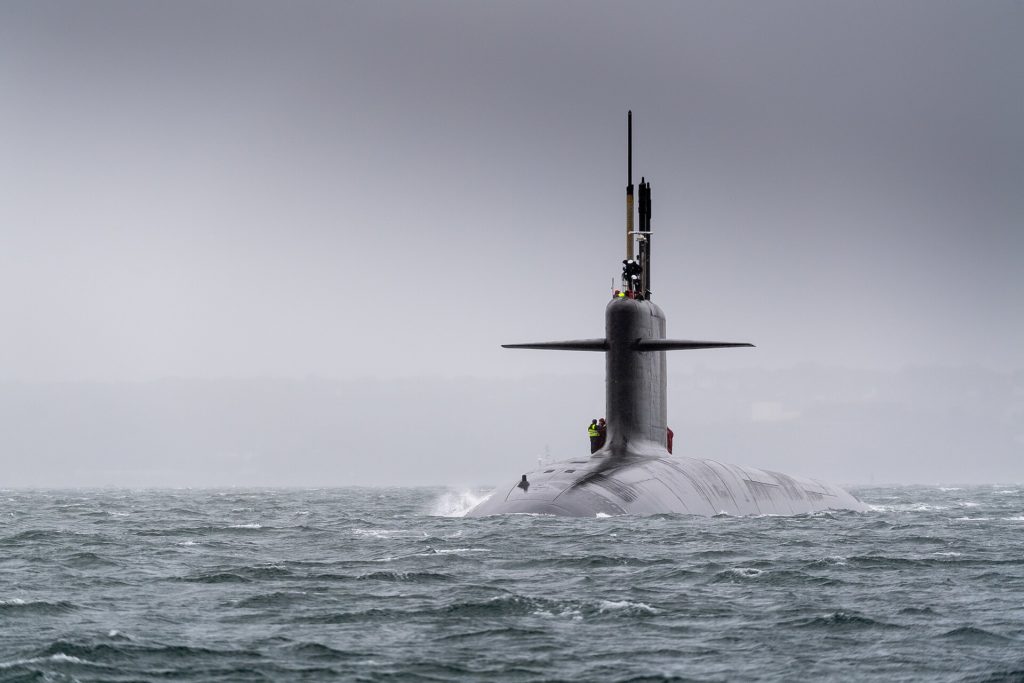
Beyond credibility, the choice of the term “deterrence” is intended to reassure a public that might fear nuclear war, to the point that, until recently, this strategy was openly described as one of “non-use” or of “preserving peace”. In his speech of 2 March 2026, President Macron returned to this distinction, stressing his rejection of the “concept of the tactical use of nuclear weapons” because “these are indeed weapons of an entirely different nature from those that might be used on a battlefield“. At the same time, to pre-empt the question “what, then, are they for?”, the speech resorts to convoluted formulations: “those who might have the audacity to seek to attack France know the unbearable price they would have to pay“; “if we were to use our arsenal, no state, however powerful, could escape it. None, however vast, would recover from it“; “a single one of our submarines (…) carries (…) nearly a thousand times the power of the first nuclear bombs“; “what matters most (…) is that no adversary or combination of adversaries can contemplate the possibility of any strike against France without the certainty of suffering damage from which they would not recover.” Herein lies the paradoxical ambiguity of the concept of deterrence: on the one hand, it rests on weapons that are not meant to be used if it succeeds, yet it implies the capacity to inflict unacceptable damage if it fails. As Bruno Tertrais , an ardent champion of nuclear weapons, bluntly puts it, “the paradox is well known: deterrence (‘non-use’) is credible only once use is possible and perceived as such by the potential adversary.”
The failure of deterrence, already contemplated by its architects such as General Poirier, is also explicitly acknowledged by President Macron and his predecessors, who devised the concept of a “final warning”, defined by the current head of state as “a single, non-renewable nuclear warning (…) decided at France’s sole discretion, to signal in very concrete terms that the conflict has just changed in nature and that France intends by this means to preserve a final chance of restoring deterrence.” Such a concept not only ends up qualifying all the confidence otherwise professed in nuclear deterrence, but also, with a certain naivety, hopes that the use of a nuclear weapon, however limited, against a nuclear-armed power will not be followed by devastating retaliation. A risky gamble.
Semantically, it is worth noting that the other nuclear powers use less ambiguous terms than French doctrine. The English equivalent is deterrence or deterrent, which contains a root expressing terror, implicitly the terror attributed to the adversary when faced with the prospect of massive retaliation. In this respect, one cannot help comparing the definition of deterrence with the UN Security Council’s definition of terrorist acts : “criminal acts, including against civilians, committed with the intent to cause death or serious bodily injury (…) with the purpose to provoke a state of terror in the general public or in a group of persons or particular persons, intimidate a population or compel a government or an international organisation to do or to abstain from doing any act.”
Even though the French concept of dissuasion seeks to gloss over the humanitarian consequences of any use of nuclear weapons, it is just as much underpinned as the English-language concept by the notion of terror inflicted on an entire population in order to sway the stance of its government.
In Russian, deterrence is rendered as sderzhivanie, which literally means “restraint” or “containment”, more neutral notions but ones that, curiously, apply equally to the state doing the deterring and to the state being deterred. This has not stopped Vladimir Putin and his spokespeople from resorting to far more threatening language intended to discourage Western countries from supporting Ukraine.
Chinese terminology, for its part, uses the concepts of wēishè (implying the notion of power), zǔhè (implying prevention) and quànjiè (meaning persuasion). It is therefore close to the French understanding, which rests on an expected rationality.
The notion of vital interests or deliberate ambiguity
As early as the 1970s, French deterrence doctrine set out its objective, which, according to the 1972 White Paper on Defence, was to defend “our vital interests“, namely “essentially (…) our national territory, the heart of our existence as a nation, but also (…) its approaches, that is to say neighbouring and allied territories.” In the 1994 White Paper, at the end of the Cold War, the concept was refined further: “the integrity of the national territory, including metropolitan France and the overseas departments and territories, of its air and sea approaches, the free exercise of our sovereignty and the protection of the population form its core today.”
However, the notion of vital interests is deliberately kept general, even ambiguous, “because the aim is to prevent an adversary from being able to calculate the risk inherent in its aggression, because the scope of vital interests is evolving and may vary over time, and above all because this scope ultimately falls to the judgement of the head of state alone, who alone is empowered to commit the nuclear forces.” These two characteristics are also reaffirmed in the speech by President Macron, who is offering a “forward deterrence” to interested European countries.
The humanitarian consequences of nuclear weapons
The official discourse of the nuclear powers, France included, cloaks itself in the pursuit of legitimacy in order to reassure their populations while showcasing the destructive capacity of their nuclear arsenals to adversaries. In doing so, it deliberately obscures the reality of the humanitarian consequences of any nuclear explosion. The concept of deterrence was first developed on the back of the myth that the American bombings of Hiroshima and Nagasaki had ended the Pacific War by forcing Japan to surrender.
We now know that the real reason for this surrender was the Soviet Union’s entry into the war against Tokyo, yet both the United States and Japan went on propagating this highly convenient myth: the Americans to legitimise their action and their subsequent strategy, and the Japanese to absolve themselves of their responsibility for the war.Thus, when it comes to the victims (estimated in 1950 at 340,000 people), and the destruction of the two Japanese cities, the nuclear powers readily embrace transparency, intended to heighten the terrifying effect of nuclear weapons. Thus, when President Macron reveals that just one of France’s four ballistic missile nuclear submarines has the capacity to cause 1,000 Hiroshimas, he is implying the possibility of causing up to 120 million deaths.
By contrast, once the international community sought to invoke these consequences, deemed wholly contrary to the principles of international humanitarian law (humanity, precaution, distinction, proportionality), as the fundamental reason for banning nuclear weapons, the response of the states possessing these weapons and of their allies was to obscure those consequences and retreat into a kind of autistic denial. Thus the nuclear powers boycotted the international conferences held from 2013 to 2014 on the humanitarian impact of nuclear weapons, as well as the ensuing negotiation of the Treaty on the Prohibition of Nuclear Weapons (TPNW).
Official data are scarce on the victims of the test explosions of 2,425 nuclear weapons (a quarter of them in the atmosphere) carried out in 15 countries or territories between 1945 and 2017, with a combined yield equivalent to 35,000 Hiroshima-type bombs. A recent report puts the total number of direct and indirect victims of these tests at around two million people and points to the devastating impact on the environment of the areas concerned.
The number of people who have fallen victim to the production of nuclear weapons is rarely discussed, partly for lack of official data: in the United States alone, a study carried out by a media outlet concluded that, between 1945 and 2025, 107,394 workers in the military nuclear industry had developed cancers and other diseases, and that at least 33,480 of them had died as a result. France waited until the Morin Law of 5 January 2010 to compensate the victims of its 210 nuclear tests carried out in Algeria and Polynesia between 1960 and 1996. The restrictive conditions of that law have just been relaxed, as they had allowed only around a thousand claimants to be compensated (including just 2 Algerians and 417 Polynesians), whereas associations estimate the real number of victims at around 400,000 (150,000 civilian and military personnel, 210,000 Polynesians and 40,000 Algerians).
The so-called French consensus on deterrence
The former Minister for the Armed Forces and current French Prime Minister, Sébastien Lecornu, admitted as much in an unprecedented burst of lucidity in 2023, when presenting the 2024-2030 Military Programming Law to the National Assembly: “nuclear deterrence (…) no longer always commands consensus.” That admission did not, of course, stop him from raising the budget earmarked for nuclear weapons under that law to €56.68 billion, an increase of €3 billion on the previous Programming Law, without any genuine democratic debate whatsoever.
Since the very beginning of France’s military nuclear programme, this approach to an issue that affects the security of each and every one of us has rested on the unproven claim that the public stands unwaveringly behind such a strategy (the supposed “consensus” invoked for so long). Yet, as several opinion surveys have shown, the majority of French people do not feel protected by nuclear deterrence and want France to honour its disarmament commitments, because nuclear weapons are seen as a source of global insecurity.
Nuclear umbrella and life insurance
The popular concept of the nuclear umbrella emerged in the 1960s to describe what strategists call “extended deterrence” (extended deterrence), meaning the protection of a major nuclear power prepared to use nuclear weapons should its allies come under attack. The United States’ reasoning in this respect was part of its non-proliferation policy: countries placed under such protection no longer needed to acquire nuclear weapons of their own. But, as we have seen, since deterrence entails the possibility of nuclear use, this umbrella has lost some of its credibility. As early as 1961, General de Gaulle put the question to President Kennedy: were the Americans prepared to sacrifice New York for Paris? Today, by offering European countries “forward deterrence”, President Macron may also ask himself: is France prepared to sacrifice Paris to save Tallinn or Warsaw? Proof that the umbrella metaphor is unfounded, for such an accessory has never stopped the rain.
Another metaphor sometimes used by supporters of nuclear deterrence is that of life insurance. The intention is to assert that deterrence offers the country the ultimate guarantee of security. The former Defence Minister Paul Quilès retorted that it was more of a “death insurance”. Indeed, as we have seen, deterrence can fail and lead to catastrophe. Moreover, this comparison ignores the fact that life insurance merely compensates the beneficiaries of the deceased and can in no way prevent the death itself.
The names of the ministries responsible for defence
The French ministry responsible for defence was realistically named the Ministry of War from 1791 to 1946, the Ministry of National Defence from 1946 to 1947, from 1948 to 1958 and from 1969 to 1973, and then the Ministry of Defence from 1974 to 2017, before being renamed the Ministry of the Armed Forces. The notion of national defence, or simply defence, was intended to underline the defensive nature of the strategy, including nuclear deterrence. That said, it became increasingly out of step with the reality of the missions entrusted to the French armed forces, which included stand-alone overseas operations (Chad, Côte d’Ivoire, Mali, Central African Republic), operations within coalitions (Afghanistan, Iraq, Syria) and UN (Lebanon) and European Union (Kosovo, CAR, Gulf of Aden) operations, all hard to justify by the defence of national territory alone. In that sense, the name Ministry of the Armed Forces is more logical, but, like the very concept of deterrence, presented as the ultimate guarantee of national security, it ends up weakening the notion of the nation’s collective defence, which explains President Macron’s attempt to remedy this by reintroducing a form of national service, with little to show for it so far.
It is worth noting that the Trump administration has taken this logic to its conclusion by renaming the Department of Defense the “Department of War”, a move justified by the offensive operations conducted by the United States (Venezuela, Iran, Syria, Nigeria, Somalia, Yemen). According to the White House, the name shows that the department “ensures peace through strength by demonstrating our ability and willingness to fight and win wars on behalf of our nation and not merely to defend it.” Orwellian language reminiscent of 1984.
Shame and assurance
As we have seen, in a field as dependent on beliefs and psychology (or even psychiatry) as nuclear deterrence, the choice of terminology is far from neutral or immaterial. That is why it matters that the public, if it intends to have a say in decisions that directly affect its security and well-being, be informed and equipped to read between the lines and to decode expressions that often amount to euphemism, understatement or even plain hypocrisy. Nuclear-armed states remain caught in a dilemma : playing down or even concealing the consequences of a nuclear war for the future of humanity so that their populations will accept this strategy (the language of shame), while at the same time displaying a capacity and a will to destroy that sustain their confidence that their adversaries find this strategy credible (the language of assurance).
Other useful links :
• Rethinking Nuclear Choices: three questions for Benoît Pelopidas
Translated from French. The French original prevails.





