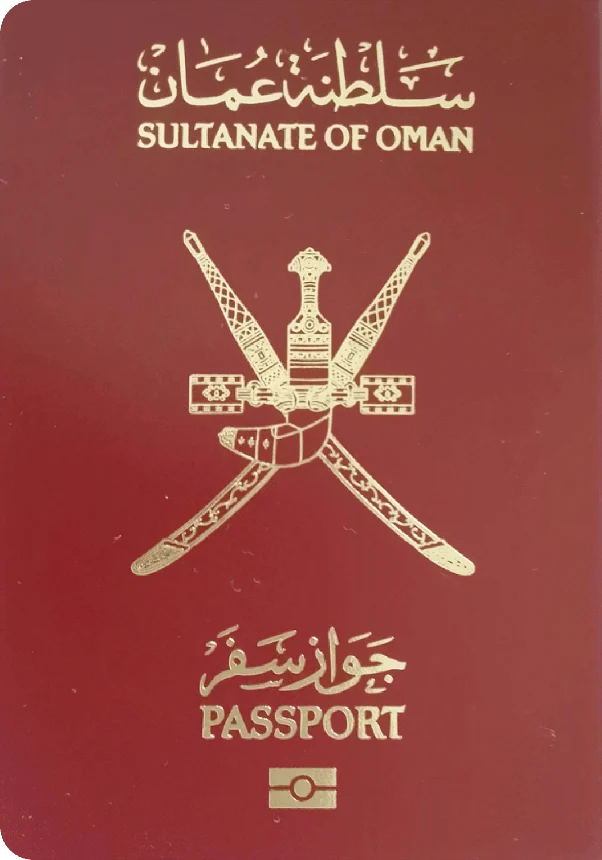
Wedged between Saudi Arabia, Iran and the Strait of Hormuz, the Sultanate of Oman has established itself as one of the most influential diplomatic players in the Middle East. Far from being a mere posture of caution, its policy of neutrality is a genuine instrument of power, shaped by history, geography and a distinctive religious identity: Ibadism.
For several decades, the major crises in the Middle East have seemed to follow a familiar pattern: clashes between regional powers, sectarian rivalries, foreign interventions and a succession of armed conflicts. Yet, in the midst of this particularly unstable environment, one state continues to follow a radically different path.
The Sultanate of Oman has neither the economic clout of Saudi Arabia, nor the military might of Turkey, nor the demographic weight of Egypt, nor the ideological ambition of Iran. Yet whenever a major crisis threatens the regional balance, all eyes turn to Muscat.
This paradox deserves an explanation.
How did a country of fewer than six million people become one of the most sought-after mediators on the planet? Why are Washington, Tehran, European capitals and the Gulf monarchies willing to entrust it with some of the most sensitive negotiations? And how has Oman managed to maintain relationships of trust with states that are at times locked in direct confrontation?
To answer these questions, one must look beyond the immediate news. Omani foreign policy cannot be understood without taking into account three inseparable factors: an exceptional geography, a maritime history stretching back centuries and a political culture deeply shaped by Ibadism. It is the combination of these three elements that has gradually led the sultanate to make neutrality not a passive stance, but a genuine national security strategy.
A geography that demands a diplomacy of balance
Oman’s history begins with its geography. At the south-eastern tip of the Arabian Peninsula, the country controls, together with Iran, both shores of the Strait of Hormuz. This sea passage is one of the most strategic chokepoints on the planet. A considerable share of the world’s oil and liquefied natural gas exports passes through it every day, linking Gulf producers to Asian, European and North American markets.
This position confers a particular responsibility on the sultanate. Any deterioration in security in the Strait of Hormuz threatens not only the interests of the coastal states but also global energy stability. Unlike other states in the region, Oman understood very early on that its own security depended above all on the stability of this maritime space. Rather than seeking a permanent balance of power with its neighbours, Muscat gradually favoured a policy aimed at easing tensions and preserving freedom of navigation.
This approach is not merely diplomatic; it follows a logic of national survival. Situated between Iran, Saudi Arabia, the United Arab Emirates and the Indian Ocean, Oman cannot secure its safety over the long term by taking one side against another. Its room for manoeuvre rests, on the contrary, on its ability to retain the trust of all.
This geographical reality explains why, over the decades, the sultanate has become one of the few remaining channels of dialogue between powers that often refuse any direct contact.
The legacy of a great maritime power
Yet to reduce Oman to its current role as a mediator would be to overlook its history. Long before hydrocarbons were discovered in the Gulf, the sultanate was a great maritime power. From the 17th century onwards, Omani sailors built up a vast trading network linking the east coast of Africa, the Arabian Peninsula, Persia, the Indian subcontinent and South-East Asia. At its height, the Omani empire controlled strategic positions stretching as far as Zanzibar, which for several decades became the sultanate’s second capital. Sea routes were then the main instrument of its prosperity and influence.
This maritime tradition has left a deep mark on the country’s political culture. The Omani authorities have always favoured trade, diplomatic relations and the stability of shipping lanes over military adventures. This historical memory can still be felt today in the sultanate’s foreign policy. Where other states think mainly in terms of the balance of power on land, Oman continues to view its strategic environment through the sea routes linking the Gulf to the Indian Ocean, East Africa and Asia.
Ibadism: a religious identity in the service of political stability
To understand what sets Oman apart, one must look at Ibadism. This school of Islamic thought, which emerged in the 7th century, remains little known in the West, even though it is one of the cornerstones of Omani national identity. Ibadism is often presented as a third way between Sunni and Shia Islam. Convenient as this formula may be, it is nonetheless reductive. The Ibadis lay claim to a theological tradition of their own, developed over the centuries, which emphasises the accountability of the ruler, consultation of the community, justice and the pursuit of compromise.
Unlike the sectarian tensions that have at times marked the history of the Middle East, Omani Ibadism has developed around a relatively open approach to relations with other branches of Islam. This culture of dialogue has helped to shape a society in which religious affiliation has never occupied the same place in political life as it has in several neighbouring states.
Any idealised view should nonetheless be avoided. Ibadism alone does not explain Oman’s foreign policy. That policy is also the product of strategic choices, economic interests and a pragmatic reading of the balance of power. Nevertheless, this religious tradition has provided a cultural framework conducive to a diplomacy that favours negotiation over confrontation.
In other words, Omani neutrality is not merely a matter of geopolitical calculation: it is also rooted in a political culture that values moderation and the pursuit of lasting balance.
Active neutrality: a national security doctrine
Omani diplomacy is often described as “neutrality”. In reality, the term active neutrality more accurately describes the sultanate’s strategy. Oman does not stand aside from crises. On the contrary, it seeks to keep channels of communication open between actors who are no longer talking to each other. This capacity for dialogue is one of its main instruments of influence.
The sultanate thus maintains close relations with the monarchies of the Gulf Cooperation Council, while preserving a constant dialogue with Iran. It remains a security partner of the United States and the United Kingdom, while developing its economic relations with China and India.
This balancing act demands great consistency. It means avoiding grandstanding statements, favouring quiet negotiations and preserving the trust of all parties. Over the decades, this approach has enabled Muscat to build up diplomatic capital unique in the region.
Muscat, the discreet capital of negotiations
When tensions reach a critical level, Oman often becomes the place where contacts resume. The sultanate has hosted several rounds of talks between American and Iranian officials, facilitating exchanges that could hardly have taken place elsewhere. This mediating role has also been evident in other regional matters, whether the war in Yemen, the release of foreign nationals or humanitarian exchanges.
Discretion is one of the keys to this success. Unlike other mediators, Oman says little about its role. The authorities put results ahead of media visibility, an approach that bolsters their credibility. The parties involved know that Muscat is less interested in reaping an immediate political dividend than in preserving a space for dialogue.
Strait of Hormuz: a responsibility shared with Iran
Omani foreign policy cannot be separated from the question of the Strait of Hormuz. Oman shares with Iran the responsibility for securing this vital sea passage. The two countries have often argued that the strait’s stability should be primarily a matter for the coastal states, even though Western naval forces are also present there to protect international freedom of navigation.
This puts Muscat in a delicate position. The sultanate must preserve its relations with Tehran while reassuring its Gulf partners and the Western powers. Rather than opting for confrontation, the Omani authorities have staked everything on constant dialogue. This strategy does not eliminate the risk of crises, but it helps to limit the misunderstandings that could lead to escalation.
At a time when any maritime incident can have global repercussions for energy markets and supply chains, this capacity for mediation gives Oman a strategic importance far greater than its demographic or military weight.
New regional rivalries strengthen Oman’s role
The profound changes now sweeping the Middle East are, paradoxically, enhancing the sultanate’s diplomatic importance. Strategic competition between the United States and China, Turkey’s growing power, Saudi Arabia’s drive to diversify its economy and the uncertainties surrounding maritime security in the Gulf are placing Oman at the centre of a new regional chessboard.
For Beijing, the Strait of Hormuz is a vital artery for China’s energy supplies. For India, the shipping routes crossing the Arabian Sea are a major economic security concern. For the United States and its European allies, freedom of navigation remains a strategic priority. As for the Gulf monarchies, they know that any lasting destabilisation of Hormuz would have considerable economic consequences.
In this complex environment, Oman remains one of the few states able to talk to all sides at once without being seen as an adversary. This ability is now its main comparative advantage.
Neutrality as a strategic choice
Oman’s foreign policy is sometimes portrayed as mere diplomatic caution. Such a reading is incomplete. For several decades, Muscat has chosen to invest more in diplomatic trust than in displays of military power. This approach does not mean that the sultanate has given up defending its national interests. On the contrary, it reflects a conviction that, in a region where the balance of power shifts rapidly, the ability to keep channels of communication open can be a form of power as effective as military means.
This strategy demands great consistency. Even the slightest excessive alignment with one camp would risk undermining the credibility Oman has built up with all the regional players. It is precisely this constancy that explains why Muscat remains a sought-after interlocutor in times of crisis today.
Outlook
The coming years could further increase Oman’s strategic importance. If the rivalry between the great powers continues to shift towards the sea routes linking the Gulf, the Indian Ocean and Asia, the sultanate will see its role as mediator and guarantor of regional stability strengthened.
At the same time, the transformations under way in the Middle East – whether the changing relations between the Arab countries and Iran, Turkey’s assertion of itself as a regional power, the development of new trade routes to Asia or the growing interest of China and India in maritime security – will increasingly place Oman at the heart of the major strategic balances.
The sultanate will nonetheless have to overcome several challenges. Its economic model remains heavily dependent on hydrocarbon revenues, even as the authorities pursue an ambitious diversification policy. Moreover, maintaining credible neutrality in an environment marked by heightened competition between powers will demand ever more deft diplomacy.
Time will tell whether Oman manages to retain this singular position. One thing, however, already seems certain: in a Middle East undergoing profound realignment, the sultanate is no longer a peripheral player. It has become one of the region’s diplomatic linchpins.
Recommended sources
* Ministry of Foreign Affairs of the Sultanate of Oman.
* Chatham House.
* Carnegie Middle East Center.
Translated from French. The French original prevails.