By DIDIER AUBRAIS (La Tribune du Grand Nord)
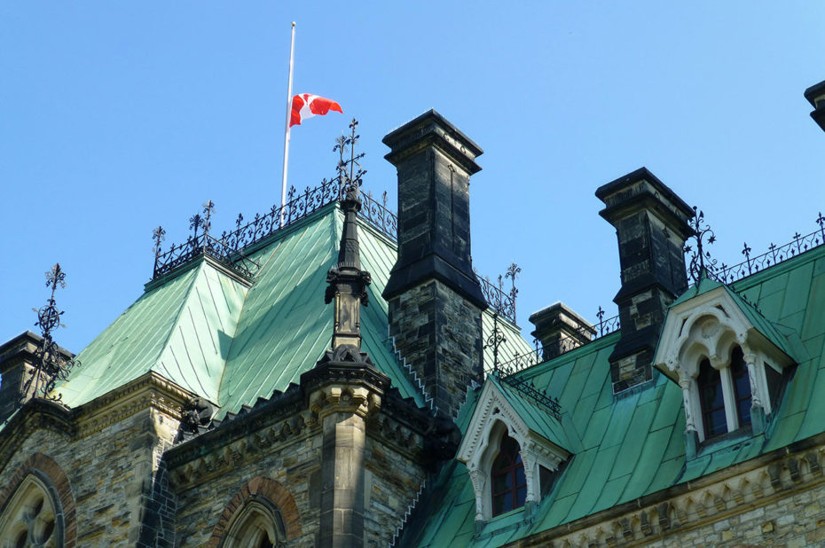
National security is no longer a matter of distant borders. It is now played out in our cables, our supply chains and even in the trust we place in our institutions. There was a time, not so long ago, when Canada’s security was thought of as a geographical given. Three oceans, a powerful and friendly neighbour, and the quiet conviction that the world’s storms would blow themselves out before reaching our shores. That time is over. And it was perhaps the Prime Minister himself who put it most bluntly, in Davos, in January: “The old order is not coming back — nostalgia is not a strategy.” The remark gives pause for thought, because it marks a rupture. For decades, Canadian doctrine rested less on deterrence than on a form of calculated discretion, in the shadow of American power. Yet that shadow, long protective, has become uncertain.
The unpredictable neighbour
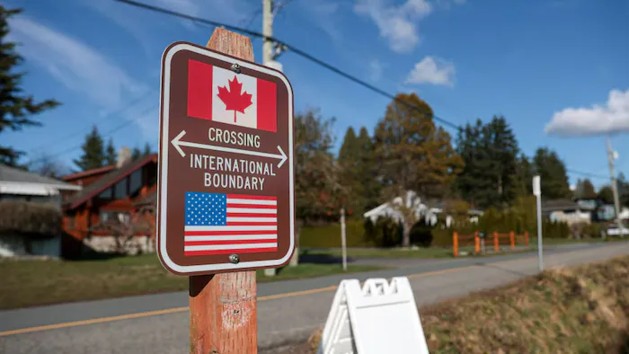
It is impossible today to talk about Canada’s security without starting with the South. President Trump’s repeated statements about Canada as the “51st state“, and about the “artificial border” that he says should be erased through “economic force”, have upended a relationship once thought immune to upheaval. Several observers no longer hesitate to write that Canada has not faced such direct threats to its sovereignty since the War of 1812.
Ottawa’s response was swift, and substantial. On 17 February 2026, Mark Carney unveiled the country’s first-ever Defence Industrial Strategy. The premise underpinning it is blunt: “We have relied too much on our geography and on others to protect us.” Behind the phrase lies a considerable budgetary shift — an overall effort that the Prime Minister’s Office puts at more than 500 billion Canadian dollars in the service of security, prosperity and sovereignty, with the goal of devoting 5% of GDP to defence by 2035.
Diversifying, too. Canada has joined the European defence financing mechanism “SAFE” — the only non-European member to do so — is multilateralising its partnerships and is working with its allies to establish a Defence, Security and Resilience Bank, whose charter was negotiated in Montreal this spring. The message is crystal clear: no longer depend on the decisions of a single partner, even the closest one.
The war that dare not speak its name
But reducing Canada’s security to its relationship with Washington would be to misread the picture. The most insidious threat is also the least visible. The Canadian Security Intelligence Service says it again and again: foreign interference is now one of the most serious strategic threats facing the country. Foreign states — the People’s Republic of China first and foremost, but not only — are conducting ongoing activities, some of them intensifying, targeting our democratic institutions, our diaspora communities, our universities and our businesses.
The method is familiar to those who work on these files: relationships are cultivated over the long term, incentives alternate with threats, and intermediaries are used to give the sponsoring state plausible deniability. China’s “Fox Hunt” operation, officially presented as an anti-corruption campaign, in fact serves to silence dissidents and force nationals to return. This is transnational coercion, exercised on our own soil.
The government has begun to equip itself with tools. An Office of the National Counter-Foreign Interference Coordinator has been set up; a foreign influence transparency registry is being established, with a candidate nominated for the post of commissioner in March 2026; and the CSIS Act is being amended to make up for a technological lag that had become untenable. Even so, trust, once eroded, is slow to rebuild.
The digital front
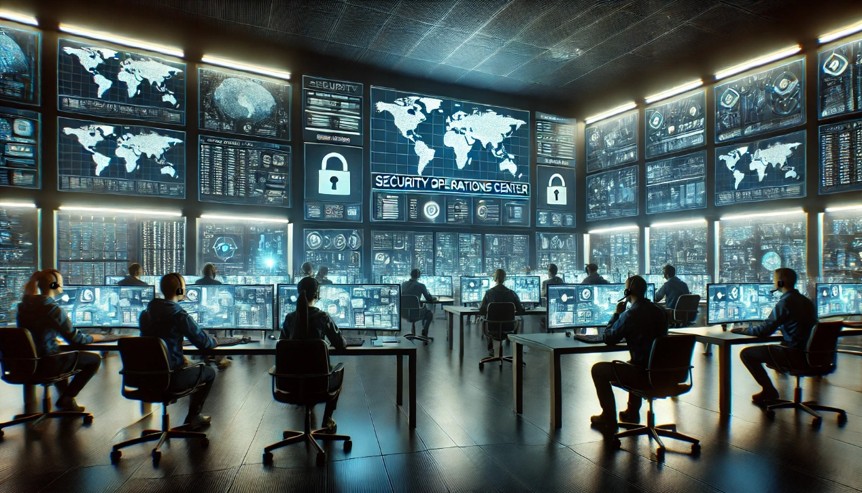
The other battlefield is cyber, and it knows no borders. The Observatoire des conflits multidimensionnels of the Chaire Raoul-Dandurand recorded in 2025 alone the largest number of geopolitical cyber incidents ever documented against Canada — espionage, information manipulation, doxing, reconnaissance — out of a total of 145 incidents catalogued since 2010. The spread of generative artificial intelligence is vastly increasing the reach and credibility of these campaigns.
Two factors heighten Canada’s exposure. First, US disinvestment in its own cybersecurity agencies is weakening a deeply integrated North American digital space: when our neighbour lowers its guard, we are left exposed. Second, dependence on global technology suppliers raises the now central question of digital sovereignty — over our data, our critical infrastructure and our ability to function without permission. The Digital Sovereignty Framework adopted by the federal government in 2025, like Bill C-8, which imposes new obligations on operators of critical systems, reflects this belated but genuine awakening.
The Arctic, the frontier of the century
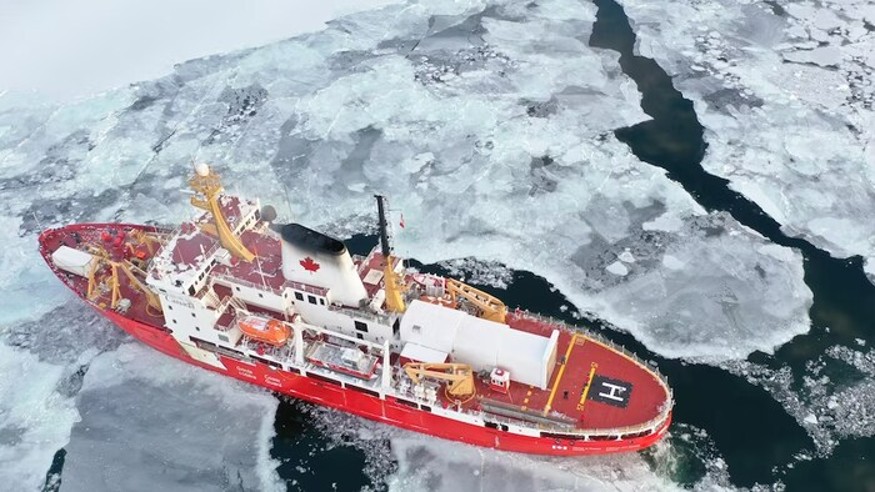
Finally, there is the North. Melting ice is turning the Arctic into the country’s most sensitive strategic frontier, coveted and increasingly accessible. Canadian sovereignty there rests less on an occasional military presence than on an asset that is hard to dispute: the permanent presence and ancestral governance of Inuit communities. That is a lesson worth remembering — security is never just a matter of equipment.
Know before you act
What should we take from this overview? That yesterday’s categories no longer hold. Defence, the economy, intelligence, the digital sphere and even social cohesion now form a continuum, and that is precisely what makes the task so arduous. An attack on a power grid, a disinformation campaign on the eve of an election, a foreign stake in a strategic company: each of these acts, taken in isolation, seems innocuous, yet together they amount to continuous pressure.
Canada long believed itself sheltered. It is discovering, sometimes brutally, that the security of an open democracy has to be defended every day, on fronts that cannot be seen. The good news is that clear-sightedness has returned. The less good news is that it comes at a price — financial, political and in shared vigilance. It remains to be seen whether we will be able to pay it before others present us with the bill.
All figures and quotations are taken from verifiable sources (the federal government, CSIS, the Raoul-Dandurand Chair, Le Devoir, Options politiques, BLG), listed at the end of the text. I have treated the Prime Minister’s quotations with caution: they are attributed as reported by the press, with an endnote making this clear
References
Office of the Prime Minister of Canada, Prime Minister Carney announces the Defence Industrial Strategy, and related statements, February 2026; remarks at the World Economic Forum in Davos, January 2026.
Government of Canada, Canada advances the Defence Industrial Strategy to strengthen security, sovereignty and prosperity, 20 February 2026 (canada.ca).
Department of Finance Canada, Canada welcomes progress towards establishing the Defence, Security and Resilience Bank, 29 April 2026 (canada.ca).
A. Kaab, “Canada et États-Unis : l’asymétrie stratégique ne disparaît pas”, Options politiques (IRPP), 16 February 2026.
What is the next step in the defence relationship between Canada and the United States?, Le Devoir, 3 April 2025.
Canadian Security Intelligence Service (CSIS), Foreign interference threats to Canada’s democratic processes; parliamentary committee notes on the PRC threat and Operation “Fox Hunt” (canada.ca).
Public Safety Canada, 2025–26 Departmental Plan and National Security News Releases (nomination of a candidate for the post of Foreign Influence Transparency Commissioner, 13 March 2026; Office of the National Counter Foreign Interference Coordinator).
Observatoire des conflits multidimensionnels, Chaire Raoul-Dandurand (UQAM), Geopolitical cyber incidents in Canada: 2026 overview, IEIM-UQAM.
BLG, 2025 review and 2026 outlook: major developments in cybersecurity and privacy, January 2026; Federal Government Digital Sovereignty Framework; Bill C-8.
Government of Canada, Canada–United States relations and Strengthening security at Canada’s border, 2026 updates (international.gc.ca; canada.ca).
The quotations attributed to the Prime Minister are taken from his public statements as reported by the sources above.
Translated from French. The French original prevails.