Long seen as an indispensable strategic partner in Central Africa, Rwanda is now watching its diplomatic standing shift. A tougher tone from Washington, Kinshasa’s diplomatic offensive at the United Nations and the realignments under way within La Francophonie point to a paradigm shift: Kigali’s much-vaunted stability is no longer enough to neutralise accusations of interference and economic predation in the eastern DRC. A quiet turning point, but a potentially decisive one.
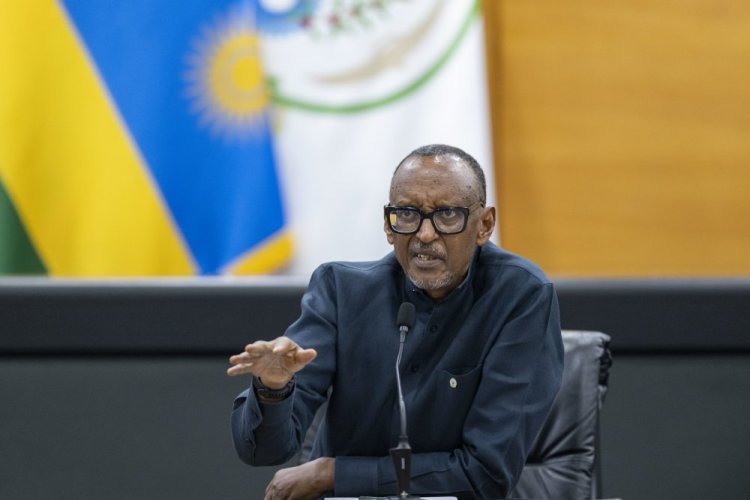
Perceptions of Rwanda are changing. For almost thirty years, Kigali enjoyed a singular political credit in Western capitals: that of a state rebuilt with rigour after the 1994 genocide, with a strong, effective central government capable of ensuring domestic security and economic growth. This image, shaped by the trajectory of its president, Paul Kagame, long underpinned the approach of its international partners, foremost among them the United States.
This reading, centred on stability and performance, often led partners to play down recurring accusations of Rwandan interference in the eastern Democratic Republic of the Congo (DRC). The successive crises in North Kivu and South Kivu were analysed through the prism of regional complexity, the proliferation of armed groups and the unresolved legacies of the wars of the 1990s. In this narrative, Kigali appeared less as a central actor than as a neighbour caught up in a difficult security equation.
Yet this narrative is crumbling. In Washington, the tone has hardened markedly in recent months. Without any dramatic break, the US administration now speaks more openly about respect for Congolese sovereignty and the need to establish clearly who is responsible for supporting armed groups. Support for Rwanda is no longer presented as a given; it is increasingly framed in terms of conditionality and heightened demands.
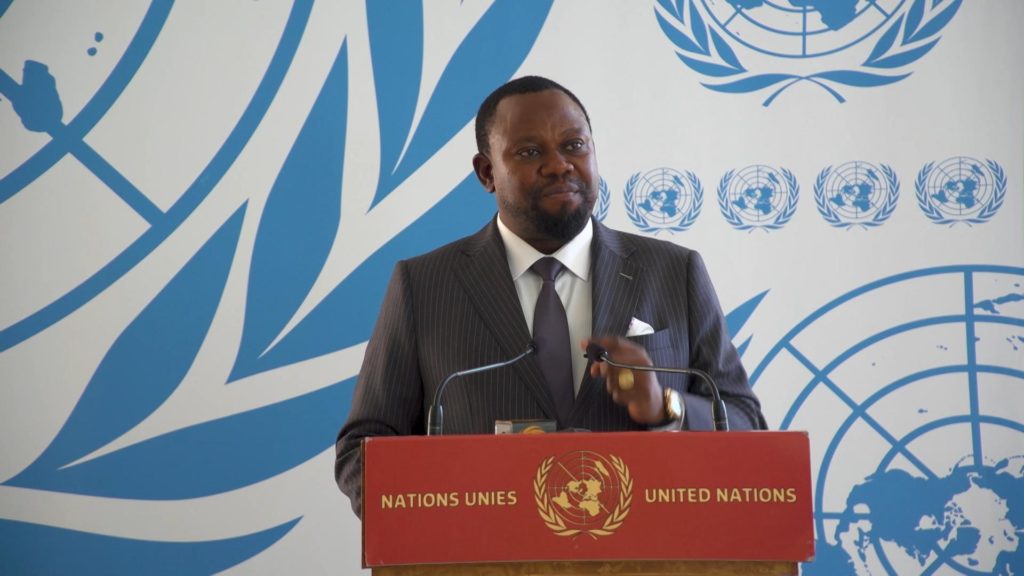
This shift is echoed in the diplomatic offensive led by Kinshasa. Before the United Nations Human Rights Council in Geneva, the Congolese human rights minister, Samuel Mbemba, crossed a political threshold by explicitly naming Paul Kagame as the “number one culprit” for the violence documented in eastern DRC. Drawing on a report consolidating data from UN experts and NGOs, he set out in detail the large-scale attacks on life and physical integrity, the systematic sexual violence and the forced displacement recorded in a single year.
But the most strategic element of his address lies elsewhere: in the link drawn between this violence and the exploitation of strategic minerals, notably coltan. By highlighting precise figures on forced artisanal production in certain mining areas, and by referring to organised economic networks, Kinshasa is shifting the debate. This is no longer merely a chronic humanitarian crisis; it is a war economy connected to global supply chains.
This interplay between local violence and global interests confronts Western partners with their own contradictions. Kivu’s minerals are essential to the technology and energy industries. Turning a blind eye to the conditions under which they are extracted, or to the political and military dynamics surrounding them, is becoming increasingly difficult to justify, both ethically and strategically.
The Congolese minister’s diplomatic round was not confined to Geneva. His visit to Ottawa immediately afterwards was intended to widen the circle of states receptive to the argument of direct Rwandan responsibility. This strategy of internationalisation comes at a time when the international community itself appears to be repositioning.
In the French-speaking world, the signals are telling. The prospect of French backing for a DRC candidate to head the International Organisation of La Francophonie, replacing the current Secretary-General, Louise Mushikiwabo, a former Rwandan foreign minister, would be a powerful political gesture. Her election in 2018 had marked a notable rapprochement between Paris and Kigali. A shift in Kinshasa’s favour would signal a significant diplomatic rebalancing at a time of heightened tensions over the Congolese question.
Taken in isolation, each of these developments could be read as a tactical adjustment. Together, they point to a deeper change. The period of strategic indulgence that Kigali enjoyed appears to be reaching its limits. Rwanda remains a central player in Central Africa, a major contributor to peacekeeping operations and a sought-after security partner. But the separation between domestic stability and regional destabilisation is now harder to sustain in international discourse.
The explicit call for sanctions against Paul Kagame, made in Geneva by Samuel Mbemba, would have been a fringe position only a few years ago. Today it is circulating without being dismissed out of hand. There is no sign that an international consensus is imminent. But the mere fact that the idea is being discussed shows that the lines are shifting.
The change in stance does not yet amount to a break. It is more akin to a gradual reordering of priorities. For a long time, Rwandan stability and effectiveness took precedence over questions about regional dynamics. Now normative pressure – respect for sovereignty, political accountability, traceability of resources – is gaining ground.
For Kigali, the stakes are high: preserving its diplomatic capital while facing a more organised challenge. For Western partners, the question is one of consistency: can they continue to promote a rules-based international order while going easy on an ally accused of breaking those rules? Rwanda, long held up as a model of resilience and state discipline, thus finds itself at the heart of a wider debate on the limits of realpolitik. The paradigm is shifting; its consequences have yet to be gauged.
Translated from French. The French original prevails.