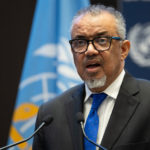
For the first time since the UN Human Rights Council was established in 2006, a Swiss national will hold its presidency. Jürg Lauber, Switzerland’s ambassador to the UN in Geneva, was elected on 9 December 2024, marking a significant milestone for the Confederation. This prestigious post, bestowed on a Swiss diplomat, is an honour, but also a complex mission in an international context marked by mounting tensions and challenges to the defence of human rights. Jürg Lauber’s personality, background and vision will play a central role in carrying out this mission.

Jürg Lauber: a seasoned diplomat in the service of human rights
Aged 61 and a native of Zug, Jürg Lauber embodies the rigour and discretion characteristic of the Swiss diplomatic tradition. With a career spanning several decades in the Swiss diplomatic service, he is known for his ability to navigate complex, multilateral environments with finesse. Before being appointed ambassador to the UN in Geneva, he held key positions, including that of Permanent Representative of Switzerland to the United Nations in New York.
His election by acclamation on 9 December 2024 in Geneva reflects the esteem in which he is held by member states. None of the countries in Switzerland’s regional group challenged his candidacy, a fact that underlines the respect for his experience and diplomatic skill. In taking on this role, Jürg Lauber also embodies the Swiss values of neutrality, humanitarian commitment and dialogue.
“It is a great honour and an immense responsibility, but above all an opportunity to strengthen our commitment to the Council,” he said after his election. The statement reflects his ambition to restore room for diplomacy in a Council too often paralysed by political divisions. Jürg Lauber’s presidency comes at a critical moment for the Human Rights Council. The UN body is regularly criticised for its ineffectiveness, the politicisation of its debates and the tensions among its members. The various regional blocs – Africa, Asia, Europe, the Americas – often take divergent positions on fundamental issues such as women’s rights, ethnic minorities and the consequences of armed conflict.
As President, Jürg Lauber will have to meet several challenges:
- Promoting dialogue amid polarisation: with heightened tensions between the major powers, notably the United States, China and Russia, the Council is sometimes seen as an arena for confrontation rather than a space for constructive dialogue. Lauber’s ability to strike a balance between Swiss neutrality and firmness on fundamental principles will be decisive.
- Making the Council effective again: Current mechanisms, such as the Universal Periodic Review (UPR), suffer from administrative cumbersomeness and political limitations. Jürg Lauber will have to encourage reforms aimed at strengthening the credibility and impact of the resolutions adopted.
- Responding to global emergencies: Humanitarian crises, mass human rights violations and the consequences of climate change demand swift, concerted responses. The Swiss presidency will have to play a driving role in mobilising member states on these priority issues.
- Reassuring civil society and NGOs: With some NGOs accusing the Council of being ineffective, or even complacent towards certain regimes, Jürg Lauber will have to restore trust with these key players in the promotion of human rights.
A test for Swiss neutrality
Switzerland is seen as a natural mediator thanks to its neutrality. However, that stance could be put to the test in a Council where national interests often take precedence over universal values. Jürg Lauber will have to steer a course between the expectations of the international community, pressure from the major powers and principles grounded in fundamental rights.
Translated from French. The French original prevails.