After the trauma of the general election of 29 October 2025 and an initial official report recording at least 518 deaths, Tanzania is opening a second inquiry. This time, the aim is no longer simply to understand what happened, but to identify possible individual and criminal responsibility. It is a decisive step for Samia Suluhu Hassan’s government, but its credibility will depend above all on its independence and its ability to investigate without taboos.
Ten months after the violence that profoundly shook Tanzania in the aftermath of the general election of 29 October 2025, the country is entering a new phase in its difficult search for the truth.
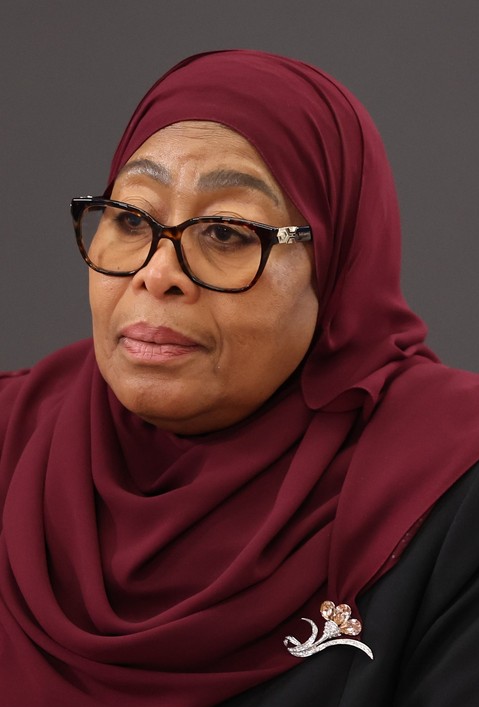
On 7 August, President Samia Suluhu Hassan officially launched a six-member commission of inquiry chaired by Judge Shabani Ally Lila. It has five months to examine offences and breaches of the law that may have been committed before, during and after the vote and, above all, to identify those who may bear responsibility for them.
This new stage follows the work of an initial commission chaired by former Chief Justice Mohamed Chande Othman. In April, it put the death toll at at least 518, while acknowledging that the actual number of victims could be higher. Several thousand people were also injured during the unrest.
The figure is considerable. It is the official death toll given by the Tanzanian authorities, yet it has not put an end to the controversy over the true scale of the crackdown. The opposition and several human rights organisations have disputed aspects of the first inquiry and called for independent investigations into the use of force by the security services.
From “What happened?” to “Who is responsible?”
It is precisely here that the fundamental difference between the two commissions lies.
The first was tasked with reconstructing the events, establishing their causes and assessing their consequences. The second has a far more directly judicial purpose: to identify the alleged perpetrators of offences, whether those who allegedly organised or financed the violence, those who allegedly took part in it, or officials who may have broken the law.
President Samia Suluhu Hassan has set out this ambition clearly: in her view, the new commission must determine “who incited, participated and provided the funds” that made the violence possible. In other words, Tanzania is attempting to move from establishing the facts to individual accountability. This shift also responds to a recommendation by the first commission, which had called for certain questions, notably the use of firearms and responsibility for the violence, to be investigated further.
A commission strengthened by two foreign judges
To lend the arrangement greater weight, Dar es Salaam made the unusual choice of bringing two senior foreign judges onto the commission alongside its four Tanzanian members. Namibia’s Petrus Tileinge Damaseb, his country’s Deputy Chief Justice, and Uganda’s Cheborion Barishaki, a judge of the Court of Appeal, thus sit alongside the Tanzanian judges Shabani Ally Lila, Gad John Mjemmas, Awadh Mohamed Bawazir and Aishieli Nelson Sumari.
For supporters of the process, this regional dimension provides a further guarantee of impartiality. The idea is to combine knowledge of local conditions and of Tanzanian law with an outside perspective that could help allay suspicions of internal deal-making. Several Tanzanian lawyers and academics back this approach. The lawyer Steven Kaswahili, in particular, believes that the presence of foreign judges can strengthen confidence in the inquiry. The political scientist Salbinus David, of the University of Dar es Salaam, argues for his part that the diversity of legal systems represented can make it possible to test analyses and evidence against one another.
Yet this partial internationalisation has not itself escaped controversy. The participation of the Namibian judge, in particular, has drawn criticism from opposition parties in Namibia, while some Tanzanian opposition figures have challenged the choice of regional partners.
Legality challenged, then upheld
Nor did the Lila commission come into being on 7 August. Its first four Tanzanian members had been appointed as early as 18 May. Two activists then went to court to challenge its legality and seek the annulment of the presidential decision.
On 17 July, the High Court of Tanzania dismissed their petition, ruling that the President had acted within the powers conferred on her by the Commissions of Inquiry Act. The two foreign judges then joined the body before its official launch in its current six-member configuration. In strictly legal terms, the commission therefore now stands on a firmer footing. But the crucial question now lies elsewhere: will it be independent enough to investigate all those involved in the violence, including when the investigations lead to state institutions?
An election that left deep divisions
This question is all the more important given that the violence of October 2025 occurred in an extremely tense electoral climate.
The vote had been preceded by the exclusion or imprisonment of leading opposition figures and by a marked deterioration in the political climate. Several international observers had sharply criticised the conditions under which the election was held. The protests that followed the vote were accompanied by an internet shutdown and a crackdown whose scale remains a matter of debate.
Testimony gathered since then has also pointed to civilians being hit by gunfire even though they were not necessarily taking part in the protests, making the question of the security forces’ conduct unavoidable. It is on this ground that the credibility of the Lila commission will truly be judged.
Identifying those who organised riots, those responsible for destruction or any financiers of violence forms part of its mission. But an inquiry capable of convincing Tanzanian society as a whole will also need to be able to establish, where it exists, the responsibility of public officials and officeholders.
The test of independence
Joseph Warioba Butiku, chairman of the Mwalimu Nyerere Foundation and a respected figure in Tanzanian public life, sums up the difficulty in a simple question: who instigated the violence?
In his view, Tanzanians must let the commission do its work before passing judgement on its findings. His reasoning is that no lasting reconciliation will be possible until a shared factual foundation has been established. The stakes therefore extend far beyond the six commissioners and their five months of work. After an electoral crisis that has done lasting damage to the image of stability Tanzania had enjoyed for decades, Samia Suluhu Hassan’s government must show that the process it has launched is not merely intended to close the matter politically, but that it can pave the way for genuine accountability.
For the Lila commission, the challenge will be to win over the government, the opposition, the victims’ families and an international community keeping a close eye on the country’s political development, all at the same time. Its credibility will therefore not be measured solely by the number of people it names. It will hinge on a far more fundamental question: how far up the chain of responsibility will it be allowed to go? That is probably where the difference will lie between yet another commission of inquiry and a genuine process of justice.
Translated from French. The French original prevails.