Al-Aydi was facing proceedings before the Lebanese military courts. He was accused, along with six other people, of taking part in a network linked to the Israeli intelligence services. The six other suspects were being held in a Lebanese prison. Al-Aydi, however, was in the hands of Hezbollah.
The escape, in March 2026, of a man held by Hezbollah in the southern suburbs of Beirut has brought back into the spotlight a question long left in the shadows: does the Shia militia, beyond its weapons, retain an autonomous apparatus for arrest, interrogation and detention? Earlier investigations referring to several clandestine prisons do not make it possible to state that all of these sites still exist. But the Khaled Al-Aydi case shows that the issue is not merely a thing of the past.
The debate about Hezbollah almost always centres on its missiles, its drones, its fighters and on the ability of the Lebanese Army to regain the monopoly on the use of force. Yet there is another attribute of sovereignty, less visible but just as fundamental: the power to arrest an individual, to interrogate them and to deprive them of their liberty. And it is precisely on this ground that a case which arose during the 2026 war has reopened an old file.
An escape that exposes a problem of statehood
In June, Associated Press (AP) pieced together the story of Khaled Al-Aydi, a Palestinian from Syria who also holds Ukrainian citizenship. According to three judicial officials, two senior Lebanese security officials and a Hezbollah political official interviewed by the agency, Al-Aydi was being held by Hezbollah in the suburbs of Beirut when he took advantage of the Israeli bombardments in March to escape. The case is all the more remarkable given that Al-Aydi was the subject of proceedings before the Lebanese military courts. He was accused, along with six other people, of belonging to a network linked to the Israeli intelligence services. The six other suspects were being held in a Lebanese prison. Al-Aydi, however, was in the hands of Hezbollah. The AP news agency also reports that a judicial warrant had been issued against him as early as September 2025.
The crucial question, then, is not whether the espionage charges against him are well founded. It is an institutional one: how can a man wanted by the Lebanese judiciary and caught up in military proceedings be held by a militia rather than by the state? The Al-Aydi case does not prove the existence, in 2026, of a vast network of clandestine prisons. It does, however, establish a point that is much harder to dismiss: at least one detainee who fell under a Lebanese judicial case was still under Hezbollah’s direct control at a time when the state claims it wants to restore its authority.
Prisons described long before the war
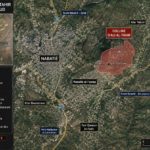
The issue is not new. An investigation published in October 2019 by Independent Arabia already described an internal detention and interrogation apparatus. The outlet quoted, among others, a former Hezbollah member who said he had spent nearly a year in one of these facilities, as well as several sources describing centres in the suburbs of Beirut, notably in Haret Hreik, Bir el-Abed and the Roueiss area. The investigation must be read with due caution: a significant share of its information rested on testimony and anonymous sources. It also contained contradictory elements. The analyst Toufic Shouman considered it an exaggeration to speak of a network of “prisons”, while acknowledging the existence of interrogation centres and that Hezbollah could hold certain suspects deemed particularly sensitive before handing them over — or not — to the authorities.
One detail is particularly important today. The al-Moujtaba complex, often featured in lists circulating on social media as a prison still in operation, was already described in 2019 as a former detention site that had been closed after its existence was made public. In other words, the list of five sites still circulating today cannot be reproduced as a snapshot of the current situation.
The massive bombardments that have struck the southern suburbs since 2024, and again in 2026, make such caution all the more essential. Facilities may have been destroyed, abandoned or relocated. What can be documented historically does not necessarily correspond to the current geography of Hezbollah’s security apparatus.
From the hostages of the 1980s to clandestine detention

This question also harks back to an older history. My book Hezbollah – Israël, une guerre sans limites addressed the kidnapping of foreign nationals in Lebanon in the 1980s, among them several French citizens. These included Michel Seurat, Jean-Paul Kauffmann, Marcel Carton and Marcel Fontaine. These hostage-takings were often claimed under names such as Islamic Jihad, within the pro-Iranian Shia movement in which Hezbollah was formed and rose to dominance.
It would, however, be wrong to draw a mechanical line of continuity between the hostage-takings of the 1980s and the detention centres being mentioned today. The contexts, objectives and actors have changed. But the parallel sheds light on a political constant: the ability of an armed organisation to remove people from the authority of the state, to interrogate them and to decide their fate. Forty years on, the question is therefore no longer one of foreign hostages used as instruments of diplomatic pressure. It is whether Hezbollah retains, in the Lebanon of 2026, an autonomous detention capability that still lies beyond the judicial and security control of the state.
A sovereignty that is not limited to weapons
This is where the issue takes on a new political dimension. The Lebanese government is no longer talking merely about limiting Hezbollah’s armed presence south of the Litani. It says it wants to restore the state’s monopoly on weapons and extend its authority over the whole of the country. At his meeting with Donald Trump in Washington on 21 July, President Joseph Aoun stressed the need to allow the Lebanese state to exercise its sovereignty in full through its own forces. Reuters noted that the agreement negotiated under US mediation on 26 June links Israel’s gradual withdrawal from Lebanon to the disarmament of Hezbollah and the return of the Lebanese army to the areas concerned.
But sovereignty is not measured solely by the number of missile launchers handed over to the army. If an organisation retains the ability to arrest a suspect, conduct its own interrogations, choose where and for how long he is detained and decide when, if ever, he will be handed over to the courts, it retains some of the sovereign prerogatives of the state. That is why the Al-Aydi affair is politically more significant than it appears. The problem is no longer theoretical. A man who was the subject of Lebanese judicial proceedings was held by Hezbollah, then escaped during Israeli strikes. The state found itself a mere spectator to a detention it did not control, and then to an escape it lacked the means to prevent.
Sovereignty is also at stake in the civil service
The problem does not end with the structures Hezbollah has built outside the state. It also concerns the influence the movement has wielded, directly or through its allies, within Lebanon’s institutions themselves. A study by Chatham House described this hybrid arrangement: ministerial representation, relays in the civil service, municipalities and public bodies, but also the ability to exert influence over infrastructure as sensitive as the airport and the ports.
Beirut’s international airport is the most sensitive example. In July 2025, Reuters reported that the Lebanese authorities had tightened controls at the airport, where Hezbollah had for years enjoyed considerable freedom of action, in order to make transfers of funds more difficult. A few months earlier, Beirut had already suspended commercial flights to and from Tehran following Israeli accusations that civilian aircraft were being used to bring in money destined for the movement. The decision had sparked protests by Hezbollah supporters around the airport.
The port of Beirut offers another example of this tension between political power and judicial authority. After the explosion of 4 August 2020, Reuters reported that the former ministers Ali Hassan Khalil and Ghazi Zeaiter, members of the Amal movement, an ally of Hezbollah, had been charged with negligence. Hezbollah subsequently came out publicly against Judge Tarek Bitar; in September 2021, the agency reported that a senior official of the movement, Wafiq Safa, had sent him a threat aimed at having him removed from the investigation. These facts do not make it possible to attribute the explosion to Hezbollah, but they illustrate the obstacles the Lebanese judiciary ran into when it sought to implicate officials belonging to the country’s main politico-sectarian machines.
On electricity, however, one needs to be precise. To speak of Hezbollah “controlling the Ministry of Energy” would be an overstatement. The Energy and Water portfolio was held for a decade by the Free Patriotic Movement (FPM), a Christian party then allied with Hezbollah. Reuters documented in 2020 the FPM’s grip on this portfolio and on Électricité du Liban. The example therefore illustrates not so much a direct takeover of the ministry by Hezbollah as a system of alliances enabling the movement to extend its influence beyond the ministries it held itself.
This distinction is becoming central in 2026. In January, the Minister of Economy, Amer Bisat, told Associated Press that restoring sovereignty was not limited to disarmament: it also meant controlling the borders and the airport, and tackling smuggling and money laundering. In other words, the reclaiming of the state is not being decided solely in missile depots. It is also being decided in offices, at border crossings, on the tarmac in Beirut — and, if any still exist, at the doors of clandestine detention sites.
The false lead of Ali Hassan Saab
A further note of caution is called for. Recent reports on the “five Hezbollah prisons” sometimes claim that their locations were revealed to the US authorities by Ali Hassan Saab. This account does not stand up to the chronology. Documents from the US Department of Justice show that Alexei Saab, also known as Ali Hassan Saab, was arrested in New York on 9 July 2019 and subsequently indicted for his activities on behalf of Hezbollah’s external operations organisation. Yet information about Hezbollah detention centres was already circulating before then, and the available US court documents chiefly detail his operational and target-reconnaissance activities. They do not make it possible to credit Saab with revealing the five prisons in the southern suburbs. This correction matters: the case is serious enough without being weakened by an attribution that cannot be proven.
The next test for the Lebanese state
Lebanon is thus entering a phase in which disarming Hezbollah can no longer be seen purely as a military operation. It raises the question of the entire parallel architecture the movement has built up over several decades: security networks, intelligence, communications, territorial control and, potentially, places of detention. But it also raises the question of the influence accumulated within the institutions and infrastructure of the state, from the airport to the borders and certain government departments. For the state, the question ought to be simple: are there still people being held by Hezbollah outside facilities controlled by the Lebanese authorities? If so, how many? Under whose authority are they being interrogated? And why are they not immediately handed over to the judicial authorities?
It would be rash today to claim that the five prisons described several years ago are still in operation. Yet after the Al-Aydi affair, it is just as hard to argue that the issue belongs to the past. The real test of Lebanese sovereignty may therefore not lie solely in the handover of a missile or the closure of an arms depot. It will also be a matter of who controls a border, an airport terminal, a government department — and, more mundanely still, who holds the right to arrest and imprison. Sovereignty will be fully restored when, in Lebanon, these powers can no longer be exercised other than in the name of the state.
FURTHER READING
• Hezbollah raises the spectre of civil war: who would really help the Lebanese army disarm it?
• Hezbollah refuses to disarm and threatens Lebanese government
• What the ceasefire agreement between Israel and Lebanon provides for
Translated from French. The French original prevails.