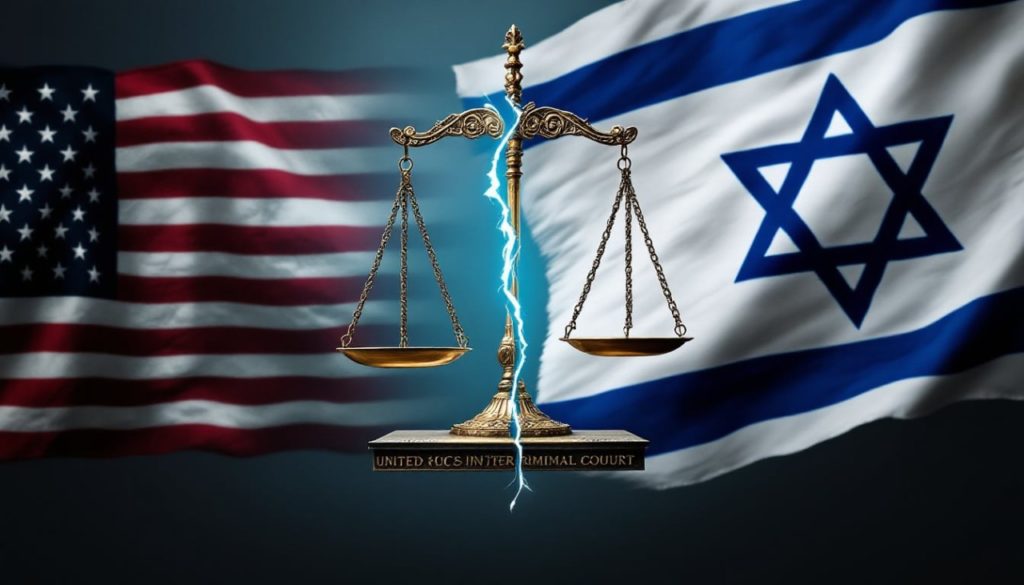
South Africa’s application to the International Court of Justice (ICJ), presented by its counsel John Dugard on 29 December 2023, refers to a genocidal process “under way” in Gaza, with 25,000 dead. On 4 February 2025, UNICEF announced a figure of 47,161 dead, including more than 14,500 children, without counting the 11,200 missing, who are probably under the rubble or held by the Israeli army. Two notions are clearly developed in the application: the colonisation and the apartheid of which the Palestinian people are victims.
This context of massacres and suffering among the Palestinian population highlights its struggle for freedom, independence and self-determination, which has endured for seventy-five years. Above all, however, it points to the responsibility of the State of Israel for failing to prevent genocide and for committing genocidal acts, as explained by François Dubuisson, Professor of International Law at the Université Libre de Bruxelles (Fayoumi, Morelle and Allo, 2024).
What Israel fears is that the ICJ case over genocidal acts will lead to Israeli leaders being tried by the International Criminal Court (ICC). One recalls the prosecution of the former Chadian president Hissène Habré in Senegal by a hybrid tribunal set up by the African Union (Weill and Salles, 2024).
On 26 January 2024, the ICJ ruled that the State of Israel must take all measures within its power to prevent the commission against the Palestinians in Gaza of any act falling within the scope of Article II of the Convention, in particular the following acts: killing members of the group, causing serious bodily or mental harm to members of the group, deliberately inflicting on the group conditions of life calculated to bring about its physical destruction in whole or in part, and imposing measures intended to prevent births within the group (International Court of Justice, 2024).
The Court considers that Israel must ensure, with immediate effect, that its military does not commit any of the acts described above, yet nine months after the urgent provisional measures ordered by the ICJ, what is unfolding runs entirely counter to them, with an escalation of violence that prompted ICC Prosecutor Khan to declare : “No one has the right to commit war crimes or crimes against humanity” (RTBF, 2024). On 28 April 2024, the US senator Bernie Sanders stressed in an interview with the television channel CNN that “there is no doubt that Netanyahu has engaged in ethnic cleansing in the Gaza Strip, displacing 80% of its population”.
Israel has been waging a devastating war in the Gaza Strip since 7 October 2023. According to the toll compiled by the Gaza Strip Ministry of Health (Hamas), as of 16 July 2026 more than 73,000 people had been killed, 173,000 injured, 33,000 women and girls killed, 50,000 children injured, 260 Palestinian journalists killed and 1.4 million people displaced.
On 21 November 2024, the ICC Pre-Trial Chamber concluded as follows: “There are reasonable grounds to believe that, during the relevant period, international humanitarian law applies, as regards the international armed conflict between Israel and Palestine, since both are High Contracting Parties to the 1949 Geneva Conventions and Israel occupies at least parts of Palestine. The Chamber also found that the law relating to non-international armed conflicts applies to the fighting between Israel and Hamas. In its view, the alleged conduct of Mr Netanyahu and Mr Gallant concerns the activities of Israeli government bodies and the Israeli armed forces against the civilian population in Palestine, more specifically civilians in Gaza. It therefore concerns the relationship between two parties to an international armed conflict, as well as between an occupying power and the population of an occupied territory. For these reasons, with regard to war crimes, the Chamber considers it appropriate to issue the arrest warrants under the law of international armed conflict. The Chamber also found that the alleged crimes against humanity were part of a widespread and systematic attack against the civilian population of Gaza ” (ICC, 2024).
It should be noted that a State’s unwillingness to prosecute, like its inability to do so, was subsequently defined during the negotiations on the Rome Statute, which brought to light a number of contradictions arising from the desire to meet a twofold requirement. On the one hand, the Court had to be equipped with instruments broad enough to recognise, where appropriate, the inability or unwillingness of States to prosecute the accused. On the other hand, such instruments had to be clearly delimited, since the subject matter of the Court’s jurisdiction remains crimes committed by individuals and not the administration of justice by States. Through the definition of the concepts of “unwillingness and “inability”, an attempt was made to reconcile these requirements: the provisions of articles 17.2 and 17.3 reflect the results that were achieved. (Della Porte,2002).
The ICJ declared that “the State of Israel shall take immediate and effective measures to enable the provision of urgently needed basic services and humanitarian assistance to address the adverse conditions of life faced by Palestinians in the Gaza Strip” (ICJ, Order, 26 Jan. 2024, §86), (Maurel, 2024). The Prime Minister, Benjamin Netanyahu, is complicating the situation further by rejecting every call for a ceasefire, including the most recent one proposed by the United States, which led to resolution SC/15723 of 10 June 2024. On 5 August 2024, the Israeli Finance Minister, Bezalel Smotrich, responded to the ICJ judges regarding the implementation of the urgent provisional measures: “It would be just and moral to let two million Gazans starve to death until the hostages are returned“. This recalls the shameful words of the former US Secretary of State Madeleine Albright about the deaths of half a million children as a result of the embargo on medicines against Iraq, in an interview on the CBS programme Sixty Minutes on 12 May 1996: “I think this is a very hard choice, but the price — we think the price is worth it ” (Albright, 2006).
Faced with attempts to obstruct, intimidate and improperly influence ICC officials, Karim A.A. Khan, elected ICC Prosecutor in 2021, has stated that he will not hesitate to submit further applications for arrest warrants if he considers that there is a realistic prospect of conviction. On 21 November 2024, the ICC issued arrest warrants for two senior Israeli officials: the Prime Minister, B. Netanyahu, and the former Defence Minister, Yoav Gallant (ICJ, 2024).
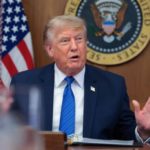
With almost all of the 2.4 million inhabitants of the Gaza Strip, under Israeli siege, displaced by the war, President Donald Trump floated on 25 January 2025 the idea of moving Gazans to Egypt and Jordan in order to clean up the territory under US control. The proposal drew widespread condemnation, most notably from the non-governmental organisation (NGO) Amnesty International, which stated on 5 February 2025: “In the face of the dangerous threats made by President D. Trump, it is more important than ever that the rest of the international community categorically rejects these proposals and steps up diplomatic efforts, in line with international law, to end Israel’s unlawful occupation, dismantle apartheid and uphold human rights for Palestinians and Israelis alike. History has amply shown that setting international law aside for reasons of political expediency is a sure way of perpetuating violations” (Amnesty International, 2025).
President Trump’s administration has repeatedly sought to undermine the work of the ICC by imposing sanctions on prosecutors involved in the investigation into US and Israeli actions. Who stands to gain? Why seek to interfere in ongoing judicial proceedings and protect, at all costs, people suspected of war crimes? Unconditional US support for the State of Israel is incompatible with the handling of international judicial cases, as the law must prevail over politics.
The ICC has become the arena for a bitter political and media battle since President Donald Trump’s statement on the sanctions imposed on the ICC on 6 February 2024, which are doing considerable harm to relations between UN member states and to multilateral cooperation in the search for a peaceful and lasting solution to this conflict. There has been a reversal in the threats of sanctions: instead of targeting those responsible for colonialist policy in Gaza and the West Bank, they are aimed at officials serving international criminal courts. “We will never accept any pressure from anyone whatsoever“, said the President of the ICC, Judge Tomoko Akane, in her opening address to the 24th annual session of the Assembly of States Parties in The Hague on 1 December 2025.
Secretary of State Marco Rubio launched a fresh offensive against the ICC on 14 July 2026, reaching a new level of aggression by declaring: “Brick by brick, we will dismantle it” (21 News.be, 2026). A wave of withdrawals by African countries (Mali, Burkina Faso, Niger and Chad) as well as by Venezuela followed, for one sole stated reason: “The ICC focuses too much on the countries of the Global South” (TV5Monde info, 2026).
The ICC maintains that, in certain circumstances defined by the Rome Statute and international law, it may investigate and prosecute alleged crimes committed on the territory of member states or where cases are referred to it by the United Nations Security Council.
Even if these judicial proceedings were brought against the Israeli leaders implicated in war crimes in Gaza, there are many obstacles to their feasibility. It is worth noting the ICC’s difficulty in carrying out arrests, which compounds the problems of prosecuting war crimes under international law. Ron Levi and Heather Schoenfeld write: “Through a combination of political manoeuvring and judicial decision-making, a substitute arrest tool was forged at the ICTY, one that maintains the Tribunal’s dependence on international organisations or states, but nonetheless gives it greater security in criminal investigation and enforcement” (Levi and Schenfeld, 2008). Given that the execution of warrants depends on the States Parties to the Rome Statute, any state cooperating with the ICC is obliged to arrest a person named in a warrant and surrender them to the Court. This is not the case for certain European Union member states, such as Hungary, for example.
We believe that, unlike the 2009 Goldstone Report, which did not lead to sanctions, South Africa’s 2023 complaint may this time carry more weight at the ICC, thanks to the 2025 Pillay report and to certain countries joining the complaint, such as Brazil, Ireland, Bolivia, Colombia, Libya, Spain, Mexico and Belgium.
In conclusion, we are facing a humanitarian and civilisational crisis in which the application of international law is threatened by certain Western powers that refuse to recognise the obligation to put an end to the crimes perpetrated by the colonial State of Israel. The task is to convince the member states of the United Nations of the need to bring war criminals before the ICC, a severe test for the Secretary-General of the United Nations of the 21st century.
Bibliography :
- Albright, Madeleine,(2006), “The Mighty and the Almighty: Reflections on America, God, and World Affairs”,Harper Collins Ed,352p. ISBN: 0060892579,9780060892579
- Amnesty International, 2025, “President Trump’s claim to seize Gaza and expel Palestinians is unlawful”
- ICJ, International Court of Justice, 2024, “Summary of the Order of 26 January 2024”.
- TV5 Monde info, 2026, “Why is Chad withdrawing from the International Criminal Court?” 28 July 2026,
- Weill, S and Salles, D, (2024), “A step towards peace? The State of Israel on trial in The Hague”, Cahiers de la Justice, No. 1, pp. 9-12.
Translated from French. The French original prevails.