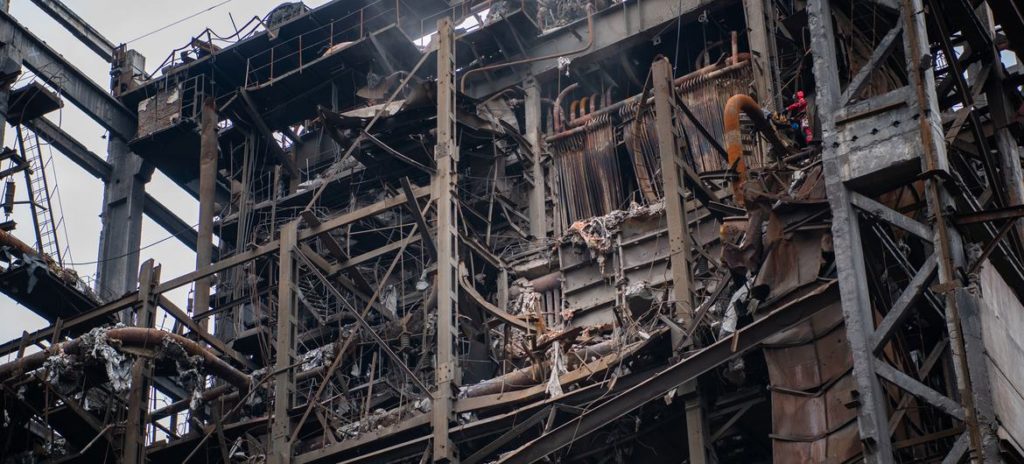
Anastasiia Honcharuk A thermal power plant in Ukraine damaged following an attack (file photo).© HRMMU
The Russian authorities have committed war crimes and crimes against humanity by carrying out repeated attacks on Ukraine’s energy infrastructure, depriving millions of civilians of heating, electricity and water in the depths of winter, according to an independent UN commission of inquiry.
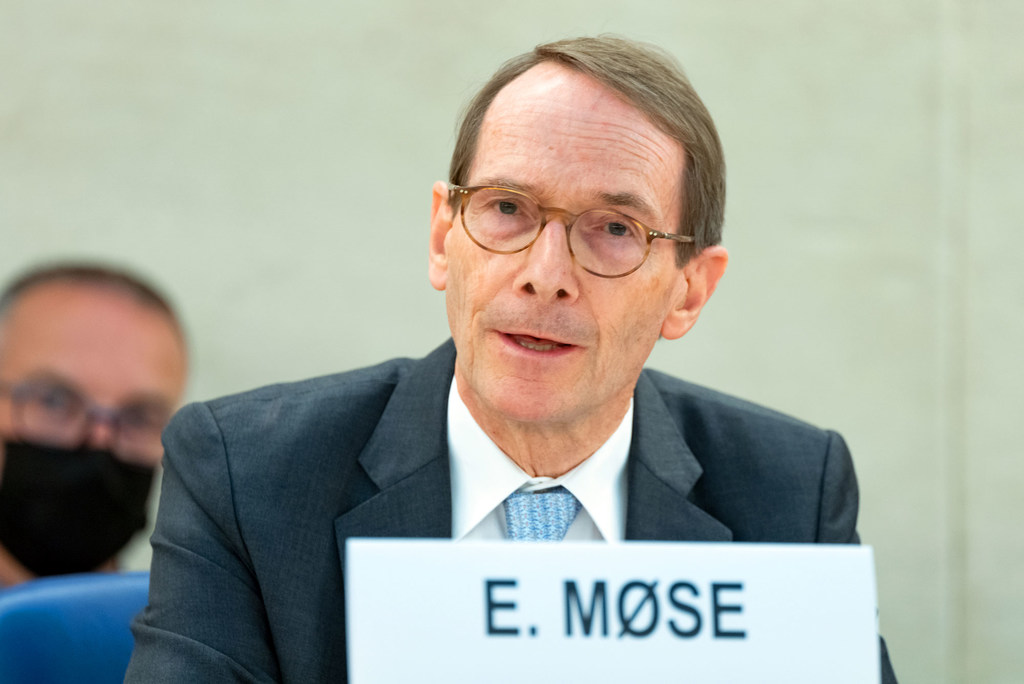
“As the cold season approaches, the Russian armed forces have once again stepped up their large-scale attacks on Ukraine’s energy infrastructure,” said the Chair of the Independent International Commission of Inquiry on Ukraine, Erik Møse, presenting a report to the United Nations General Assembly on Monday.
Millions of civilians deprived of essential services
The Commission examined the consequences of Russian strikes on Ukraine’s energy infrastructure, particularly during the winter of 2025-2026, as well as their cumulative effects since autumn 2022. Over the years, waves of attacks involving hundreds of drones and missiles have grown in frequency, intensity and geographical reach, inflicting considerable damage on Ukraine’s energy sector.
Last winter, as temperatures fell as low as -21°C, millions of people endured prolonged cuts to heating, electricity, gas and water, forcing them to live in particularly harsh conditions. The health and psychological consequences were considerable. Prolonged exposure to the cold, deprivation of essential services and the constant need to find ways to survive took a heavy toll on people’s physical and mental health.
Older people, people with reduced mobility and those dependent on electrical medical devices were particularly vulnerable. Some, fearing they would be trapped in a lift during a power cut, could not even reach a shelter during air-raid alerts. “What was most frightening was falling asleep and not waking up; being afraid of freezing to death was like torture,” a 53-year-old man living in Kyiv said, as quoted in the report.
“I lay there, cold and hungry, without medicine, without anything,” a 74-year-old woman from Kyiv recounted. Children were also hard hit, with prolonged school closures and illnesses linked to the lack of heating in homes.
Deliberate attacks on civilian infrastructure
On the basis of the evidence gathered, the Commission considers that the Russian commanders who ordered the strikes knew that the heating facilities targeted were indispensable to the civilian population, particularly during the winter.
It concludes that the Russian authorities committed war crimes by intentionally directing attacks against civilian objects. It also considers that the repeated attacks, carried out as part of a policy aimed at depriving the population of electricity and other essential services, constitute crimes against humanity in the form of other inhumane acts.
The investigation draws in particular on the testimony of 255 people who lived through these winter conditions in nine Ukrainian regions, as well as on information provided by the authorities, doctors and non-governmental organisations.
The Commission also examined attacks by Ukrainian forces on energy infrastructure in Russia and in the occupied territories of Ukraine. It points out, however, that it was unable to look further into their consequences, owing to a lack of access and of responses from the Russian authorities to its requests for information.
Nationals of 29 countries recruited through trafficking
In another part of its report, the Commission says it has gathered compelling evidence of the recruitment, through human trafficking, of nationals of 29 countries to serve in the Russian armed forces. According to its findings, agents or agencies operating in various countries lured these men with bogus job offers, exploiting their vulnerabilities and holding out the prospect of legitimate employment.
On arrival in Russia, the recruits were forced to sign contracts written in Russian with the Ministry of Defence. They were then sent to the front lines in Ukraine, where they were assigned to dangerous missions. Many were killed or went missing, while others were captured or surrendered to Ukrainian forces.
According to a 35-year-old woman whose husband was recruited in the Caribbean, “they took his passport and simply told him to sign here, here and here on the contract. It was written only in Russian. He was under total pressure and had no other option”.
The Commission of Inquiry highlights the high degree of coordination between the recruitment networks and the Russian authorities, notably in obtaining visas, organising travel and receiving the recruits in Russia. It calls for the release of all victims of this trafficking from the Russian armed forces and recalls that attacks on civilians and civilian objects are prohibited under international law.
Finally, the Commission stresses the need for justice and accountability mechanisms, as well as concrete support for the victims of the violations and crimes documented.
The United Nations Independent International Commission of Inquiry on Ukraine is an independent body mandated by the United Nations Human Rights Council in Geneva to investigate all violations and abuses of human rights, violations of international humanitarian law and related crimes in the context of the aggression against Ukraine by the Russian Federation. The Commission is composed of Erik Møse (Chair), Pablo de Greiff and Vrinda Grover.
Translated from French. The French original prevails.