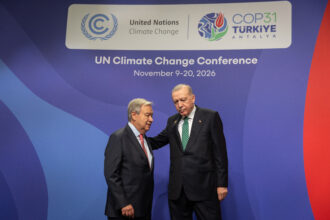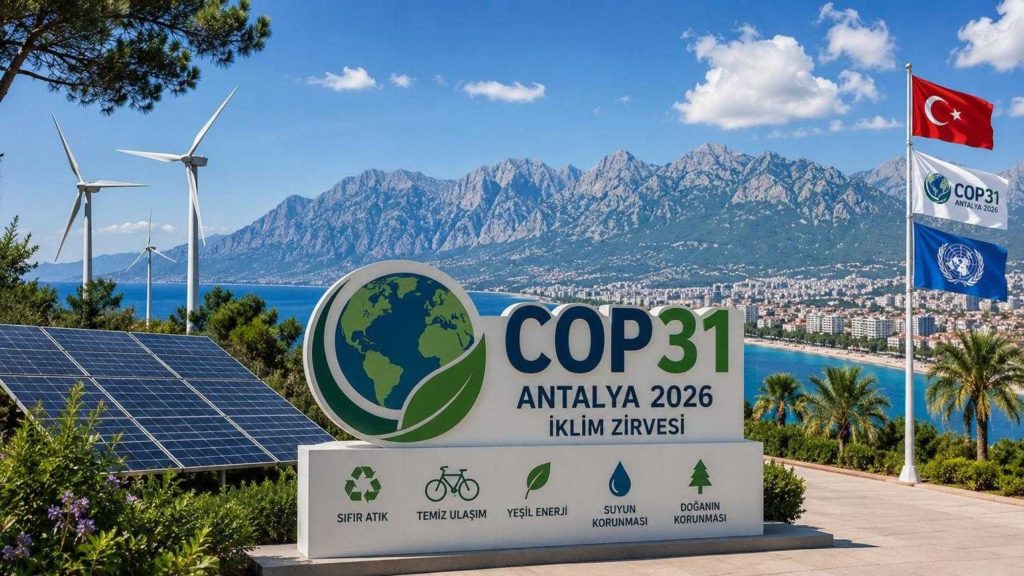
A few days before the opening of COP31 in Antalya, Şebnem İncesu, Türkiye’s Ambassador to Switzerland in Bern, sets out her country’s priorities: accelerating the implementation of climate commitments, mobilising finance and strengthening trust between states. It is an ambition pursued within the framework of an unprecedented partnership with Australia. From 9 to 20 November 2026, Antalya will host the 31st United Nations Climate Change Conference. More than ten years after the adoption of the Paris Agreement, the gathering is expected to advance collective action against climate change. Against a backdrop of geopolitical tensions and financial constraints, the Turkish presidency intends to champion an approach based on dialogue, consensus and action.
La Tribune des Nations: What ambition does Türkiye have for COP31?
Şebnem İncesu: We are convinced that the next chapter of international climate cooperation must be defined as much by what countries deliver as by what they promise. Over the past decade, the international community has adopted collective goals and drawn up national climate plans. These commitments must now be translated into public policies, investment and measurable improvements for people.
We therefore want to make COP31 a “COP of implementation”. As 2030 approaches, the priorities are clear: accelerating emissions reductions, expanding renewable energy, building resilience and mobilising finance on a scale that matches the needs.
Why is this conference also a test for multilateralism?
Geopolitical tensions, economic uncertainty and energy security concerns are putting mounting pressure on international cooperation. At the same time, the effects of climate change are worsening, particularly for vulnerable communities and developing countries, which often have limited financial and technological resources.
COP31 must help to restore trust and to demonstrate that international cooperation can deliver concrete solutions. Climate action touches on development, economic resilience, energy security and social well-being. It therefore requires an ability to work together across differences.
The organisation rests on a sharing of responsibilities with Australia. How will this partnership work?
Türkiye will host the conference in Antalya, hold its presidency under the leadership of our Minister of Environment, Urbanisation and Climate Change, Murat Kurum, and lead its Action Agenda. Australia, represented by its Minister for Climate Change and Energy, Chris Bowen, will lead the formal negotiations in close consultation with Türkiye. It will also carry the Pacific dimension and contribute to shaping the Action Agenda.
This cooperation brings together complementary perspectives. Türkiye lies at the crossroads of Europe, Asia and the Middle East and maintains relations with countries in different regions. Australia brings, in particular, its engagement with Pacific states, whose climate concerns must take centre stage.
How can countries whose needs and capacities remain so different be brought closer together?
Our approach rests on three principles: dialogue, consensus and action. Every country must be able to express its priorities and contribute to shaping collective outcomes.
Climate action cannot follow a one-size-fits-all model. Economic structures, energy systems, development needs and institutional capacities vary considerably. A successful transition must take these differences into account while preserving the shared commitment to the goals of the Paris Agreement.
This means advancing emissions reduction and adaptation together, with adequate finance, better access to technology and capacity-building. That is a precondition for building trust and achieving balanced outcomes.
What should the COP31 Action Agenda deliver?
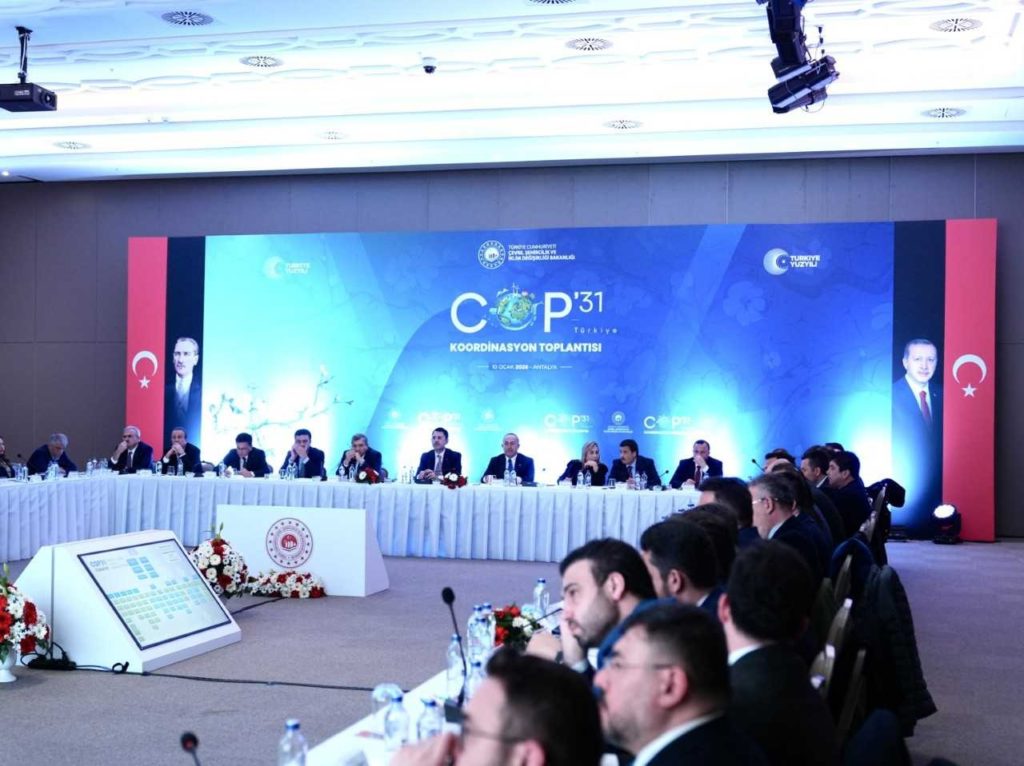
It is the practical strand of our approach. Its aim is to mobilise governments, international organisations, financial institutions, businesses and civil society around initiatives that can accelerate the implementation of existing commitments.
Its priorities include clean energy and electrification, the circular economy, resilient cities, green industrialisation and climate finance. It also covers youth, education, food security, oceans and health systems.
The challenge is to turn shared priorities into investable projects that can then be scaled up.
What concrete goals do you wish to highlight?
The Action Agenda proposes several targets for 2035: raising the share of electricity in global final energy consumption to 35%, halving the projected increase in municipal waste generation, cutting the energy intensity of buildings by at least 25% and raising the circular material use rate to at least 15%. These proposals reflect a broad vision of climate action. Emissions reductions must go hand in hand with better use of resources, more resilient infrastructure and more sustainable patterns of production and consumption.
Will these initiatives create new obligations for states?
The Action Agenda is a platform for voluntary cooperation. Its initiatives create no legal obligations, no additional reporting requirements and no additional commitments for participating countries. They are intended to turn existing priorities into concrete solutions. This work complements the intergovernmental negotiations: each of these two strands has its role, and progress in one can reinforce the other.
What commitments is Türkiye itself making for its climate transition?
Having ratified the Paris Agreement in October 2021, Türkiye has committed to reaching net zero greenhouse gas emissions by 2053. That target sets the overall direction of our transition. Our first updated nationally determined contribution provided for a 41% reduction in emissions by 2030 compared with a baseline scenario. This is indeed a comparison with a projected trajectory. Our second contribution, submitted at COP30, sets the target of limiting emissions to 643 million tonnes of CO₂ equivalent by 2035.
These commitments are accompanied by a long-term climate strategy and mitigation and adaptation action plans covering the period 2024–2030, in sectors such as energy, industry, transport, buildings, agriculture and forestry.
How are these policy directions reflected in the national framework?
The adoption of our first climate law, in 2025, was a major milestone. It provides a legal basis for strengthening climate governance and developing a national emissions trading system. The green taxonomy regulation, published on 24 September 2026, aims for its part to establish common criteria for sustainable economic activities, to channel finance towards green investment and to prevent greenwashing.
The aim is to give economic actors greater visibility and predictability to support the transition to a low-carbon economy.
Ultimately, how will you judge the success of COP31?
By its ability to build trust, mobilise resources and accelerate implementation. The international community already has a great many climate goals. Achieving them requires political will, institutional capacity, finance and lasting cooperation. We want Antalya to mark a milestone in the shift from commitments to results. Success will be measured by the progress we are able to make possible for people, economies and ecosystems.
Translated from French. The French original prevails.