After 35 years on the ground, the United Nations Mission for the Referendum in Western Sahara (MINURSO) ceased operations on 31 October, after the Security Council failed to reach agreement. The failure of two competing draft resolutions reveals an international rift over the territory’s future, at a time when negotiations are coming up against a fundamental question: can autonomy under Moroccan sovereignty offer a way out of the conflict without stripping the Sahrawi people’s right to self-determination of its meaning?
The end of MINURSO marks a turning point in one of the oldest decolonisation conflicts still unresolved. Established in 1991 to monitor the ceasefire and prepare a referendum on the status of Western Sahara, the United Nations mission is leaving the stage without having achieved the political objective that justified its creation. The vote that was supposed to allow the Sahrawis to choose between independence and integration with Morocco never took place.
On 1 November, the UN Secretary-General, António Guterres, was keen to stress that the end of the mission in no way called into question the inalienable right of the Sahrawi people to self-determination. The United Nations intends to pursue its efforts through the Secretary-General’s Personal Envoy, Staffan de Mistura. But this diplomatic continuity should not obscure one reality: the international organisation is losing an operational instrument for monitoring and preventing tensions, without any replacement mechanism having been agreed.
The episode thus reveals a paradox: although diplomatic talks resumed in 2026, the Security Council proved unable to agree on maintaining the mission that, for three decades, had been tasked with helping to keep the territory stable.
A double failure at the Security Council
On 30 October, on the eve of the mandate’s expiry, two draft resolutions in turn ran up against divisions within the Security Council. The text tabled by the United States, which proposed renewing the mandate for one year while making the Moroccan autonomy plan the preferred basis for a political settlement, won eleven votes in favour. It was, however, vetoed by Russia. China, Pakistan and one other member of the Council abstained.
The Russian draft, which provided for a more conventional extension of the mandate until 31 October 2027, then secured only three votes in favour, with the United States voting against and eleven members abstaining. It therefore failed to obtain the nine votes required for adoption. This double failure does not simply reflect a rivalry between Washington and Moscow. It highlights a deeper disagreement over the terms of a settlement: should the UN mechanism be adapted to a balance of power that currently favours Morocco, or should a framework be preserved that explicitly leaves open the possibility of independence?
For Washington, the old formula no longer offers a way out of the deadlock and must evolve towards negotiations centred on autonomy. Moscow denounced a text that, in its view, would have favoured one party and predetermined the outcome of the process. Behind these positions, the right to self-determination has become a central issue in the diplomatic confrontation. The Council’s paralysis is all the more significant given that Resolution 2797, adopted in October 2025, had already made the Moroccan autonomy plan a basis for negotiations, while retaining the reference to a mutually acceptable political solution and to self-determination. The previous compromise thus proved insufficient to bring positions closer on the future of the mission.
Moroccan plan gains ground, but question of consent remains
Since 2007, Rabat has championed an autonomy proposal that would keep Western Sahara under Moroccan sovereignty, while granting the territory institutions responsible for managing its internal affairs. Morocco regards this formula as the realistic solution to a conflict that weighs on its territorial integrity and its regional relations.
Recent diplomatic momentum has worked in its favour. Resolution 2797 of 2025 had already strengthened the standing of this proposal within the negotiating framework. In 2026, several rounds of direct talks were held in Washington and Madrid, driven by the United States and involving Morocco, the Polisario Front, Algeria and Mauritania.
The US draft submitted to the Security Council in October went further in this direction, placing the Moroccan plan at the heart of the process and envisaging changes to the mandate and structure of MINURSO. Although the text was not adopted, the initiative shows that international discussions are gradually moving away from the original logic of a referendum and focusing instead on the search for a political compromise.
Rabat hailed the non-renewal of the mandate as a major step towards closing the file on the Moroccan Sahara at the United Nations. The Polisario Front and Algeria, by contrast, criticised the US approach, which they regard as detrimental to the exercise of the right to self-determination. This development does not, however, mean that the status of the territory has been definitively settled. A proposal backed by several powers does not, in itself, amount to an agreement accepted by all the parties. The key question remains whether the Sahrawis consent to the solution adopted.
Therein lies the legal and political difficulty: can autonomy be regarded as an expression of self-determination if its framework and limits are set before the population concerned has been able to express its will freely? Conversely, how can a process be brought to an end when it rests on a referendum whose arrangements could never be agreed? As long as these questions remain unanswered, Morocco’s diplomatic gains will not be enough to guarantee a lasting settlement.
The referendum abandoned, but not the right to self-determination
MINURSO was established under Security Council resolution 690, following on from settlement proposals accepted in 1988 by Morocco and the Polisario Front under the auspices of the UN and the Organisation of African Unity. The referendum was meant to allow the territory’s inhabitants to choose between two options: independence or integration with Morocco. However, disagreements over the identification of voters and the arrangements for the vote gradually paralysed its preparation.
The 1991 ceasefire had nonetheless created a framework for stabilisation. The mission continued its activities for decades, despite the absence of a political settlement. The resumption of hostilities in 2020 further weakened this arrangement, without leading to a large-scale conventional war.
Two realities must therefore be distinguished. The first is the failure of the original referendum mechanism. The second is the persistence of the question of self-determination, which does not disappear with the end of the mission. By reaffirming this principle on 1 November, António Guterres sought to prevent the winding-up of MINURSO from being interpreted as an implicit endorsement of Moroccan sovereignty or as the abandonment of any political prospect for the Sahrawis.
The scope of this statement is, however, limited by circumstances. The Secretary-General can keep up mediation efforts and reaffirm the principles of the United Nations, but he cannot single-handedly substitute for an agreement between the parties or overcome divisions within the Security Council. The future of the process will therefore depend on the negotiators’ ability to devise a formula that is politically workable while preserving the possibility of a genuine choice for the population concerned.
A flashpoint between Morocco and Algeria
The Western Sahara conflict goes far beyond the question of the status of a desert territory on Africa’s Atlantic seaboard. For decades it has been one of the main sources of rivalry between Morocco and Algeria, two powers that have had no diplomatic relations since 2021.
Rabat controls most of the territory and regards international support for its autonomy plan as growing recognition of its position. The Polisario Front, backed by Algiers, demands independence and continues to contest the legitimacy of the Moroccan administration. Mauritania, which is also involved in the talks, has to contend with the security and political balances of its neighbourhood.
In this context, the end of MINURSO can be read in two opposing ways. For supporters of the Moroccan plan, it may symbolise the exhaustion of an old mechanism that never managed to deliver the referendum. For its opponents, it risks removing a monitoring instrument without resolving the dispute that justified its existence.
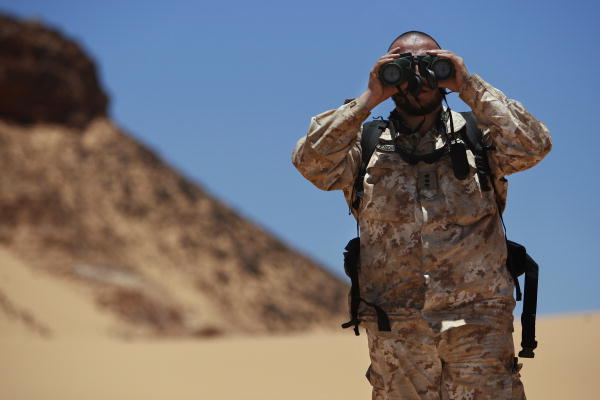
The issue is particularly sensitive on the ground. The gradual withdrawal of military observers and the end of the mission’s patrols could reduce independent verification capacity and make it harder to prevent incidents. The UN has specifically voiced concern about the risk of escalation and called on all parties to exercise the utmost restraint.
The closure of the mission does not automatically mean a resumption of fighting. It does, however, add a further layer of uncertainty in a region where military tensions, regional rivalries and diplomatic disagreements are closely intertwined.
Refugee camps: the blind spot of a political settlement
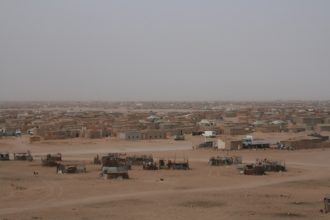
The fate of the Sahrawi refugees living in the Tindouf region of Algeria is another major issue. Generations have grown up there waiting for a solution to the conflict. For these communities, the diplomatic deadlock is not merely a legal dispute: it shapes their prospects of return, of political representation and of a collective future.
The 2026 discussions also brought to the fore the question of registering the refugee population and of humanitarian access. The US draft submitted to the Council notably provided for steps to complete the registration of this population, a politically sensitive matter in the context of the negotiations.
These questions cannot be treated as mere technicalities. Defining who is entitled to take part in a political consultation, guaranteeing a free choice and ensuring the possibility of voluntary return are directly linked to the credibility of any settlement.
The end of MINURSO makes it all the more necessary to pursue a mediation effort that is not confined to relations between governments. To be lasting, any compromise will also have to take account of the aspirations of the Sahrawis, including those of the people living in the camps and their representatives.
After MINURSO: three possible scenarios
The end of the mission’s operations opens a period whose outcome remains uncertain. Three possible paths can be envisaged.
First scenario: renewed negotiations on autonomy. The United States and Morocco’s partners could seek to turn recent diplomatic gains into a political agreement. This option would, however, require the Polisario Front and Algeria to agree to continue the dialogue, and credible guarantees to address concerns over self-determination. Without the meaningful participation of the Sahrawis, any agreement would risk remaining contested.
Second scenario: a prolonged stalemate. The parties could continue to defend irreconcilable positions, while the United Nations kept up a political mediation effort without the on-the-ground infrastructure that characterised MINURSO. This scenario would prolong the uncertainty for the population and could deepen mistrust between Rabat and Algiers.
Third scenario: a deterioration in security. In the absence of a monitoring mechanism and effective de-escalation channels, a military incident could lead to rising tensions. This risk should not be presented as an inevitable consequence of the withdrawal, but it justifies the calls for restraint made by the Secretary-General.
Nor can the possibility of the UN presence eventually returning in a different form be ruled out. That would, however, depend on a fresh political decision and on agreement within the Security Council, precisely what was lacking in October.
A test of the United Nations’ credibility
Finally, the end of MINURSO raises a broader question about the role of the UN in protracted conflicts. A peacekeeping mission can help to stabilise a situation, monitor a ceasefire and preserve space for negotiation. It cannot, however, impose a political solution when the parties refuse to compromise.
After 35 years, MINURSO is disappearing without the dispute having been resolved and without the planned referendum ever having been held. Its record is therefore mixed: it did not achieve its original political objective, but it provided an international presence and helped to monitor the ceasefire over a long period.
The Security Council’s failure also exposes the limits of multilateralism when the major powers no longer agree on the principles and arrangements for an intervention. The Russian veto blocked the American text; the Russian proposal failed to secure a sufficient majority. In this confrontation, the fate of a territory and the rights of a population remained subordinate to strategic disagreements.
António Guterres says the United Nations remains ready to support peace efforts. The liquidation of the mission, which is to be carried out in an orderly manner, therefore does not formally bring the diplomatic process to a close. But it profoundly alters the conditions in which that process takes place.
The real test now will be whether negotiations can make progress without the on-the-ground instrument that has accompanied them since 1991. If the demise of MINURSO were simply to entrench the balance of power without producing an accepted agreement, it could turn a diplomatic stalemate into lasting instability.
The end of MINURSO is not the end of the Western Sahara conflict. Rather, it marks the transition to a more uncertain phase, in which the search for a compromise will have to show that it can reconcile political realism, regional stability and the right of the Sahrawis to decide their own future.
Translated from French. The French original prevails.