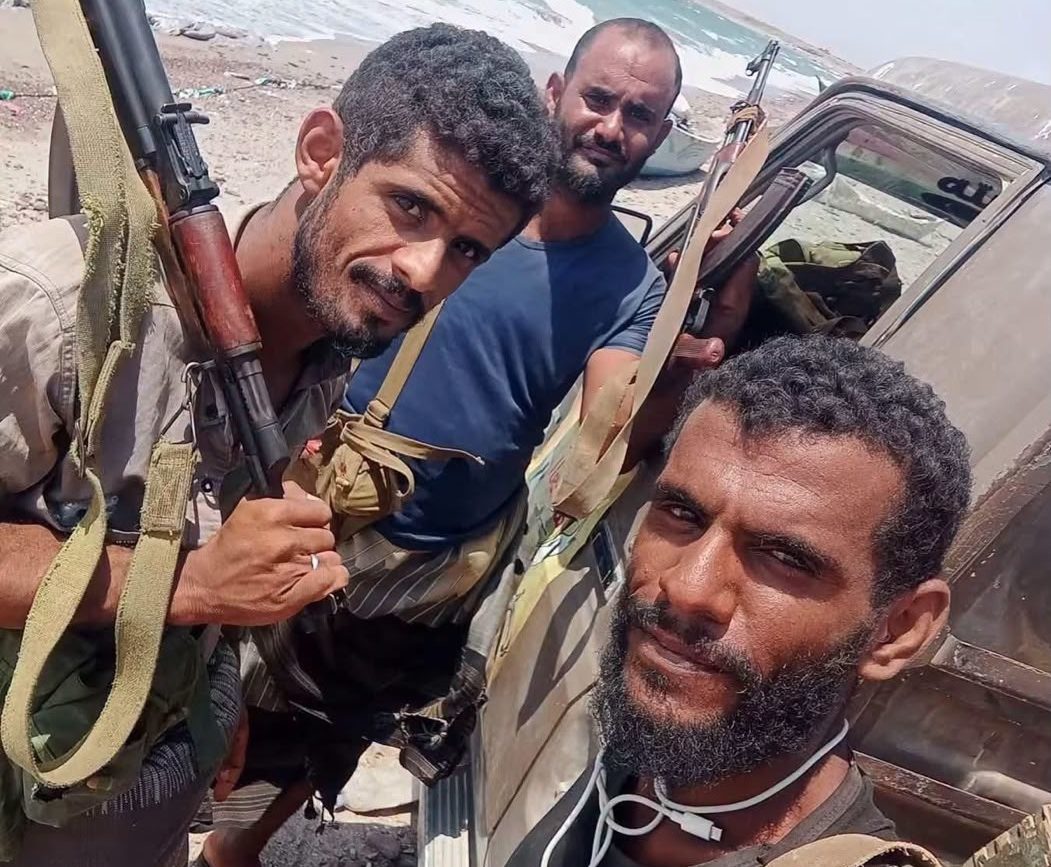
As Riyadh and the Yemeni government try to rebuild a front capable of retaking Bab el-Mandeb from the Houthis, another issue is returning to the fore: the question of the South. The Southern Transitional Council (STC), militarily weakened since its defeat in Hadramawt but still able to mobilise, refuses to let the war against the Houthis bury its plans for independence. Its responsibility for the debacle at Mokha must, however, be distinguished from that of the anti-Houthi forces that actually held the front line. The recent thaw between Riyadh and Abu Dhabi may reduce rivalry between the sponsors without, on its own, resolving a southern question that is several decades old.
To understand the Southern Transitional Council (STC), one has to go back well before its creation. Until 1990, Yemen was divided between the Yemen Arab Republic in the North and the People’s Democratic Republic of Yemen in the South. Unification on 22 May 1990 did not put an end to the rivalries. In 1994, southern leaders attempted to secede; the forces of Yemeni President Ali Abdallah Saleh, backed in particular by anti-secessionist southern units and Islamist fighters, prevailed. In the years that followed, thousands of soldiers and civil servants from the former South were sidelined or marginalised. From 2007, this resentment fuelled the Hirak, the Southern Movement, initially driven by social and administrative grievances before some of its factions once again called for independence.
The war that broke out after the Houthis seized Sanaa in 2014 turned this political demand into a military contest. When the Saudi-led coalition intervened in 2015, local southern forces played a major role in retaking Aden and other regions. The United Arab Emirates invested heavily in these networks: security units, local formations, military structures and strategic maritime positions. The South thus acquired armed apparatuses that were increasingly autonomous from the central government.
2017: birth of a southern quasi-government
The Southern Transitional Council (STC) was founded in May 2017 around Aidarous al-Zubaidi, a former governor of Aden. Its aim is explicit: to represent the South politically and, ultimately, to secure the restoration of a South Yemeni state. With backing from Abu Dhabi, the STC set up institutions and provincial branches and drew on allied security forces and military formations. Aden became its political centre; Lahj and al-Dhale are important strongholds, while its influence extends to Abyan, Shabwa and Socotra.
The Council is, however, no longer a perfectly united bloc. The crisis of January 2026 brought into the open divisions between the faction that has remained loyal to Aidarous al-Zubaidi and officials who, meeting in Riyadh, announced the dissolution of the STC — a decision immediately contested by other senior figures in the movement. Abdulrahman al-Muharrami, known as Abu Zaraa, vice-president of the STC and commander of the Giants Brigades, has since moved closer to the Riyadh-backed architecture and increasingly appears to be a distinct southern pole. These rifts are less about the existence of a “southern question” than about strategy, relations with Riyadh and Abu Dhabi, and al-Zubaidi’s claim to be the sole embodiment of the southern cause.
Yet the STC never became synonymous with “the South”. Hadramawt, a vast, hydrocarbon-rich eastern province, has its own elites, tribes and demands for autonomy. Al-Mahra also retains a strong local identity. Even among the groups that have received Emirati support, objectives diverge: the Giants Brigades are first and foremost an anti-Houthi military force; Tareq Saleh’s National Resistance officially upholds the unity of Yemen; the STC, for its part, pursues a separatist project. Lumping these actors together therefore obscures an essential part of the problem.
From alliance with Abu Dhabi to rupture with Riyadh
Saudi-Emirati differences over Yemen gradually emerged from 2019 onwards. The Emirates scaled back their direct military presence while retaining influence through the forces they had trained and funded. Riyadh, for its part, continued officially to champion Yemen’s unity and the internationally recognised government. The Riyadh Agreement of November 2019 was meant to bring the STC into government and place the armed forces under a joint command. Its main military provisions were never genuinely implemented.
The contradiction burst into the open at the end of 2025. The STC advanced into Hadramawt and then Al-Mahra, seized oil facilities and moved closer to the Saudi border. For Riyadh, Hadramawt is a red line: the province borders the kingdom directly and accounts for a major share of Yemen’s energy resources. Saudi Arabia then backed the counter-offensive by the government and the Nation’s Shield forces. Mukalla was retaken in January 2026. Riyadh also struck what it described as an Emirati arms shipment bound for the separatists; Abu Dhabi disputed that account and then withdrew its last military personnel.
The STC thus lost much of its territorial control. But defeat has not made the southern question disappear. Protests, local networks and political structures remain. In early October 2026, as the government announced a new general offensive against the Houthis, the STC issued a fresh call for “general popular mobilisation” and for rallies on 14 October, reaffirming its defence of the South and its political project.
Mocha: what responsibility does the STC bear?
The fall of Mokha in September brutally exposed the weaknesses of the anti-Houthi camp. The Houthis broke through the defences on the west coast, seized the port of Mokha and then advanced towards Dhubab and the islands of the Bab el-Mandeb. The collapse triggered an inquiry and a reorganisation of government forces.
Can the STC be held responsible? The available evidence does not allow that conclusion. The Mokha front was held mainly by Tareq Saleh’s National Resistance, alongside other formations, including the Giants Brigades. The analyses published after the defeat point above all to rivalries between commanders, a lack of coordination, competing chains of command, morale problems and the difficulty of organising a common defence. The STC was not the operational command at Mokha.
Its responsibility is therefore indirect and political rather than direct. For years, the coexistence of an internationally recognised government, a separatist STC and formations backed by different patrons prevented the creation of a genuinely unified army. The crisis of December 2025 to January 2026 made this fragmentation worse still: forces that should have been preparing for the confrontation with the Houthis fought one another in the South. When the Houthis regained the initiative on the west coast, they therefore faced an adversary that was numerically substantial but fragmented in both its organisation and its command.
It would therefore be wrong to conclude that southern separatism alone explains the debacle. The National Resistance and the Giants had their own rivalries; Tarek Saleh is not a separatist; and some units that emerged from the former Emirati set-up had already distanced themselves from the STC. Mokha is first and foremost the failure of a fragmented military architecture, of which the STC is one component, but not the only one.
Riyadh picks up the pieces of the former Emirati system
Since September, Saudi Arabia has been trying to correct precisely this weakness. The Homeland Shield, backed directly by Riyadh, is now fighting alongside the Giants Brigades on the heights of Lahj and Taiz. Tarek Saleh was received in Riyadh by the Saudi joint forces command to discuss the rebuilding and coordination of his units. A Tihama Resistance with its own command was formed after the defeat at Mokha, while reporting directly to the coalition’s joint operations.
The phenomenon is significant: several formations that the Emirates had helped to build are now funded, coordinated or deployed within a Riyadh-centred set-up. This does not mean that Abu Dhabi has lost all influence, nor that these forces now form a homogeneous army. But the operational centre of gravity has shifted.
Can the Saudi-Emirati rapprochement solve the STC problem?
The visit to Riyadh on 29 September by the Emirati Vice-President, Mansour bin Zayed, marks the first significant public sign of a thaw since the crisis at the start of the year. Mohammed bin Salman and Khalid bin Salman discussed bilateral relations and regional developments with him. Renewed Houthi pressure largely explains the urgency: Riyadh wants to prevent old rivalries between Saudi and Emirati networks from jeopardising the new offensive.
A rapprochement could therefore solve part of the problem: if Riyadh and Abu Dhabi stop backing competing chains of command, they can make it easier for the Giants, Tareq Saleh’s forces, the Homeland Shield and the other anti-Houthi components to cooperate. The Financial Times reports, moreover, that Riyadh hopes the Emirates can help manage the southern factions without necessarily returning directly to the war. On 5 October, this détente took dramatic military form: the Giants Brigades, which emerged from the former Emirati set-up, launched their offensive towards Dhubab and Mokha under Saudi air cover. The Guardian believes that a political agreement between Riyadh and Abu Dhabi made this coordination possible; no such agreement has, however, been officially set out.
But that is not enough to “settle” the STC. The movement does not rest solely on Emirati money or weapons. It is rooted in a southern history going back to the 1994 war, the 2007 Hirak and the feeling among part of the population of having been marginalised after unification. Even Abu Dhabi, therefore, cannot simply order this demand to disappear. Conversely, the STC does not represent all southerners: Hadramawt, Al-Mahra and several local networks dispute its claim to speak for the whole of the former South Yemen.
Bab el-Mandeb: war forces cooperation, not agreement
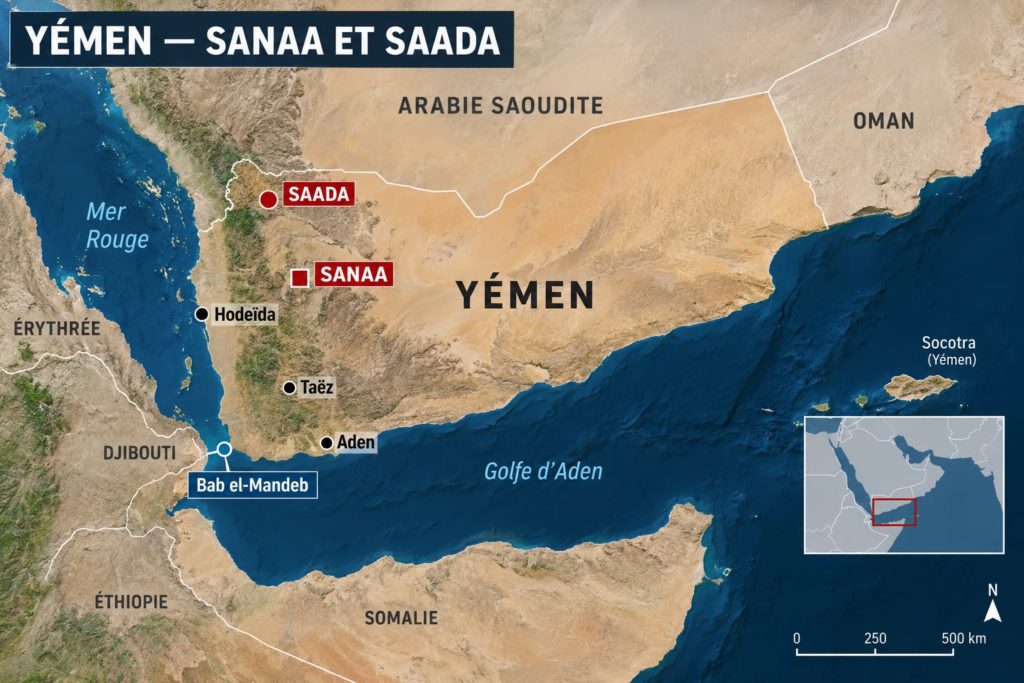
This is where the STC question ties directly into the new battle against the Houthis. On 4 October, Rashad al-Alimi’s Yemeni government announced the launch of operations aimed at retaking lost territory. The very next day, Operation “Fajr al-Yemen” (“Dawn of Yemen”) went on the offensive along the coast. The Riyadh-led coalition says it has committed around a hundred combat aircraft to provide continuous air cover for ground troops and to secure Bab el-Mandeb. Reuters has confirmed heavy Saudi strikes and a rapid advance by government forces to the outskirts of Mokha; the Yemeni Ministry of Defence announced that the city had been retaken, although Reuters was unable to independently verify the full extent of the gains.
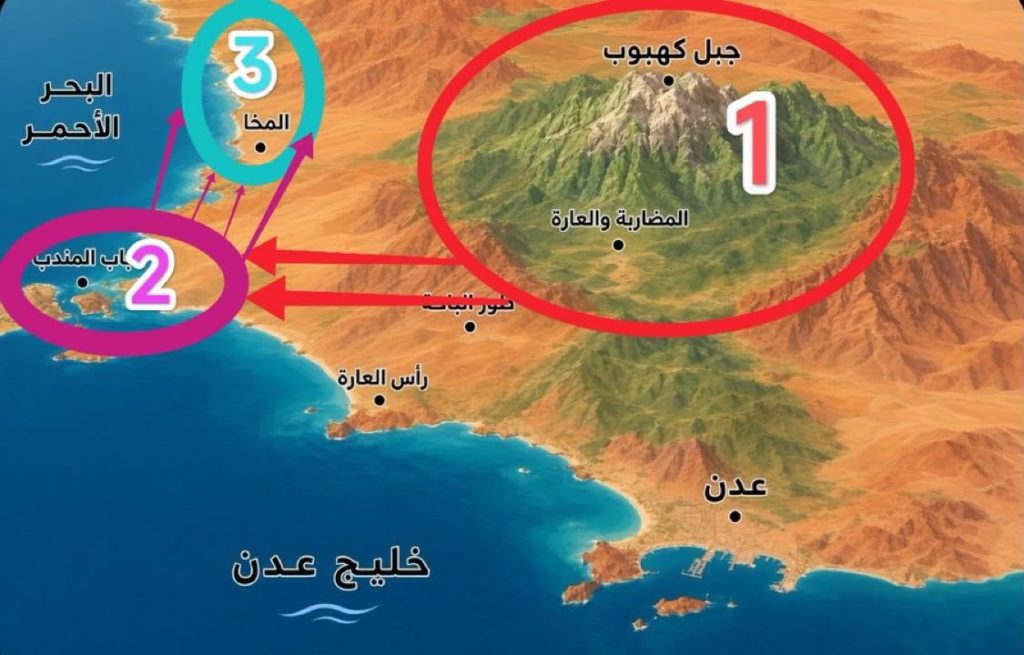
On the ground, the Giants Brigades and the Homeland Shield forces have been deployed along the Dhubab–Bab el-Mandeb axis. Their involvement does not mean that the STC, as a political organisation, has formally joined the offensive under its own banner. The Giants have historically belonged to the southern military ecosystem built with Abu Dhabi’s backing and were long linked to the STC, but they now have their own chain of command and cooperate directly with Riyadh. For its part, the STC issued its own call on 4 October for a “general popular mobilisation”, from Mahra to Bab el-Mandeb, while reaffirming its goal of restoring a southern state.
The distinction is crucial. The STC finds itself in a paradoxical position: it regards the Houthis as a threat to the South and supports the strengthening of the southern fronts, but refuses to let this mobilisation lead to the unconditional restoration of a centralised Yemeni state in which the question of southern self-determination would once again be put off. The war may therefore temporarily bring together, on the ground, forces drawn from formerly rival camps without reuniting their political projects.
For Riyadh, the difficulty is similar. The kingdom needs the southern forces to retake the coast, secure Bab el-Mandeb and contain the Houthis. But the more indispensable these formations become, the greater their weight in negotiations on the post-war settlement. A military victory could thus reopen the very political question that Saudi Arabia has sought to contain for years.
The other war behind the war
The new offensive against the Houthis is therefore not being played out solely between Sanaa and the internationally recognised government. It is also unfolding within the anti-Houthi camp, between a project of national unity, aspirations to provincial autonomy and the demand for a southern state.
The rapprochement between Saudi Arabia and the Emirates may reduce competition between sponsors, restore order to chains of command and prevent their former protégés from neutralising one another. It may also help rebuild a force capable of challenging the Houthis’ control of Bab el-Mandeb. But it cannot erase by decree thirty years of disputes between the North and the South.
That may be the main lesson of the current phase: in Yemen, fighting the same enemy still does not mean pursuing the same goal. The battle for Bab el-Mandeb will show whether Riyadh can unite the anti-Houthi camp sufficiently to regain the initiative. It will not, on its own, show which Yemen these forces will then agree to defend.
Sources and further reading
• Reuters — Planned Saudi offensive and fragmentation of forces, 2 October 2026
• The Guardian — Coordination between the Giants Brigades and the Saudi air force, 5 October 2026
• Reuters — Mansour bin Zayed’s visit to Riyadh, 29 September 2026
• Reuters — The players in the Yemeni conflict and the STC, 2 January 2026
• Associated Press — Disputed dissolution of the STC and internal divisions, 9 January 2026
• Associated Press — Recapture of Hadramawt and Mukalla, January 2026
• The Guardian — Investigation into the military debacle at Mocha, 18 September 2026
• Financial Times — Thaw between Riyadh and Abu Dhabi and southern factions, 29 September 2026
• Carnegie — Political aspirations of the South and internal divisions
• Carnegie — Saudi and Emirati maritime interests in Yemen
• Washington Institute — The 1994 civil war and the victory of Saleh’s forces
• South24 — Mobilisation announced by the STC on 4 October 2026
Worth reading on X
• Consulting4502 — X account monitoring Yemen and the Gulf
Further reading from LTDN
• La Tribune des Nations — After the Mokha debacle, the war shifts to the heights of Taiz
Translated from French. The French original prevails.