From the extreme adversity of migration routes to the anonymous disarray of big cities, the
Geneva International Film Festival and Forum on Human Rights (FIFDH) shone a spotlight on
three major works this year. Starting from the personal to question the political, these stories
deconstruct simplistic narratives about exile and integration.
The image shakes. It is raw, wrenched from reality by a smartphone held at arm’s length. On
screen is Soraya Akhlaghi. She is not acting out a tragedy; she films it so as not to drown in it.
In “A Fox Under a Pink Moon”, directed by Mehrdad Oskouei (Iran) and Soraya Akhlaghi
(Afghanistan), this young Afghan woman living in exile in Iran bears on her body the marks of a
threefold violence: a forced marriage at sixteen, the wandering of an undocumented stateless person and the hell of
the road. Around her, other figures share in this physical and spiritual shipwreck. Exhausted
mothers, young men with vacant stares, all at the mercy of cynical smugglers
bound for Greece. A journey in which every kilometre is a dispossession.
Soraya’s pink moon: a ruse against violence
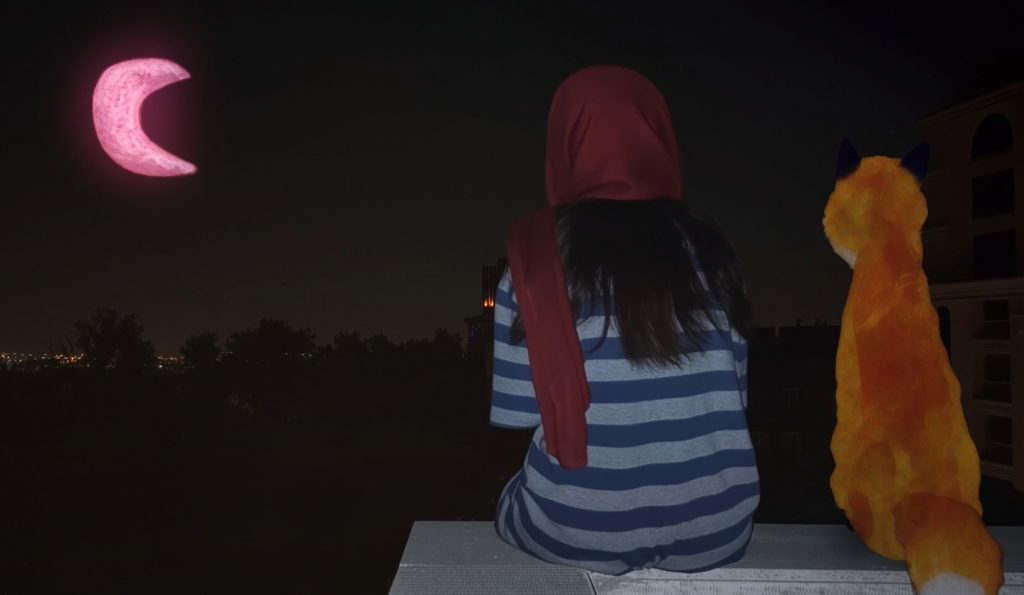
Yet at the heart of this distress, resilience emerges through art and poetry. Soraya
refuses silence through creation. Working closely with Mehrdad Oskouei, she
conceives and draws the animated sequences in which a fragile fox stalks a pink moon. These
images are not mere ornaments; they are the last refuge of her being, her
free will. By sculpting, drawing, playing the guitar or creating this animated world
— a figure of cunning and survival — Soraya transmutes her pain into aesthetic
material. Art here becomes inviolable territory, a space where the protagonist is no longer a
“migrant” enduring an impersonal collective fate, but a singular artist taking back
control of her own life in the face of horror.
From Eritrea to Geneva: the long road to emancipation
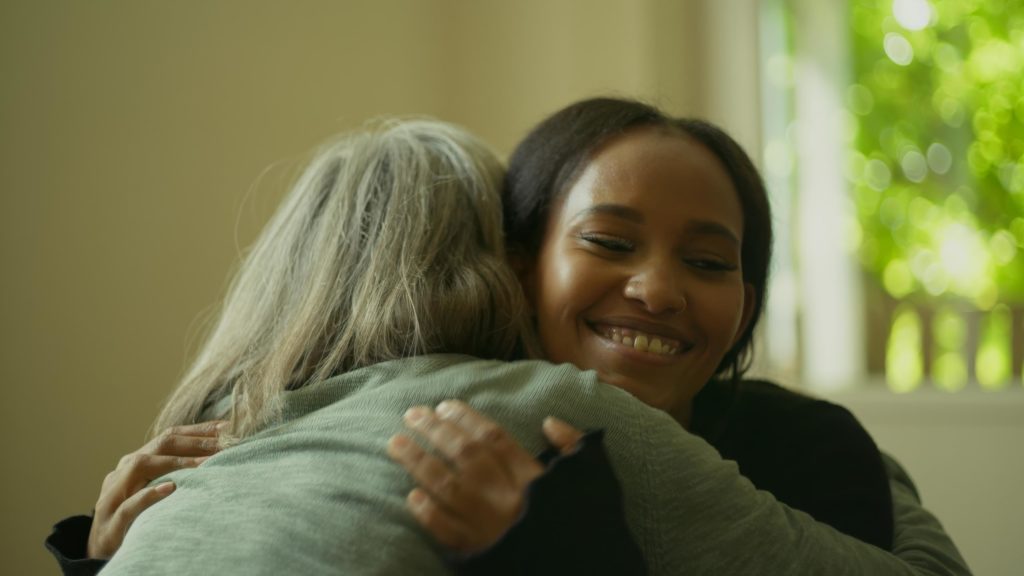
This quest for freedom finds a powerful echo, rooted in the long term, in “Freedom – Le
destin de Shewit”, directed by the Swiss film-maker Anne-Frédérique Widmann. Given its world
premiere at the FIFDH, the film, which opens in cinemas in September, follows over ten years a young Eritrean woman who arrived alone in Geneva at the age of 13. Raped as a child and fleeing a country where female genital mutilation
remains a brutal reality, Shewit has had to fight against the invisible walls of bureaucracy.
The film documents her transformation, from the teenager crammed into a cramped hostel to the
woman standing tall who refuses to be just a number.
Films that remind us that a society’s identity is defined
by its capacity to embrace individual stories rather than
render them invisible.
Her journey is marked by pivotal encounters that illustrate Geneva’s spirit of solidarity. On the
one hand, there is Eliane Ruckstuhl, the film’s camerawoman, who becomes her godmother and takes her into
her home, giving her a foundation of stability. On the other, there is the invaluable support of Melete
Solomon-Kuflom, coordinator of the Association de médiateurs et médiatrices interculturels
(AMIC). Herself of Eritrean origin, Melete Solomon-Kuflom plays a key role as a cultural
“bridge” and source of support, helping Shewit to navigate the maze of integration while
preserving her integrity. This female mentorship enables Shewit to break free from
the dictates of her community and become a free woman, proving that independence is
probably the only bulwark against trauma.
Wolf Street: the outsider at the heart of Poland’s tensions
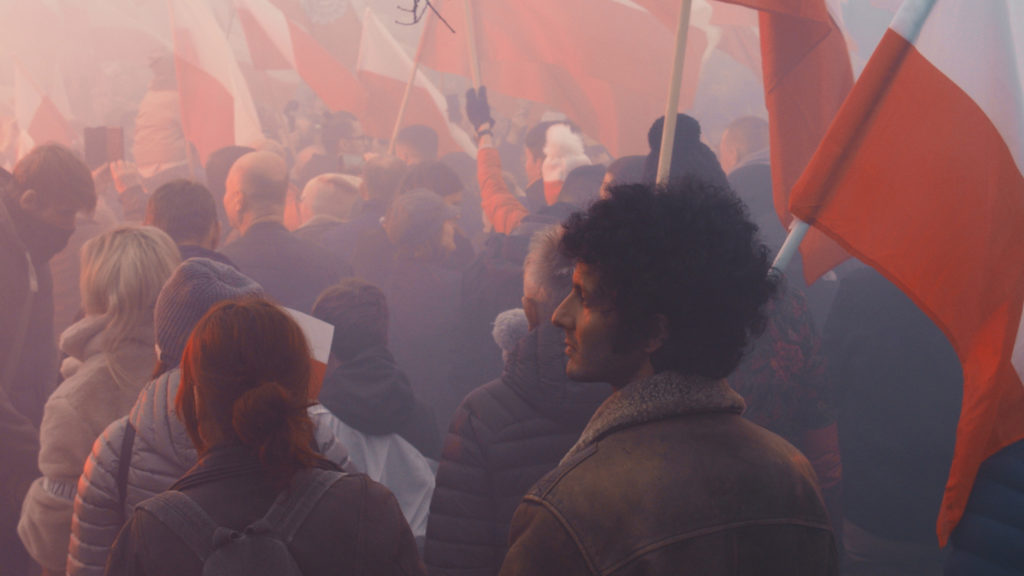
This loneliness of the outsider seeking to come to terms with their surroundings also lies at the heart of
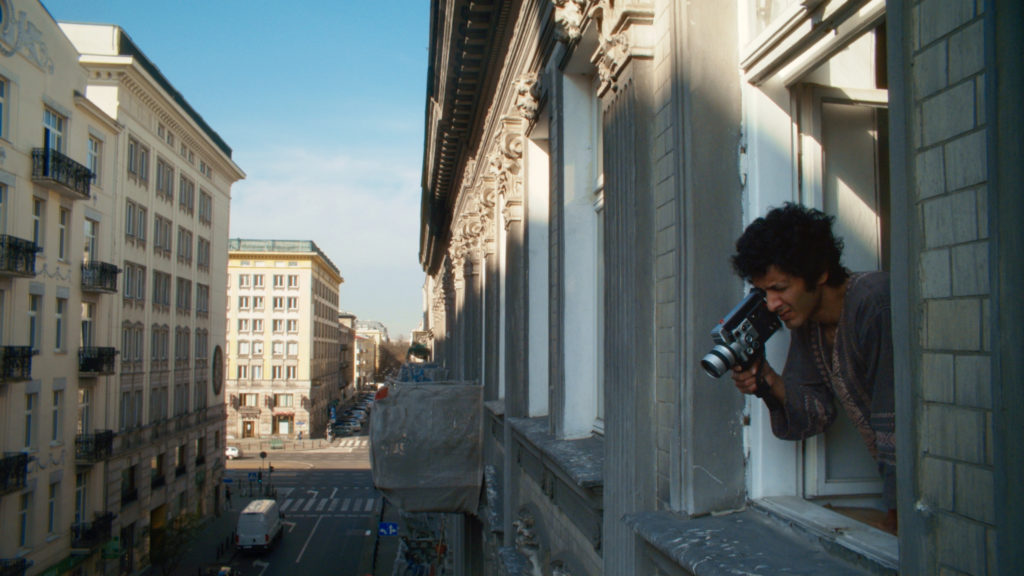
“Letters from Wolf Street” by director Arjun Talwar, an Indian and Polish citizen. The film captures
the tension between the desire to belong and the reality of a fragmented public space. More than a
testimony, it paints a portrait of a Poland in the midst of change: on one side, the marches of the
nationalist right; on the other, the colourful parades of LGBTIQ activists. Placed at the centre
of these opposing currents, the outsider exposes the host society’s own
tensions. These filmed “letters” act as mirrors: they question the place
given to those who, having survived the journey, come up against the inertia of prejudice
and the country’s ideological rifts.
These journeys resonate with a moment in which populist rhetoric saturates
the political, media and digital spheres. The proliferation of stigmatising discourse and the
rigidity of legal and regulatory frameworks succeed in reducing the exile to a statistical
abstraction. In the face of this erosion of social and cultural cohesion, the works shown at the FIFDH
offer an alternative: they remind us that a society’s identity is shaped by its capacity
to embrace individual stories rather than render them invisible.
The recognition of rights, whether civic or human, seems inseparable from the
recognition of a creative voice. Whether it is Soraya shaping her fox, Shewit
asserting herself as a free woman with the support of AMIC, or the observers of Wolf Street, these voices
assert an irreducible presence. Integration then no longer appears as an administrative
injunction, but as an encounter between imaginations. Ultimately, these three
films suggest that the strength of a democracy lies in its ability to let individual
journeys transform the common landscape, beyond borders and divides.
The Jury of the FIFDH’s Creative Documentary competition awarded its prize, funded by the Barbara Hendricks Foundation for Peace and Reconciliation, to “Letters from Wolf Street” by Arjun Talwar.
The 24th edition of the International Film Festival and Forum on Human Rights in Geneva was
a resounding success, drawing more than 32,000 festivalgoers and playing to
packed houses throughout the Festival. Over ten days, audiences discovered a
rich film programme that resonated with current events. They also took part in
memorable discussions, offering the insights of more than 200 guests from the worlds of art, science, politics and activism. In an era marked by authoritarianism and conflict, the Festival reaffirmed the power of images and dialogue. Thirteen works received awards, including films from Iran and Sudan that tell stories of exile, struggle, resilience and hope.
Translated from French. The French original prevails.