PART 2 (To read Part 1: https://ltdn.org/pourquoi-la-crimee-nest-pas-russe-histoire-droit-et-volonte-de-ses-peuples/)
The revolution of 1905 shook the imperial order in Crimea for the first time. Strikes, peasant uprisings and political circles emerged not only in the towns but also in the countryside. For the Crimean Tatars, it was a moment of awakening: without a political voice of their own, their future would once again be taken from them. It was then that the generation of figures who would later lead the national movement took shape. The early 20th century left Crimea in a state of tension and expectation. Formally, it remained part of the Russian Empire, but in practice it was one of its most fragile regions, stirred by deep social movements. Behind the façade of seaside resorts, military bases and the “southern paradise” lay the reality of a colonial periphery: Crimea remained a place of profound inequality.
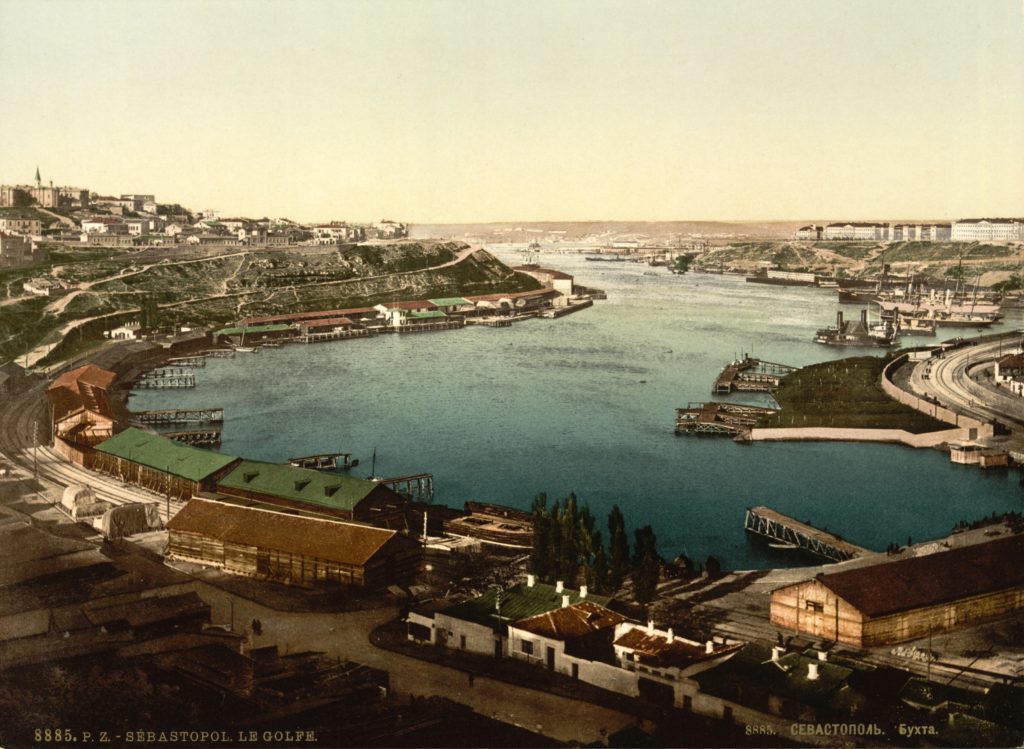
The Bay of Sevastopol in 1915.
After the mass waves of Crimean Tatar emigration in the 19th century, the Tatars still made up a significant share of the peninsula’s population, but had virtually no political rights and had lost most of their land. The most fertile plots belonged to the state, to Russian landowners or to the military department. Sevastopol and Kerch were closed naval cities, where civilian life was subordinated to the interests of the fleet, and the tsarist authorities increasingly saw Crimea as a strategic outpost rather than as a home for its peoples.
At the same time, Crimean Tatar society was showing a remarkable capacity for renewal. In Bakhchysarai, Simferopol and Karasubazar (today Bilohirsk), new-style schools, printing houses and cultural associations were operating. The newspaper Terdjiman (1883-1918), founded by Ismail Gasprinski, became not merely a periodical but an intellectual centre of the modern Muslim world. Gasprinski put forward a programme of renewal — teaching in the mother tongue, equality between women and men, and dialogue with Europe without loss of one’s own identity. At that time, Crimea was one of the main centres of Muslim reformism in the entire Empire.
At that time, Crimea was one of the main centres of Muslim reformism in the entire Empire.
Finally, the revolution of 1917 opened a window of opportunity. After the fall of the autocracy, the Crimean Tatar people began, for the first time in more than a century, to speak openly of self-determination. In December 1917, the Kurultai of the Crimean Tatar people — a democratically elected national parliament, with women taking part — convened at the Khan’s Palace in Bakhchysarai. It was an unprecedented step not only for Crimea but also for the Muslim world of the time.
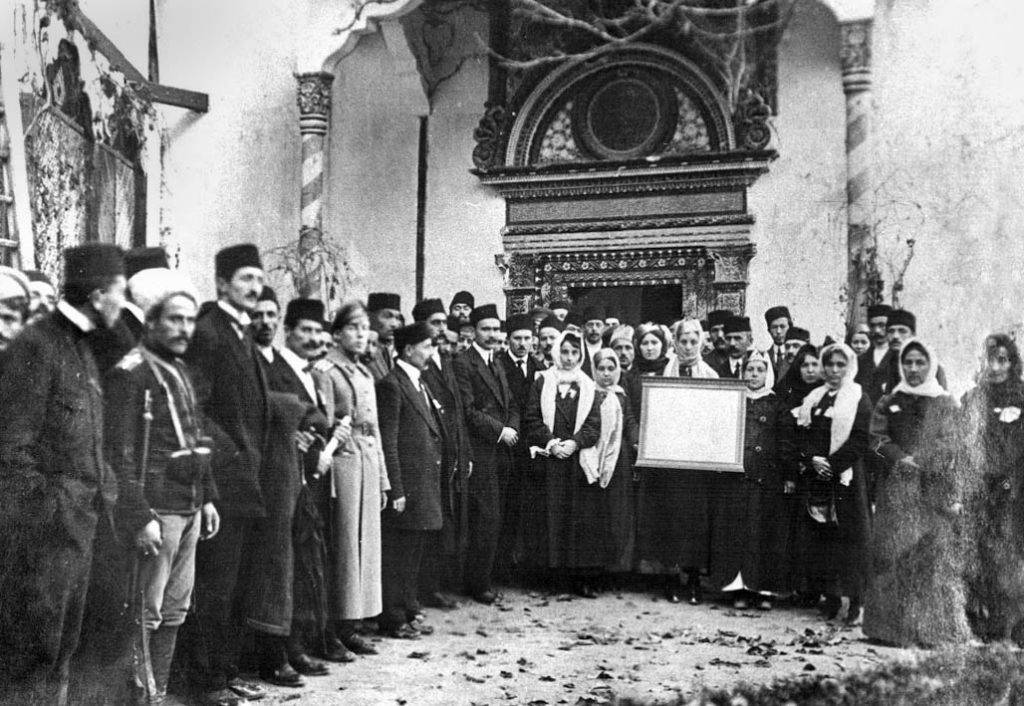
The first elected members of the Kurultai, men and women, of the Crimean People’s Republic
The Kurultai proclaims the Crimean People’s Republic — a secular, democratic state founded on the principle of equality among its citizens, regardless of nationality or faith. It is the world’s first democratic Muslim government, and the Constitution it adopts becomes one of the boldest and most progressive political documents of its time in Eastern Europe. It is born as the response of a people deprived of a voice for centuries, yet one that had preserved the memory of its own identity and of its right to shape its future.
The document enshrines principles that, at the start of the 20th century, are more the exception than the rule. Crimea is proclaimed a democratic republic. The source of power is the people, not a monarch, a party or an army. For the first time in Crimea’s history, power is constituted through a representative body — the Kurultai — elected by universal, equal and secret suffrage.
It is particularly telling that the Constitution does not build the nation on an ethnic principle. The Crimean People’s Republic is conceived as a common home for all the peninsula’s inhabitants — Crimean Tatars, Ukrainians, Russians, Jews, Armenians and Greeks. All citizens are proclaimed equal, regardless of origin, religion or social background. In a region torn apart by imperial hierarchies, this is a radical step.
The Constitution also lays down the principles of the separation of powers, judicial independence, and freedom of speech, conscience, the press and assembly.
One of its most innovative provisions was full political equality for women. They had the right to vote and to stand for election — a provision that, in 1917, had yet to be enshrined in many European states. For the Muslim world of the time, this was unprecedented. The Kurultai, which included women deputies, in effect shattered the stereotypes that empires used to justify their domination of so-called “backward” peoples.
The Constitution also laid down the principles of the separation of powers, the independence of the judiciary, and freedom of speech, conscience, the press and assembly. The state was separated from religion, while freedom of worship was guaranteed. This combination of secularism and respect for tradition made the Crimean project unique: it copied neither Western nor Eastern models, but sought its own path.
It is also important that the Constitution was not merely a declaratory dream. It provided for genuine mechanisms of governance, local self-government and the accountability of officials to society. Crimea was conceived not as a military base or a colony, but as a state governed by the rule of law, rooted in the multinational reality of the peninsula.
Today, the Constitution of the Crimean People’s Republic remains not only a historical document but proof that Crimea had its own modern political tradition, its own vision of freedom and law. And that tradition was born not thanks to Russia, but in spite of it.
Democratic republic crushed by Bolshevik order
A democratic, inclusive and secular Crimea, however, had no place in the logic of dictatorship. As early as 1918, the Bolsheviks crushed the Kurultai, and its leader, Noman Çelebicihan, was executed without trial or investigation.
The overthrow of the Crimean People’s Republic and the crushing of the Kurultai were no accident, but a deliberate act to eliminate an alternative to empire, violence and colonial control. Crimea became an arena of struggle between the Bolsheviks, the White armies, German troops and a succession of governments and regimes that came and went at kaleidoscopic speed.
For the Crimean Tatars, it was yet another lesson of history: without a state of their own and without international protection, their right to independence was forever becoming a bargaining chip. Even so, the very existence of the Kurultai and the Crimean People’s Republic destroyed for ever the imperial myth of a “passive” or “unfinished” people.
For Crimea, the early 20th century was not an era of stability but a point of no return. The empire collapsed, but freedom had no time to take root. What had been emerging as a space of democracy and coexistence between peoples was trampled underfoot by the chaos of civil war and totalitarian experiments.
It was from precisely this moment that Crimea set out on the path that would lead to the deportation of 1944, to Soviet colonial silence and, ultimately, to the present-day Russian occupation. But the early 20th century left something else behind — the memory that Crimea had already chosen freedom. And that it had done so sooner than many in Europe were prepared to accept.
Soviet repression and collectivisation
For Crimea, the Soviet period was not an era of “liberation” or modernisation, as Soviet historiography later sought to portray it, but a time of systemic violence, repression and the continued destruction of its indigenous peoples. After the defeat of the Crimean People’s Republic and the establishment of Bolshevik rule in Russia, the peninsula was permanently stripped of any form of genuine autonomy. Crimea was turned into an administrative unit of the Soviet Union, where decisions were taken not in Bakhchysarai or Simferopol, but in Moscow.
In 1921 the Crimean Autonomous Soviet Socialist Republic (ASSR) was created within the Russian Soviet Federative Socialist Republic (RSFSR). Formally, it proclaimed national rights for the Crimean Tatars, but in practice autonomy was an illusion. The brief period of “korenizatsiya” in the 1920s – the development of Crimean Tatar education, press and culture – was soon brought to an end. By the close of the decade, repression had begun against the Crimean Tatar intelligentsia, clergy, political activists, teachers and writers. Those who still remembered the Kurultai and the 1917 Constitution were branded “nationalists” and “enemies of the people”.
Collectivisation dealt Crimea a further blow. The traditional Tatar way of life was trampled underfoot: land was confiscated, farms were destroyed, and people were forced into collective farms or displaced. The famine of the early 1930s also struck Crimea, although Soviet reports carefully concealed it. Alongside the economic pressure, cultural erasure continued: mosques were closed, religious life was banned and the Crimean Tatar language was driven out of public life.
The 1944 deportation of the Tatars: a crime with no statute of limitations
From 18 to 21 May 1944, the Soviet regime committed a crime which, by its scale and nature, meets the definition of genocide. On Stalin’s orders, the entire Crimean Tatar people was deported, without trial and without any individual investigation.
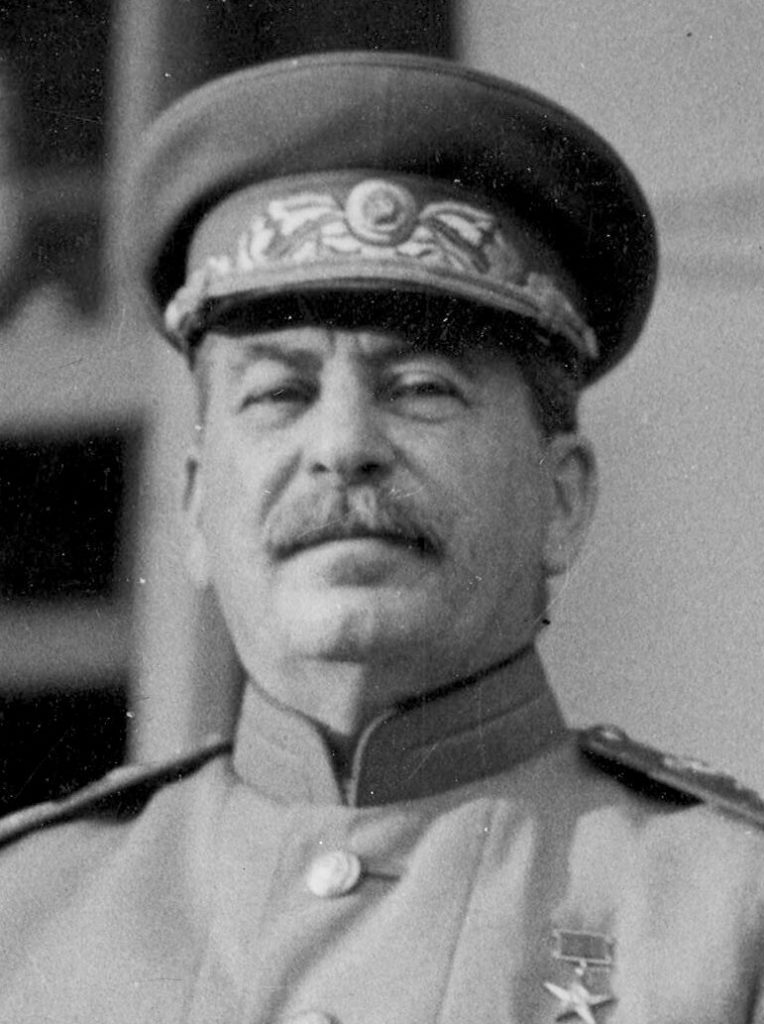
Joseph Stalin in 1943
Within a few days, more than 190,000 people — women, children, the elderly, frontline veterans, disabled war veterans — were torn from their homes and crammed into cattle wagons. They were given anywhere from a few minutes to a few hours to prepare. The journey lasted weeks. In the wagons there was no water, no food and no medical assistance. People died of thirst, disease and exhaustion along the way. They were unceremoniously unloaded in remote regions of the Soviet Union — from the northern Urals to the Central Asian republics.
The deportation of the Tatars caused the deaths of between a quarter and half of the population.
According to various historians’ estimates, between a quarter and nearly half of the entire Crimean Tatar people died in the first years of the deportation. This was not a “resettlement” — it was a deliberate operation aimed at destroying a people as a community, along with its roots, its memory and its land.
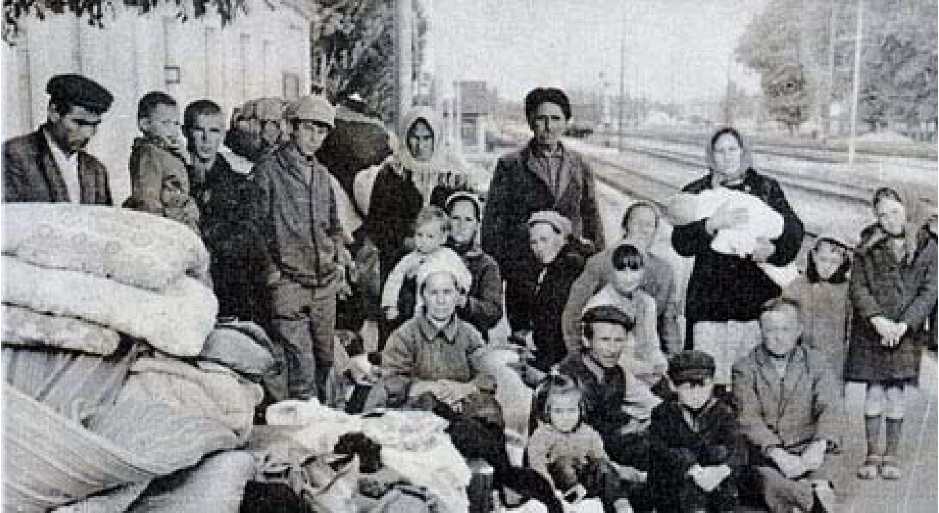
A group of Crimean Tatars waiting for the train that will take them into exile, May 1944
After the deportation, Crimea was almost entirely “cleansed” of its Crimean Tatar population. The people were officially declared “traitors”, even though tens of thousands of Crimean Tatars had fought in the ranks of the Red Army, received military decorations and died at the front. Even that did not save their families from deportation. Collective punishment became the norm of Soviet logic.
In exile, the Crimean Tatars lived for decades under the special settlement regime — with no freedom of movement, no possibility of return, not even the right to call themselves publicly a people of Crimea.
The history of Soviet Crimea is the history of how a state can destroy a people not only with weapons, but also with decrees, railway wagons and silence. And it is a history without which it is impossible to understand present-day Crimea, or the price its peoples have paid for the right to their own home.
The deportation of the Crimean Tatars in May 1944 was neither a “resettlement” nor a “preventive operation”, as Soviet and later Russian propaganda portrayed it for decades. It was a deliberate attempt to erase a people from their land — physically, culturally and historically. It was a deliberate state crime, aimed at changing the demographic make-up of Crimea and bringing the peninsula permanently under the control of the Soviet centre of power. It is precisely the consequences of this deportation — an altered demography, destroyed memory, traumatised generations — that Russia would later use as an argument for fresh claims on Crimea.
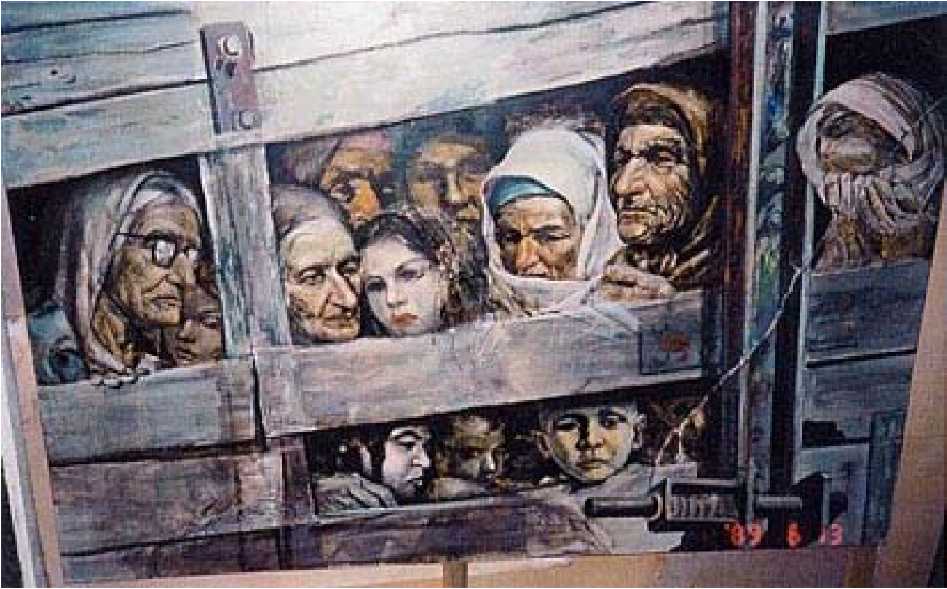
Drawing of Tatar women and children on a train to their places of exile, May 1944
Between 1944 and 1948, almost all Crimean Tatar place names were replaced with Russian ones. Entire layers of history — khanate towns, Muslim communities, centuries-old settlements — officially ceased to exist. Crimea was to be “purified” not only of people, but also of the very idea that it had ever had an indigenous people and a statehood tradition of its own.
Crimea became a land without a voice. Settlers from the central regions of the Soviet Socialist Republic were moved into the emptied villages. The new inhabitants were given the deportees’ houses, land and belongings — without explanation, without history, without context. Thus an artificial demographic reality took shape, one that the Russian authorities would later try to present as a “historical norm”.
In the post-war decades, Moscow constructed a new image of Crimea — a seaside resort, a military outpost, ideologically “safe”. The peninsula was presented as a place of rest, of sanatoriums and of heroic myths of the “Great Patriotic War”. But behind this “image” lay the crux of the matter: for the first time in a thousand years, Crimea existed without its indigenous people.
The Crimean Tatars were not merely absent — they could not be spoken of. They were not mentioned in museums, not studied at school, and the very subject of Crimea was off limits to them. The very fact of the deportation would long remain taboo. Even in official documents, people were referred to as “special settlers”, stripped of the right to return.
In 1954, the Crimean Oblast was transferred from the RSFSR to the Ukrainian Soviet Socialist Republic (Ukrainian SSR). The decision was an administrative one, taken within a unified Soviet state, but it underlined once again a simple fact: Crimea had no “special Russian status”. Its fate was decided in Moscow without regard for the will of the population — and without the participation of the Crimean Tatars, who had been exiled following their deportation.
Why Crimea was transferred to Ukraine: economics, not a “gift”
The transfer of Crimea to the Ukrainian SSR in 1954 remains one of the historical episodes most distorted by Russian propaganda. For decades it has repeated the “Khrushchev’s gift” narrative, seeking to reduce a complex economic and administrative decision to the personal gesture of a much-criticised leader. In reality, the transfer of Crimea was a necessary, rational and purely economic step, taken within a unified Soviet system.
After the Second World War, Crimea was in deep crisis. The 1944 deportation destroyed the peninsula’s traditional economy. Entire agricultural systems that had sustained life in Crimea for centuries — fruit growing, viticulture, irrigation, livestock farming — disappeared. Fields became overgrown with weeds, villages emptied and harvests fell sharply. Settlers from the central regions of the RSFSR often lacked both the experience to work in an arid climate and the basic infrastructure to live.
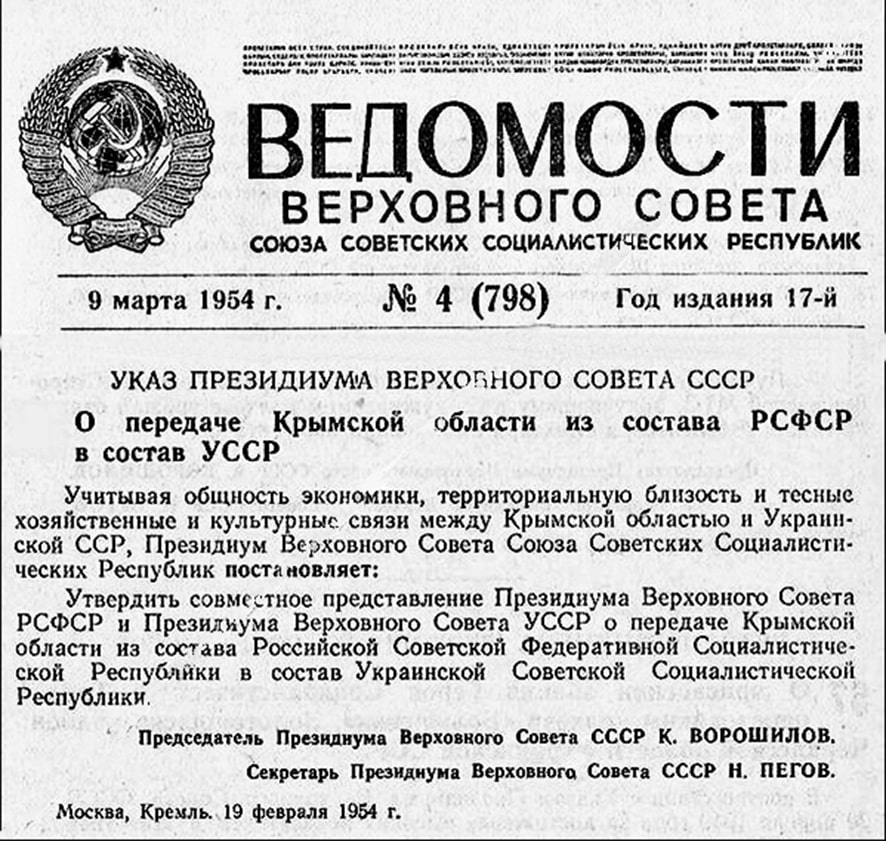
The decree transferring Crimea to the Ukrainian Soviet Socialist Republic in 1954.
Crimea suffers acutely from shortages of water, electricity, food and labour. The peninsula lacks sufficient resources of its own and depends entirely on the mainland. Yet logistically, economically and geographically, Crimea is bound to Ukraine, not to Russia. Railways, roads, energy networks, food supplies — everything comes from southern Ukraine, above all from the Kherson and Mykolaiv regions.
It is precisely the Ukrainian SSR that, in the post-war years, de facto sustains Crimea: it supplies grain, building materials, electricity, personnel and funding. The reconstruction of ports, towns, sanatoriums and factories is carried out at the expense of the Ukrainian budget and Ukrainian ministries. For Moscow, it becomes clear that running Crimea from the centre is inefficient and costly.
The transfer of Crimea to Ukraine is also linked to large-scale infrastructure projects. Already at that time, the idea of bringing water from the Dnieper to the peninsula is being considered — a project that would later materialise as the North Crimean Canal. Without Ukraine, Crimea physically cannot solve its water problem, and without water there can be no agriculture, no towns and no seaside resorts.
The 1954 decision is therefore not a gesture of “friendship between peoples”, but the recognition of an obvious fact: Crimea is economically, logistically and spatially an integral part of Ukraine. The decision is taken by collective bodies of Soviet power — the Presidium of the Supreme Soviet of the USSR and the governments of the republics — and raises no objection within the political system of the time.
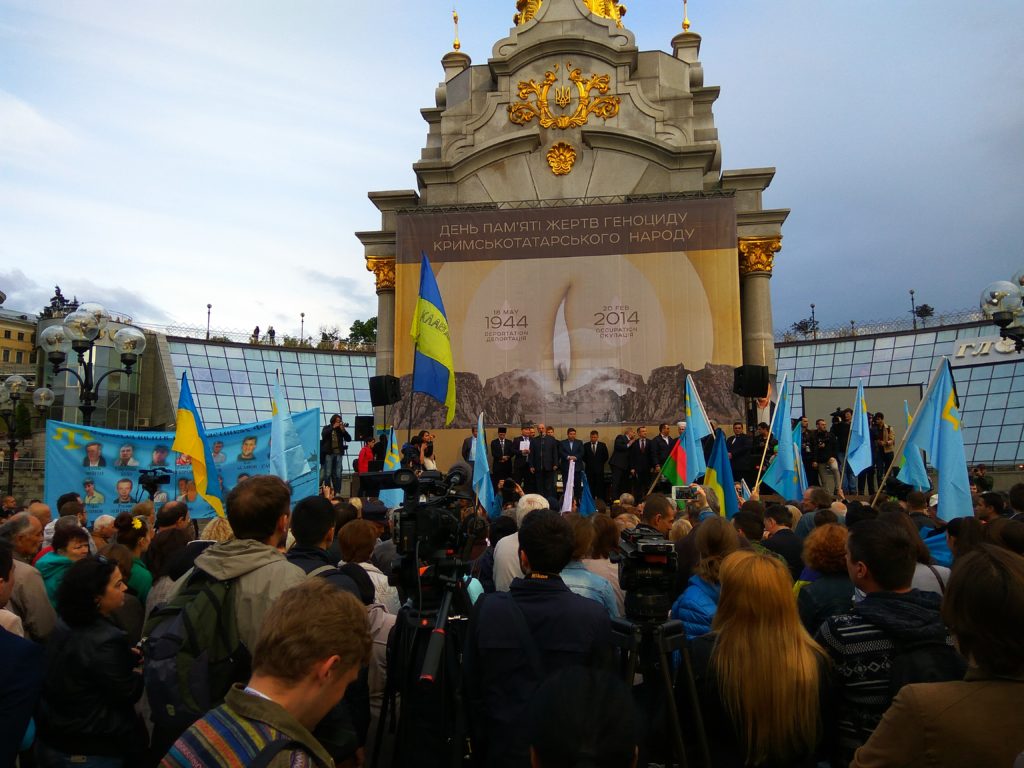
A gathering in front of the monument commemorating the deportation of the Crimean Tatars, in Kyiv in 2016.
In 1954 there was no protest from Russia, no talk of a “historic injustice”. For nobody regarded Crimea as “eternally Russian land”. That question arose much later, after the collapse of the USSR, when myths became an instrument of revanchist political propaganda.
The transfer of Crimea to Ukraine was an attempt to rescue the peninsula from economic decline and integrate it into a living economic system, rather than leave it as a military and seaside-resort colony with no future. In that sense, it merely confirms the essential point: Crimea was never a self-sufficient “Russian” territory, but always existed in connection with those who actually sustained its very existence.
Translated from French. The French original prevails.