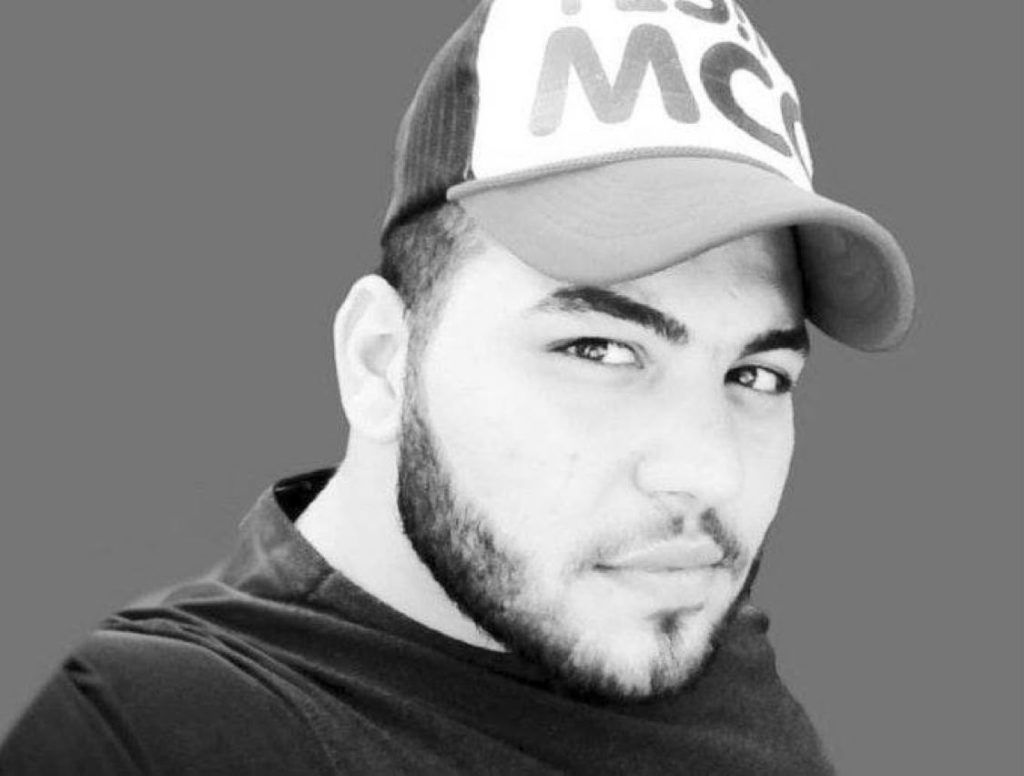
While international attention remains focused on the military clashes between Iran, Israel and the United States, another conflict is unfolding within the Islamic Republic itself. According to several Iranian sources, young Arif Khoshkar has been executed after being convicted of offences linked to the protest movement. Beyond this individual tragedy, his execution illustrates how the death penalty has been turned into an instrument of government intended to intimidate a society that the regime continues to regard as its main threat.
According to information released by several Iranian sources, the death sentence handed down to Arif Khoshkar has been carried out. The exact circumstances of his trial and hanging remain difficult to establish in a country where the authorities tightly control information about detainees and where many executions are carried out without prior announcement.
The young man’s case cannot, however, be reduced to a mere court story. It is part of a much broader acceleration in the use of capital punishment. Iran Human Rights says that at least 370 people were executed in the first six months of 2026, including 101 in June alone. The organisation also stresses that the wave of hangings intensified after executions of political prisoners began in March.
The death penalty as an instrument of government
In Iran, the death penalty is no longer merely the outcome of criminal proceedings. It has become an instrument of political control, used to punish certain individuals but above all to send a warning to the population as a whole. The charges brought by the revolutionary courts — “waging war against God” (moharebeh), “corruption on earth” (efsad-e fel-arz), espionage, armed rebellion or undermining national security — make it possible to turn political dissent, taking part in a demonstration or contact with foreigners into a capital crime.
By the end of April, the Center for Human Rights in Iran had already recorded at least 22 executions of political prisoners in six weeks, including ten people arrested during the January protests. The organisation describes secret proceedings, forced confessions, allegations of torture and an almost complete absence of judicial safeguards.
Justice fast-tracked by war
The external war has given the Iranian authorities a particularly favourable backdrop for tightening domestic repression. Since the US-Israeli strikes of 28 February 2026, any opposition can be portrayed as treason and any independent activity as collaboration with the enemy.
Amnesty International has condemned the use of “wartime conditions” as a pretext to step up arbitrary arrests, fast-track grossly unfair trials, hand down heavy prison sentences and carry out politically motivated executions.
This acceleration is crucial. Protesters can now be arrested, interrogated, sentenced, have their sentences upheld by the Supreme Court and then be hanged within the space of a few months. The time that once allowed families, lawyers or international organisations to mobilise is shrinking drastically.
Hanging as a message to society
The aim is not merely to eliminate an opponent. Each execution is meant to have a collective effect. It reminds students, women who refuse to wear the compulsory veil, striking workers, Kurdish or Baloch activists, bazaar merchants and the families of victims that any form of dissent can lead to prison, torture or the gallows.
Families are sometimes informed only at the last minute. Final visits may be refused. Bodies are not always returned immediately, so as to prevent funerals from turning into protest gatherings. Even in death, the condemned person thus remains an instrument of pressure on their relatives.
The regime is seeking to make it clear that the repression does not stop at those who take part directly in a protest. It can reach lawyers, journalists, families, internet users or those who pass information abroad.
Two wars waged simultaneously
The Islamic Republic is now waging two parallel wars. Abroad, it is confronting the United States, Israel and several Gulf states, threatening shipping in the Strait of Hormuz and trying to show that it retains a capacity to cause regional harm despite the strikes it has suffered.
At home, it is waging war on its own society. The logic is the same: to offset the erosion of its power through intimidation. Missiles and drones serve to deter external adversaries; prisons and gallows are meant to deter internal opponents.
This link between war abroad and repression at home was already apparent in the clashes in Iranian Kurdistan, Baluchistan and Khuzestan, and in the attacks targeting members of the Basij. As La Tribune des Nations showed in its analysis of Iran’s internal fractures, these pockets of dissent do not yet amount to a national uprising, but their simultaneity is fuelling the anxiety of a regime that fears they may converge.
A show of force that reveals the regime’s fear
By stepping up hangings, the Islamic Republic is seeking to project an image of strength. Yet this brutality also exposes its vulnerability. A government confident of its legitimacy would have no need to execute its opponents at an ever faster pace.
The regime knows that the anger has not gone away. It has been contained by mass arrests, internet shutdowns, the violence of the security forces and the threat of the death penalty. The root causes of the protests remain: economic crisis, corruption, rejection of the political system, ideological exhaustion and the aspiration of a growing share of young people to live differently.
Fear can scatter a demonstration and silence a city for a time. It can neither restore trust nor give back to the regime the legitimacy it has lost.
The execution of Arif Khoshkar thus stands as the symbol of a survival strategy: the Islamic Republic is trying to respond to its weakening abroad with heightened terror at home. It can still kill its opponents. It can no longer convince its people.
LTDN ARTICLES TO READ
• Iran: internal fault lines reawaken
• Iran: two young protesters executed as repression intensifies
EXTERNAL ARTICLES
• Iran Human Rights — More Than 370 Executions in First Six Months of 2026
• Center for Human Rights in Iran — Iran’s Execution Machine: Political Hangings Surge
Translated from French. The French original prevails.