Empires are rarely content merely to conquer territory. Land can be lost. Peoples can rise up. Borders can shift. A true imperial power therefore aspires to something more: it seeks to appropriate a past. For whoever appropriates history is also trying to appropriate the future. For several centuries, Russia has waged wars not only for territory; it has also been waging a war over memory. Its greatest trophy is Kyivan Rus’ — a state that took shape on the banks of the Dnipro long before a modest settlement appeared in the forests of the north-east and later became Moscow.
Contemporary Russian historical mythology strives to convince the world that Rus’ and Russia are one and the same. According to this narrative, Russia is the sole and direct successor to the ancient state of Rus’, while Ukraine is merely an accidental branch of the great tree of history. Yet the facts tell a very different story.
By the end of the 13th century, the Ruthenian world no longer had a single political centre. Its territories developed within different states and under different political models. Over the following centuries, the Ukrainian lands were mainly incorporated into the Grand Duchy of Lithuania and then, from the late 16th century, into the Polish-Lithuanian Commonwealth, which united the Kingdom of Poland and the Grand Duchy of Lithuania. At the same time, on the southern frontier of Eastern Europe, a new society was taking shape, born of the constant threat posed by the steppe frontier, of military conflict and of the need to organise itself by its own means. It was in this environment that the Cossacks gradually emerged.
The Cossacks: the birth of a new political community
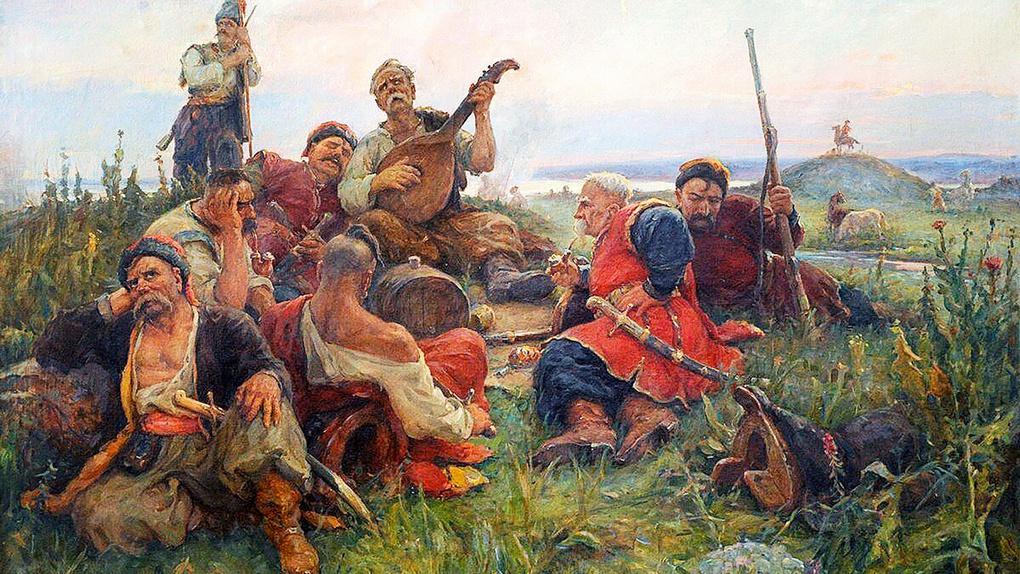
The Cossacks emerged during the 15th and 16th centuries on the southern frontier of Eastern Europe – a space where the interests of the Grand Duchy of Lithuania, the Crimean Khanate and the Ottoman Empire intersected, while the Muscovite state was gradually becoming an increasingly prominent player.
Originally, the Cossack was above all a frontiersman – a warrior, an exploiter of natural resources, a farmer or an adventurer in search of plunder, for whom the steppe was at once a dangerous frontier and a space of opportunity. Gradually, however, the Cossack phenomenon ceased to be merely a social and military one. It became a political community.
The Cossacks were no longer content simply to fight. They organised their own lives, elected their leaders, took collective decisions, entered into relations with the rulers of neighbouring states and defended their own political interests ever more actively. By the 16th and 17th centuries, the Cossacks had become a force that neither the King of Poland, nor the Crimean Khan, nor the Ottoman Sultan, nor the Tsar of Muscovy could any longer ignore.
This political organisation was particularly evident in the lower Dnieper region, beyond the rapids. The Zaporozhian Sich was not merely a military stronghold. It became a centre of Cossack self-government – a distinctive military and political community, with its own rules, its own institutions and traditions of collective decision-making. Power there was not the hereditary property of a single ruler. The chief of the kosh and the officers were elected, and their authority depended on the support of the Cossack community. The most important matters were put before the council.
Herein lay one of the most important features of Cossack political culture. Power was not understood solely as the right to command. It was a mandate that the community could grant, limit or withdraw. It is precisely for this reason that the Cossack movement gradually became far more than a military force on the southern frontier. It forged a political culture that combined military organisation, the election of leaders, collective decision-making and an understanding of freedom as the right of a political community to determine its own affairs.
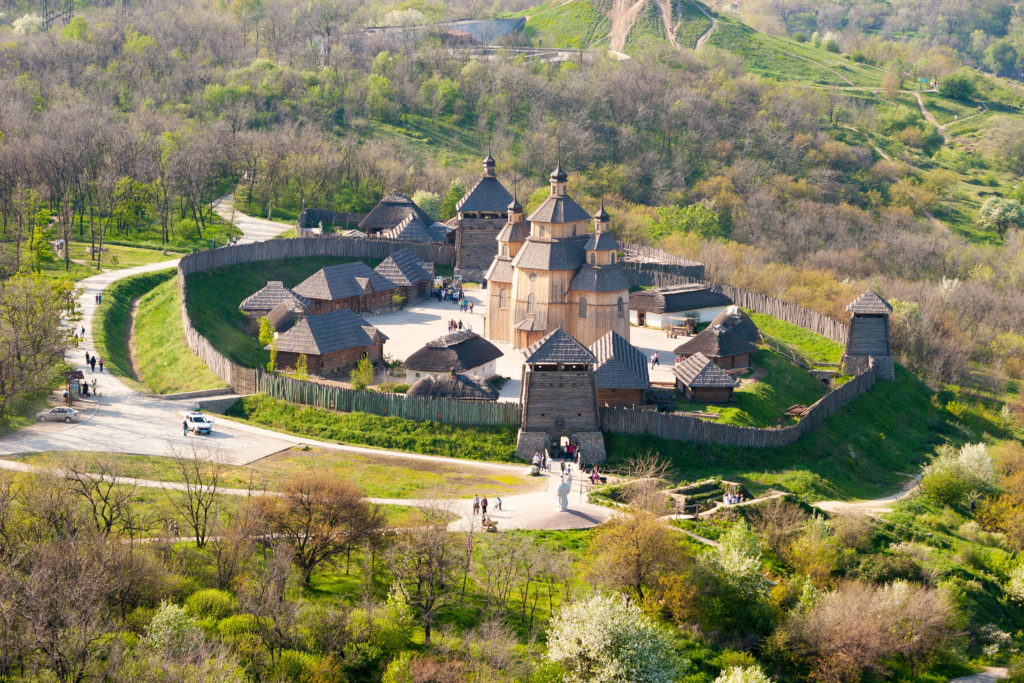
The sich of Mala Khortytsia.
It would, of course, be wrong to project the contemporary notion of democracy onto the Zaporozhian Sich. Cossack society remained military and estate-based. Its political rights did not extend to all the inhabitants of the Ukrainian lands. Nevertheless, for its time, it had indeed created an unusual model of power: the leader was not an absolute sovereign, and his authority depended on the community’s recognition.
In the 17th century, this culture spread far beyond the confines of the Zaporozhian region. The Cossack elite gained diplomatic experience, Cossack troops took part in international conflicts and the Cossack community itself laid ever clearer claim to being the political representative of the Ukrainian lands. It was then that a decisive turning point came. The Cossack movement began to transform itself from a military and political community into a force capable of creating its own state.
The Hetmanate: when Cossack politics became a state
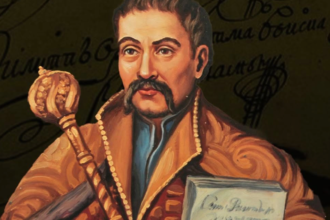
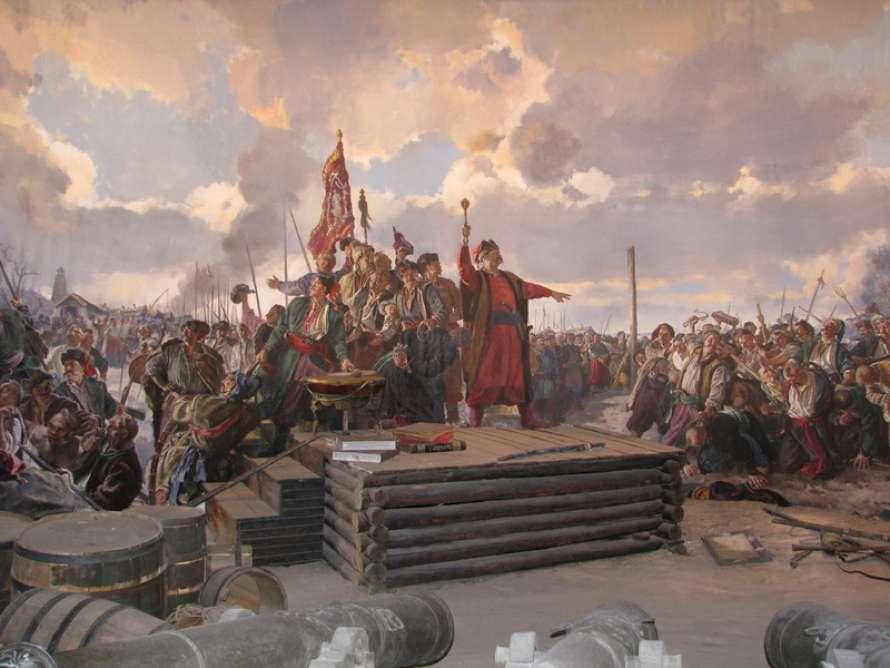
In 1648, this process entered a new phase. At the head of a vast popular uprising stood Bohdan Khmelnytsky (c. 1595–1657) – hetman of the Zaporozhian Host, the military and political leader who led the revolt against Polish rule and became a central figure in the formation of the Cossack state.
The uprising quickly went beyond the bounds of a mere military conflict. It spread across much of the Ukrainian lands and brought about the disintegration of the previous system of power. In its place, over the following years, a new political structure gradually took shape – the Hetmanate, which sources of the period associated above all with the Zaporozhian Host.
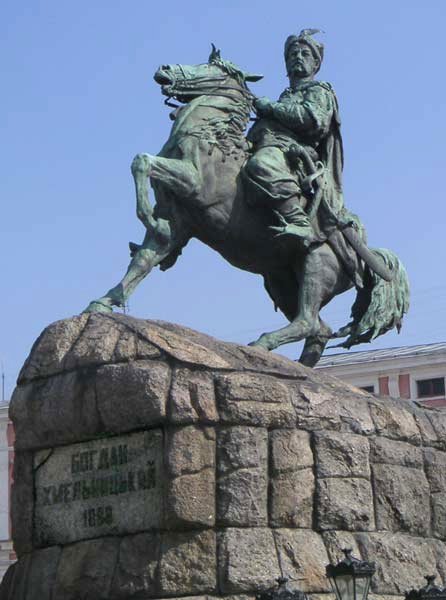
The statue of Bohdan Khmelnytsky in front of St Sophia’s Cathedral in Kyiv.
Its emergence mattered not because the Ukrainian lands had supposedly “returned” to Kyivan Rus’. Centuries of historical transformation separated Rus’ from the Hetmanate. Society, the international environment, military organisation and the very principles of state administration had changed. The Hetmanate was a state of early modern Europe. But it did not arise out of nothing.
Its political system had grown out of the Cossack culture which, over the preceding centuries, had developed its own rules for organising power. In the Hetmanate, this culture took on the form of a state. A territorial and administrative organisation emerged, based on the system of regiments and sotnias, along with organs of government, an army, financial mechanisms, a judiciary and a diplomatic practice. The hetman became head of state, while the Cossack elite formed part of the new political apparatus. What had previously existed as the practice of the Cossack community was now transformed into state institutions.
It is precisely here that the fundamental distinction between the Cossack movement and the Hetmanate lies.
The Cossack movement created a political culture. The Hetmanate transformed it into a system of state power.
Within the Hetmanate, power struggles pitted the hetmans against the Cossack elite, and the political rights of the various groups within the population were far from equal. But one element remained fundamental: the hetman’s power was not regarded as his personal, hereditary property. The hetman was elected. His power was bound to the Cossack community, the military elite and the councils. State decisions required political legitimacy, not merely force.
In this respect, the Hetmanate extended the political logic that had taken shape within the Cossack world. But it now faced a far more complex task. It had to survive amid states much more powerful than itself. To the west remained the Polish-Lithuanian Commonwealth. To the south, the Crimean Khanate and the Ottoman Empire. To the north-east, the rapidly strengthening Muscovite state.
That is why, from its very beginnings, the history of the Hetmanate was not only a history of state-building but also one of a constant search for allies and of attempts to preserve political autonomy at a time when the great powers were vying for Ukrainian lands.
From alliance to dependence
In 1654, the Hetmanate concluded an agreement with the Muscovite state that is traditionally associated with the Pereiaslav Council and the subsequent formalisation of the agreements between Moscow and the Cossacks. In the Russian historiographical tradition, this event was long presented as the “reunification” of Ukraine with Russia – as though the Ukrainian lands had simply returned to the state to which they naturally belonged. Historical reality, however, is far more complex.
The Hetmanate did not cease to exist in 1654. It retained its own army, administration, courts, financial mechanisms, territorial organisation and the institution of the elected hetman. The Muscovite state did not absorb it immediately. The agreements of 1654 marked the beginning of a different process – the gradual transformation of a military and political alliance into a relationship of dependence.
It is important, however, not to give the impression that this process was direct and uninterrupted. During the second half of the 17th century, the status of the Hetmanate remained the subject of constant negotiation, conflict and struggle. The hetmans and the Cossack elite repeatedly sought to preserve or extend their prerogatives, shifted their foreign policy orientation and looked for other allies.
Nevertheless, the overall trend was gradually becoming clear. As the Muscovite state grew stronger, it increasingly sought to control the internal affairs of the Hetmanate. The hetman’s diplomatic prerogatives were curtailed, oversight by Moscow’s representatives tightened, and Ukrainian autonomy came to depend more and more on the will of the Muscovite monarch. This is where the next chapter of this history begins.
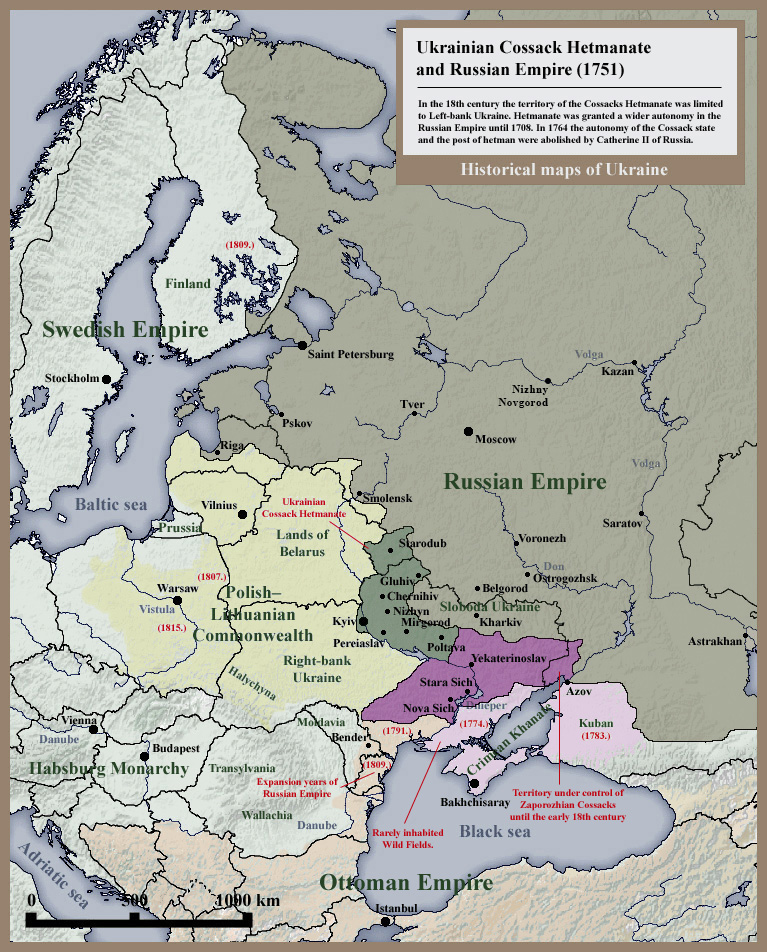
For to the Muscovite state, the Hetmanate was not merely a territory to be controlled. It was a political system that retained its own institutions, its own elite and its own conception of power. And it was precisely for this reason that, in the following century, the question of Ukrainian autonomy gradually became, for the imperial centre, a question to be settled by erasing it.
The Hetmanate would survive for several more decades. Its political tradition would manifest itself again in the era of Ivan Mazepa and Pylyp Orlyk. But the trajectory was already clear: the Ukrainian state had been born anew. The question now was whether it could remain independent.
Read Kyivan Rus’: the war over origins (Part 1)
Translated from French. The French original prevails.