Week after week, we have grown used to the constant twists and turns in the conflict between the United States and Iran since war broke out at the end of February. Since the collapse of the ceasefire last June, which wiped out the progress conceded just before it, one conviction nonetheless seemed to be shared: to find a way out as quickly as possible and to avoid the increasingly heavy consequences of a lasting blockade of the Strait of Hormuz for oil prices and the global economy. Fear of a quagmire and of a never-ending conflict has put pressure on the mediators in recent weeks. Before the conflict, around a fifth of the world’s oil supply, some 20 million barrels a day, passed through Hormuz. Flows recovered in September but remain below their pre-war level; on Monday, Brent was still trading at more than $105 a barrel. It is worth remembering that last February it stood at just $70.
But since June, efforts to revive negotiations on a full and lasting reopening of the strait have been struggling. At the other end of the Arabian Peninsula, the Houthi takeover also continues to weigh on Bab el-Mandeb and the Red Sea. The situation on the world’s energy routes is therefore growing more complicated at the very moment the conflict around Hormuz is driving up transport and insurance costs for every economy.
Iran’s proposal in New York rejected
Yet a glimmer of hope had emerged at the United Nations General Assembly, with a ready-made proposal from Tehran: a seven-day plan intended to restore confidence and allow normal traffic to resume in the Strait of Hormuz. The initiative was something of a surprise, since Iran had rarely taken the lead in proposing a diplomatic solution since February. But Tehran knows it still holds two considerable levers in the war: its nuclear programme and its capacity to cause disruption in Hormuz.
The plan presented by Abbas Araghchi, Iran’s Minister of Foreign Affairs, went further than a mere gesture of goodwill. Tehran notably proposed reopening Hormuz in exchange for the lifting of the US blockade of its ports, the restoration of waivers allowing its oil exports and the release of part of its frozen assets. The plan also envisaged resuming talks on Iran’s nuclear programme and was framed with a view to a strengthened version of the memorandum concluded in June between the two countries.
For a few days, then, it seemed possible to believe in a new opening. Yet Donald Trump publicly rejected the Iranian proposal, immediately sparking fresh concern on the oil market. But contrary to what that rejection might have suggested, the plan was not dead. Trump himself said on Sunday that he expected further talks, and Qatari mediators were continuing their contacts with both sides. And this is where Qatar returns to centre stage, as the situation becomes untenable for every country in the region.
Qatar takes back the initiative
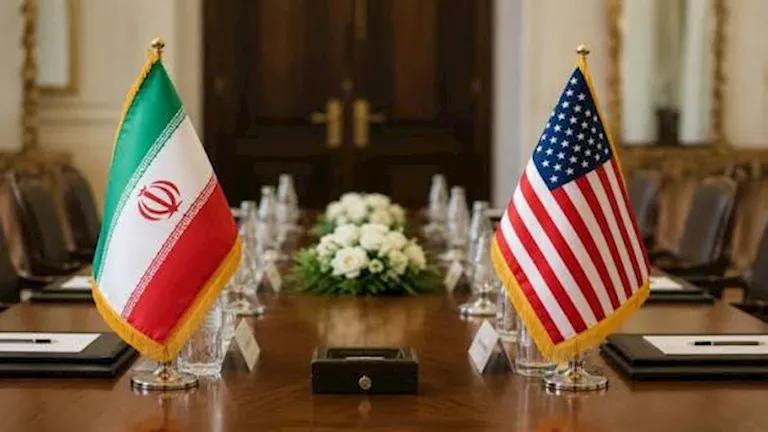
For several days, Doha has been conducting genuine shuttle diplomacy between Washington and Tehran. Qatar had already taken part in the efforts that led to the June memorandum. It has now once again become one of the key intermediaries in attempts to bring the conflict to an end. Its Ministry of Foreign Affairs has officially confirmed that several meetings and exchanges of messages took place in New York during the General Assembly, but also outside it. Doha says it is working to bring the positions closer together, above all to allow freedom of navigation to be restored in the Strait of Hormuz.
And the situation has moved on again in the past few hours. While Tehran was still officially awaiting the American response on Tuesday, the Qatari mediators eventually passed on to Abbas Araghchi the points received from Washington. On Wednesday 30 September, the American response reached Tehran and must now be examined by the Iranian authorities. Its precise content has not been made public. But one detail considerably changes the reading of current events: according to information obtained by the Reuters news agency from a source familiar with the negotiations, the disagreement now reportedly concerns the order in which the various measures are to be carried out more than the components of the plan themselves.
In other words, the two sides are no longer merely discussing whether to negotiate, but who should make the first move. It is something of a chicken-and-egg situation. Should the United States begin by loosening its economic stranglehold before Iran fully reopens Hormuz and makes nuclear concessions? Or must Tehran give ground first before obtaining anything in return from the Americans? This is the age-old question of every negotiation with Iran: nobody wants to make the first move for fear that the other side will pocket the concession and then fail to honour its commitments. Yet the midterm elections are approaching, and Trump has little interest in continuing this war, other than his ego.
An economic and financial war: how long will it last?
Why, then, did Trump publicly reject a proposal that took up some of the elements already discussed in June? Because Trump appears to be regaining confidence in his strategy of maximum economic pressure while the whole world suffers from the situation: Washington now believes it holds a more favourable balance of power and is seeking to extract more from Tehran, which is suffering under sanctions. But is it not an illusion to imagine that Iran will collapse for economic reasons in the short term?
For several months, the US administration and Israel bet on military warfare and on weakening the regime enough to shift the balance of power in Tehran. But the regime is still standing. US strategy has therefore shifted in parallel to another front: economic strangulation. Far from being seen in Washington as an opening to be accepted as it stood in order to ease the ongoing economic and energy crisis, the Iranian proposal was, unfortunately, most likely interpreted by the US administration as a faint sign that America’s economic strategy was beginning to bear fruit.
Yet the problem with sanctions is that they are often easy to circumvent through third countries. On 24 August, the Treasury Secretary, Scott Bessent, launched “Operation Economic Outcast”, described by the US Treasury as an “Economic D-Day”. Its stated aim was to cut off the last sources of revenue and the financial channels allowing the Iranian regime to circumvent sanctions and wage its war. We also know that economic sanctions have a long history and have never brought about the political changes hoped for: Cuba, North Korea, Venezuela and Iran itself are cases in point.
Translated from French. The French original prevails.