The election of the next Secretary-General of the United Nations, scheduled for 2026, comes at a turning point in the organisation’s history. Paralysed on the major international conflicts by vetoes in the Security Council and facing a financial crisis that the Secretariat itself describes as an “existential liquidity crisis”, the UN system is going through a period of soul-searching unprecedented since the end of the Cold War.
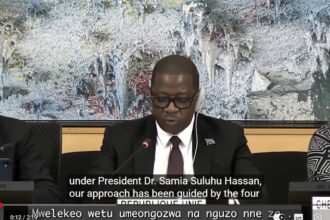
To follow the candidates’ hearings: https://webtv.un.org/en/asset/k1h/k1hkyf9mo0
A highly political election
Although the Secretary-General is often described as the world’s most senior civil servant, the appointment is first and foremost a delicate diplomatic exercise. Member States submitted their nominations between the end of 2025 and the beginning of 2026. Each candidate then set out publicly their vision for the future of the organisation at hearings held by the General Assembly, an exercise that has become a tradition since the previous election to make the process more transparent. The decision nevertheless remains in the hands of the Security Council.
Its fifteen members will have to agree on a single name, without any of the five permanent members – the United States, China, Russia, France and the United Kingdom – exercising its right of veto. The chosen candidate must then be confirmed by a simple majority vote of the General Assembly. As is often the case at the UN, the winner will not necessarily be the best-known figure, but the one who emerges as the most acceptable compromise between the major powers.
Regional rotation favours Latin America
For several decades, an unwritten rule has guided successions at the helm of the UN: rotation between the world’s major regions. After two terms served by Portugal’s António Guterres, this tradition would this time favour a candidate from Latin America and the Caribbean, a region that has not held the post since Javier Pérez de Cuéllar, the Peruvian Secretary-General from 1982 to 1991. This logic explains why most of the six candidacies officially submitted come from that region.
Michelle Bachelet: political stature
The former President of Chile appears to be one of the most experienced figures in this election. Twice Chile’s head of state, Michelle Bachelet also knows the United Nations inside out, having headed UN Women before becoming High Commissioner for Human Rights. Few candidates can claim such a combination of government experience and international responsibilities.
Her commitment to human rights gives her strong credibility with a large part of the international community. It could, however, give rise to reservations among certain states reluctant to see fundamental rights issues take centre stage on the agenda of the next Secretary-General.
Rebeca Grynspan: the development expert
Another closely watched candidacy, that of Costa Rica’s Rebeca Grynspan rests on a career devoted almost entirely to multilateralism. A former Vice-President of Costa Rica, she now heads the United Nations Conference on Trade and Development (UNCTAD), having previously held senior positions at the United Nations Development Programme (UNDP).
Her profile appeals to many countries of the Global South at a time when debt, development finance and the climate transition are taking up an ever larger place in international debate. On the other hand, her experience of handling major geopolitical crises is more limited than that of some of her rivals.
María Fernanda Espinosa: a seasoned UN insider
Ecuador’s María Fernanda Espinosa has another asset rarely found in a single candidate. A former minister of foreign affairs, of defence and of the environment, she is also one of the few figures to have served as President of the United Nations General Assembly.
This twofold experience gives her an in-depth understanding of the diplomatic balance between member states. She is often described as a consensus-builder, a quality particularly sought after in an organisation facing growing polarisation.
Rafael Grossi: the man for nuclear crises
As head of the International Atomic Energy Agency (IAEA), Argentina’s Rafael Grossi has in recent years established himself as one of the most visible diplomats in the UN system. His interventions on Ukraine’s nuclear power plants, Iran’s nuclear programme and the safety of facilities in wartime have earned him international stature.
His experience of handling sensitive crises is a clear advantage. But his expertise remains largely focused on nuclear safety and security, which could be seen as a more specialised field than that of his rivals.
Carolyn Rodrigues-Birkett: the voice of small states
A former minister and later Minister of Foreign Affairs of Guyana, Carolyn Rodrigues-Birkett is a less conventional candidate. She embodies the concerns of small states, which are particularly exposed to the consequences of climate change, debt and geopolitical tensions.
Her candidacy is a reminder that the United Nations is not solely an organisation of the great powers but also a forum in which medium-sized and smaller countries seek to make their voices heard. Her lack of international visibility could, however, limit her chances against far better-known figures.
Macky Sall: the experience of a former head of state
Former Senegalese President Macky Sall is the only African candidate in this election. After twelve years at the helm of Senegal, he has solid experience in government as well as a reputation as a mediator earned within the African Union. His profile could appeal to states wanting a leader well versed in high-level political negotiations. But his candidacy comes up against a major obstacle: the tradition of regional rotation, which this time appears to favour Latin America and the Caribbean. He has been nicknamed Senegal’s Kofi Annan, after the Ghanaian who held the post from 1997 to 2006.
A woman at the helm of the UN?
Beyond geographical balance, another question runs through this election: that of women’s representation. Since the United Nations was founded in 1945, all nine Secretaries-General have been men. This time, four of the six officially nominated candidates are women : Michelle Bachelet, María Fernanda Espinosa, Rebeca Grynspan and Carolyn Rodrigues-Birkett. Many states believe that after more than eight decades in existence, the organisation should at last reach this historic milestone.
This argument could carry weight in the final negotiations, particularly if several candidacies appear equally strong diplomatically. The logic of geographical rotation remains one of the main arguments in favour of a Secretary-General from Eastern Europe. It is the only region never to have led the United Nations since the organisation was founded in 1945.
As far back as 2016, several states had argued that the post should go to Eastern Europe. António Guterres was ultimately chosen thanks to his broad support in the Security Council and his exceptional experience at the head of the Office of the United Nations High Commissioner for Refugees. Ten years on, the regional argument could return with force.
Kaja Kallas: government experience, but the Russian challenge
Kaja Kallas regularly features in informal discussions. A former Prime Minister of Estonia and now a central figure in European diplomacy, she has considerable government experience and a high international profile. Her background matches the recent evolution of the post, which is increasingly focused on managing geopolitical crises.
But her firm stance towards Moscow could prove a major obstacle. Russia holds a veto in the Security Council and would find it hard to accept a figure seen as one of its harshest critics.
Kolinda Grabar-Kitarović: a transatlantic profile
Kolinda Grabar-Kitarović combines several qualities traditionally valued in UN negotiations. A former President of Croatia, former Minister of Foreign Affairs and former NATO Deputy Secretary General, she brings together international experience and hands-on government practice.
His time at NATO could, however, prompt similar reservations on the Russian side, even if his image is generally less polarising than that of Kaja Kallas.
More than an administrator, a restorer of trust
Ultimately, this election goes far beyond the question of individual careers. The next Secretary-General will inherit an organisation facing unprecedented challenges: proliferating conflicts, great-power rivalries, the weakening of multilateralism, the rise of artificial intelligence, the climate emergency and chronic budgetary difficulties. Success will depend less on the office’s institutional authority — relatively limited under the Charter of the United Nations — than on the ability to persuade increasingly divided states to return to dialogue.
In a world where international institutions are regularly challenged, the next diplomatic battle will not merely choose the future head of the UN. It will also reveal whether member states still believe the organisation can play a central role in global governance.
Translated from French. The French original prevails.